
Who Is an ADU Right For in Massachusetts? The Three Types of Families Building ADUs Right Now
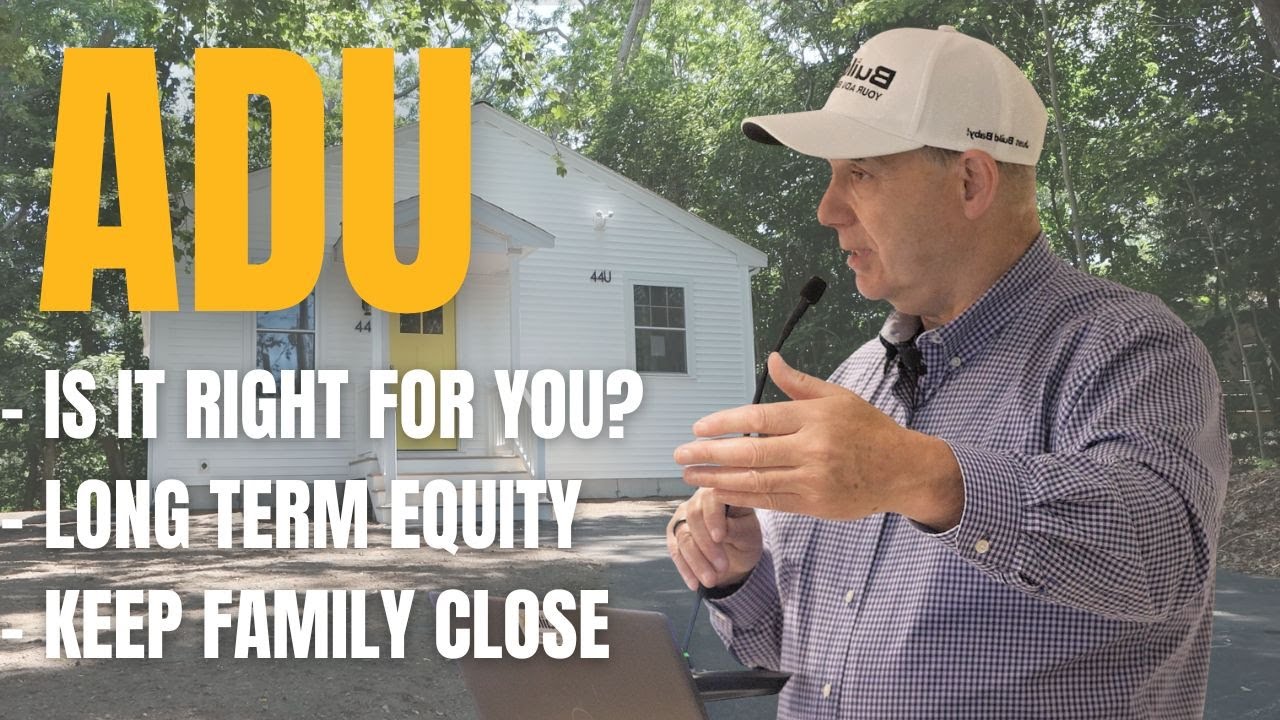
Watch: Why Is an ADU Right For You in Massachusetts?
You have heard about ADUs. Maybe a neighbor said something or you saw something about the new ADU laws in Massachusetts on the news. Perhaps someone in your family has a situation right now and you are up at night looking for answers. The question is not whether ADUs exist but if building an ADU would make sense for your family, in your situation, on your property. That difference matters because an ADU isn't a one-size-fits-all solution. It is a specific answer to a certain set of conditions.
My name is Buz Artiano, and I am the founder of BuildX. We've built dozens of ADU projects across Massachusetts, mostly around the South Shore and Plymouth County areas. We are the only team you need: we handle design, permitting, and construction. So we see every phase of a project from the first site visit up until you move in. We hear every version of the question: "Is this right for us?" After answering hundreds of calls, we have learned that the families who build ADUs fall into three different categories, and the reasons they build are more alike than you would think.
This article talks about who is actually building ADUs right now based on the calls we get from families across Massachusetts. If you picture your family in one of these three groups, you are not alone, and this is probably the right next step for you. But if you do not see yourself here, that is good information to have as well.
Quick Answer: Based on BuildX calls, 50% of ADU inquiries come from families with older parents who want to live close to them. Another 25% are from families who are taking care of someone who has a physical or emotional disability who lives now in a group home too far away to check on regularly. The remaining 25% are young adults between 25 and 40 who are paying $35,000 to $40,000 per year on rent and don't want to keep paying that much and building no equity. If your family is in one of these three categories, an ADU is probably a good solution for your situation.
In This Article
- Who Is Actually Calling About ADUs in Massachusetts?
- What Does the Aging Parent Scenario Look Like?
- What About Families Caring for a Member with a Disability?
- Are Young Adults Really Building ADUs Instead of Renting?
- How Do You Know Which Scenario Fits Your Family?
- Is an ADU the Right Answer for Every Family?
- Which Family Are You?
Who Is Actually Calling About ADUs in Massachusetts?
Three types of families is the answer to that question. After looking at every first consultation call to BuildX, we can put these ADU inquiries into three groups with usually the same percentages. 50% of calls come from families with an older parent situation. 25% of calls come from families with a disabled family member. And 25% of calls come from young people who are tired of paying rent with nothing to show for it.
These are not just marketing categories, these are real discussions with real families in Massachusetts who are having to make real decisions. Every endorsement we have filmed, every project we have completed, and every meeting we've had about design comes back to one of these three situations. If you know which group you are in, that helps you understand what your ADU needs to do for you, how much it will cost and what questions you need to ask.
What Does the Aging Parent Scenario Look Like?
Half of the families who call us are dealing with something like this. Mom or Dad is getting older, they need more care on a daily basis, and the living situation you have now isn't working. Maybe they can't drive at night anymore. Or maybe they are forgetting to take their meds. Maybe you just noticed that even though the parents live 10 minutes away, you don't actually see them every day because there is so much going on in your life.
We think of it this way: if a parent lives 10 minutes away, it might as well be two hours. Because with work, kids' sports, and the pace of daily life, that 10-minute drive doesn't happen on the days it matters most. Proximity needs to mean steps, not miles.
Within this 50% group, we see two common paths:
Path one: The adult child's family buys the parents' house and puts an ADU in the backyard for the parents. The parents don't want a large house but they do want to stay close. The child's family needs more space, so they buy the family home, sell their own property, and then use that equity plus some financing to build an ADU on the same property. The parents move into the ADU, the grandchildren are just a few steps away, and the whole family is on one property.
Path two: The parents sell the main house and build an ADU in their child's backyard. This is the reverse arrangement. The parents get the equity out of their home, the child provides the lot, and the ADU is built in the child's yard. It has the same outcome. Everyone is on one property, the parents keep their independence in their own ADU, and the children can check on the parents every day.
Both ways will solve the same problem. The parent gets a private, accessible home that is the right size. The family gets peace of mind and no one has to drive across town to make sure that Dad remembered to take his blood pressure medication.
What About Families Caring for a Member with a Disability?
One in four families who get a hold of us has a situation that is more urgent and causes more emotional distress than most people realize. A family member, usually an adult child, has a physical disability, an emotional disability, or maybe both. That person may currently be in a group home, an apartment, or some other place that puts distance between them and the family. That distance could be five minutes or an hour, but no matter which, the family can't watch them closely to see what is happening from day to day.
We describe the emotion of these calls like this. These families are paying $2,000 to $4,000 every month for their family member to live somewhere they don't want to be. The environment might be okay but it is not what anyone wants. The care may be adequate but the family can't see what goes on every day. And in the age of smartphones and unrestricted internet access, a person who needs special care, not living with family, is open to risks that didn't exist 10 years ago. That makes a parent's blood pressure go up in ways that are hard to measure but can't be ignored.
The ADU solution has a direct benefit that works like this. It lets you take the $2,000 to $4,000 per month that currently goes to a group home or apartment and put it toward building an ADU that suits your purpose in the family's backyard. The family member gets their own home. The family gets to see them daily. And the monthly cost, rather than going toward rent, will give them an asset the family owns.
When we build an ADU for families in this situation, the way we design the layout is different from a regular build. We pay attention to the width of doorways, how accessible the bathroom is, if you can see the ADU from the main house and if the ADU needs to be independent or connected. We also look at the lot to see how close it is to the main home's kitchen and living areas, because the goal is not just housing. The goal is a living arrangement where a parent can look out of a window and know that everything is fine. This sort of design only happens when you have built enough of these to understand what families actually need once they move in, not just what looks good on paper.
Are Young Adults Really Building ADUs Instead of Renting?
The remaining 25% of our calls come from adults between 25 and 40 years of age who are looking at a number problem that doesn't add up. They are paying rent, sometimes $35,000 to $40,000 per year, and all of it goes to a landlord, so they are building no equity. The apartment isn't great: someone upstairs stomps around at 10 o'clock at night or they may have trouble getting a parking spot. The quality of life is tolerable, but it isn't what they wanted for this part of their life.
An ADU for this group works like this: instead of continuing to throw away $40,000 a year, they build an ADU on their family's property, maybe a parent, a sister or another relative's lot. The family member provides the land, and the young adult helps with the financing. They will have a detached ADU that will be their own home. Especially if the ADU is detached, it will really truly feel like their own house, because it is.
This type of situation is getting more common all the time because the cost of renting in Massachusetts has gone up so much that an ADU figures out to be a smarter long-term financial move for many young families. They stop paying all their money to a landlord, start putting equity into something that belongs to them, and get a better quality of life.
How Do You Know Which Scenario Fits Your Family?
Ask yourself three questions. First: who is the ADU being built for? If the answer is an older parent you want closer to you, you are in the 50% group. If the answer is a family member with a disability who's now living somewhere that worries you, you are in the 25% disability group. If the answer is a young adult in the family who's paying rent and not gaining anything, then you are in the 25% young adult group.
Second: what problem are you solving? If the situation is about an aging parent you want to deal with how close they are for daily care. Disability situations mean you need answers for safety, oversight and putting monthly expenses into an asset that you own. Young adult situations are about finances and quality of life.
Third: whose property will the ADU go on? The answer to that question decides everything from lot evaluation to permits and how you finance. For an aging parent, you could put the ADU on either the parent's lot or the child's lot, depending on which sub-path fits. In the disability and young adult situations, the ADU almost always goes on an existing family member's lot.
If you can answer those three questions, you know enough to go to the next step. You don't need to have the financing figured out. And you don't need to know the capacity of your septic system or your lot's setback requirements. Those are questions we answer together.
Is an ADU the Right Answer for Every Family?
No. We build ADUs for a living, so of course you expect us to believe in our product. But we also turn away projects that do not make sense. If the lot can't use the current septic system for the ADU, the project won't work no matter how much the family wants it to. If the financing would make the family stretch past what is responsible, we will tell you so. If an assisted living facility honestly gives better care for a certain medical situation than a backyard ADU can, that is the right choice for that family.
Our job isn't to sell ADUs to families who don't need them. Our job is to give you a clear picture of what is possible on your property, how much it will cost, and whether the outcome will be what your family actually needs. Some families go through our evaluation process and decide the timing isn't right. That is a good outcome too.
Which Family Are You?
If you saw your family in one of these three groups, you already know more than most people who call us for the first time. The aging parent family, the family with a disabled member, and the young adult family all have one thing in common. They are at a point where their current living situation isn't working anymore and they are looking for something better. That is exactly where every BuildX project begins.
We will evaluate your property, walk through your family's situation, and tell you whether an ADU is a realistic option for your specific lot and circumstances.
Walk through a completed ADU in person or Request a Free Consultation
Call us: (781) 627-7000