
Can My Adult Child Build an ADU on My Property as Their First Home?
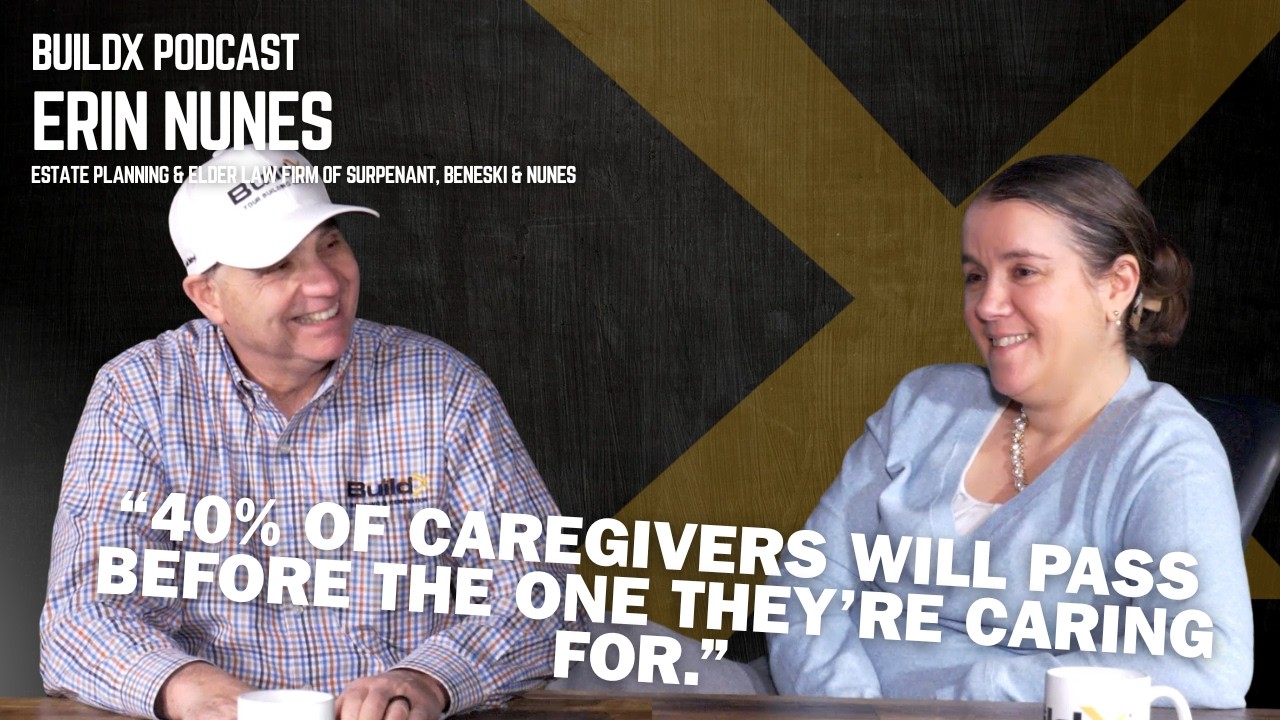
Watch: 40% of Caregivers Pass First… Here's Why That Matters for Your Family
Your adult child is looking at the housing market and seeing the same thing you see: starter homes are listed for between $500,000 to $900,000. Most of them are in the wrong area, need a lot of work, or are sold before they can make an offer. Meanwhile, rent will cost between $2,600 to $3,600 per month with nothing to show for it. You have a yard, you have equity, so your question is one that more Massachusetts families are asking every month: could my kid just build something on my property?
My name is Buz Artiano, and I am the founder of BuildX. We've built dozens of ADU projects across Massachusetts, mostly around the South Shore and Plymouth County areas. We are the only team you need. We do the design, permitting, and construction. So we see every phase of a project from the first site visit up until you move in. We evaluate septic constraints, zoning issues, utility connections and the requirements to get a permit from the city. About 25 percent of our clients are families that are in this exact situation: a young adult who wants to build an ADU as their first home on a parent's property. We have already done three of these projects, and we understand both how the construction works and the legal issues that make them work.
This is one of the most practical housing ideas available to Massachusetts families right now, and almost nobody is talking about it. The cost is different than most people expect, the legal protections are simple if you plan ahead, and the way it is set up will work well into the future for housing. Here is what you need to know to decide whether this way makes sense for your family.
Quick Answer: Yes. Massachusetts lets homeowners build one ADU, and your adult child can live in it as their primary residence. A completed ADU usually costs $350,000 to $400,000, usually resulting in a better home than what that same money buys on the open market. The important step most families don't do: your child will not automatically own the ADU. You will need legal protections set up, like a formal lease, trust, or deed before construction begins.
In This Article
- Can My Adult Child Actually Live in an ADU on My Property?
- How Does the Cost of an ADU Compare to Buying a First Home?
- Who Actually Owns the ADU, and Why Does That Matter?
- What Happens if My Child Is on the Mortgage but Not the Deed?
- What Are the Long-Term Benefits Beyond Solving a Housing Problem?
- Is an ADU on a Parent's Property the Right Move for Every Family?
- Is Your Backyard Your Child's Best Path to Homeownership?
Can My Adult Child Actually Live in an ADU on My Property?
Yes. Massachusetts lets homeowners build one ADU, and your adult child can live in it as their primary residence. A completed ADU usually costs $350,000 to $400,000, usually resulting in a better home than what that same money buys on the open market. Your adult child can occupy the ADU as their primary residence, and the unit will be a fully independent home with its own kitchen, bathroom, bedroom, and separate entrance. You can review the full requirements at mass.gov.
At BuildX, about 25 percent of our ADU clients are families in this situation. The adult child can't afford to buy a traditional house, the parents have a property with enough space, and the family decides that building on land they already own is more sensible financially than competing for overpriced inventory. We have completed three ADU projects just for young adults using their parents' property, and each one followed about the same pattern: the family compared the cost of building to the cost of buying, and figured out that the ADU delivered a better home for less money, and moved forward with the right legal protections in place.
How Does the Cost of an ADU Compare to Buying a First Home?
The comparison is what drives most families to explore this option. In the communities where we build, the typical entry-level home costs between $500,000 and $900,000. Many of those homes are in places the buyer doesn't want to live, need a lot of renovation, or need a bidding war to own. A completed ADU on a parent's property usually will cost between $350,000 and $400,000 and will give you a brand-new, custom-designed home in a place the family already knows and trusts. The rental comparison is just as persuasive. If they are paying $2,600 to $3,600 a month in rent, your child is spending $31,200 to $43,200 every year with no equity, no stability, and no control over the living situation. An ADU changes that spending into a real asset on family-owned land.
The math shifts even further when you add in what the open market actually has at ADU prices. A $400,000 purchase on the open market in southeastern Massachusetts often is a 40-year-old house that needs a new roof, updated systems, and cosmetic work before it will be like a home. A $400,000 ADU is a new home that's built to current energy code with modern finishes, efficient systems, and no deferred maintenance.
Who Actually Owns the ADU, and Why Does That Matter?
This is the question that surprises most families. An ADU doesn't have a separate form of ownership because it's part of the property it sits on. That means your adult child will not automatically own the ADU that they're living in, even if they contributed money toward the construction.
Estate planning attorney Erin Nunes, who's worked with ADU families in the Plymouth area for over 20 years, says that the ADU belongs to whoever owns the land. If your child pays $400,000 toward building it, but isn't on the deed, they have increased the value of your property by $400,000 without any legal claim to that value.
This isn't a dealbreaker, it is a planning requirement. The legal protections that apply to this issue are well-established and simple if they are set up before the building starts. The options are to put your child on the deed so they have some ownership, create a trust that protects their investment, and draw up a formal lease with a right of first refusal, or set up a combination of these things depending on your family's needs. We work with families on these things at the start of the process, because ownership needs to be decided before the building starts.
We tell every family in this situation to not start construction until the legal structure is decided. We have seen projects where the family thought everything would work out and didn't talk to an attorney. When circumstances changed, the adult child didn't have any documentation, no ownership interest, and no options. The cost of an estate planning consultation is between $1,500 and $3,100 for the founding documents. Compared to a $350,000 to $400,000 investment of the construction, that is the least expensive and most important line item in the whole project budget.
What Happens if My Child Is on the Mortgage but Not the Deed?
This difference causes more problems for families who want to build an ADU for the young adult than any other issue. Being on the mortgage and being on the deed are two completely separate legal things. Your child can be financially responsible for the loan. In one of our builds, the adult child went on the new mortgage with his parents because the parents didn't have a mortgage and the lender had to have an additional borrower for the construction loan. The child was responsible for the debt but didn't have any ownership in the property. That situation had to have a separate legal step to make sure the child's investment was protected.
Before any financing is decided on, your family needs to have an honest talk with both your lender and your attorney about how the mortgage, the deed, and the ownership interest work. If those three elements don't work well together, you could end up in a situation where your child is paying for a home they don't legally own.
What Are the Long-Term Benefits Beyond Solving a Housing Problem?
The short term benefit is obvious. Your child gets a home they can afford in a place they want to live. But the long-term flexibility is what makes this idea completely different from buying a normal home.
When a young adult builds an ADU on a parent's property, the family is already together. As the parents get older, living close by goes from a convenience to a necessity. Instead of trying to move a parent or child later in life, the infrastructure is already there. The family that builds an ADU for a 28-year-old now might 20 years later move into the ADU and the adult child might move into the main house with their own family. We have seen this type of arrangement happen in multiple projects, and it is one of the reasons we want families to think about the ADU not as a short-term fix but as a 30-year family asset.
The physical distance is striking. If your child lives 20 minutes away, you will see each other about once a week which means that in 10 years that will be about 520 visits. If they are in the backyard, you are looking at seeing them daily, roughly 3,650 visits in that same decade. That changes the nature of the family relationship in ways that go well beyond real estate.
Is an ADU on a Parent's Property the Right Move for Every Family?
No. And we let families know about that because it matters more that your family makes the right decision than that we win a project.
An ADU on a parent's property isn't the right plan if the adult child needs to live in a different area for work or personal reasons. It isn't the right plan if the family can't agree on ownership structure, money contributions, or what they expect in the long run. About 30 percent of families who first want to build an ADU end up deciding not to go forward with it because the family disagreements are too complicated to fix. That's not a failure. That's families working hard to figure out what actually works before spending $350,000.
It's also not the right plan if the parent's property can't support an ADU. The size of the septic system, the limits of lot coverage, setbacks and wetland buffers all can restrict or stop construction. We assess these limitations before giving a quote on a project because finding out about a $50,000 septic problem after you have committed to a build is the kind of surprise that destroys trust and budgets.
If your family is in agreement, your property can support the unit, and the legal structure is set up before construction starts, this is one of the best housing decisions for a young adult in Massachusetts right now. If any of those three conditions is missing, there are better choices.
Is Your Backyard Your Child's Best Path to Homeownership?
For families with the right property, the right legal plan, and when the members are in agreement, an ADU on a parent's lot will give you a new-construction home for less than the cost of a starter house on the open market. Your child builds equity on family land, your property will add long-term value, and your family gets the ability to adapt with changing circumstances over the next 20 to 30 years.
We will evaluate your lot, walk through the ownership and permitting requirements, and give your family a clear picture of what building an ADU for your adult child would cost and involve.
Tour a completed ADU in person or Request a Free Consultation
Call us: (781) 627-7000