
Can I Build an ADU for a Disabled Family Member Without Losing Their Government Benefits?
Watch: Elder Law Secrets, Special Needs Trusts & Condo-izing ADUs: Patrick Kelleher | BuildX Podcast #31
You've spent years caring for a child with a disability. Maybe your son or daughter is aging out of a school-based program, or they're living in a group home that you don't like the feel of and you think it's not safe anymore. Maybe you lose sleep over wondering about what happens when you're not here or can't support them the same way anymore. You know an ADU could give your child a safe, dignified place to live on your property, so they'll be close enough for you to always be able to help. But there is one really big issue that most people struggle with. They need to know if building an ADU, or leaving that property to their child someday, is going to somehow disrupt the government benefits they need to live off of.
My name is Buz Artiano, and at BuildX we've built dozens of ADUs of all kinds throughout Massachusetts, mostly around the South Shore and Plymouth County areas. We do it all, we handle the design, permitting, and construction. We take care of all the difficult stuff like dealing with septic issues, lot coverage limits, and zoning requirements. This topic is actually very personal for us. A close friend called us years ago because her son, who is nonverbal and autistic, was getting too old for his current program and they were looking at having to put him in a group home. She couldn't sleep at night over this whole thing. When she called us, that was the phone call that got us into the ADU business. It's the entire reason that BuildX even exists.
The answer to the question in the title is yes, you can build an ADU for a disabled family member without any risk of them losing their benefits. But only if you set up all the legal stuff correctly right from the start. This article walks through how to make that legally possible, it explains financial limits, and the difference between two types of trusts that determines whether your family keeps the homes or if the government takes them back.
Quick Answer: Yes, you can build an ADU for a disabled family member without losing their government benefits. The way you do this is by using something called a third-party supplemental needs trust, which is created by the parents while they're still alive. Your disabled family member is named as a beneficiary but not the trustee. The trust lets them live in the ADU and keep their SSI and Medicaid (MassHealth in Massachusetts) benefits. Here's the important part: a person receiving SSI can't have assets worth more than $2,000 in their name. An elder law attorney has to get this all set up for you before we start construction.
In This Article
- Will Building an ADU Knock My Disabled Family Member Off Their Benefits?
- What Is a Third-Party Supplemental Needs Trust and How Does It Protect Benefits?
- What Happens to the Trust When My Disabled Family Member Passes Away?
- Why Does This Matter Before You Start Building?
- How Did This Become Part of What BuildX Does?
- Is an Elder Law Trust the Right Move for Every Family Building an ADU?
- Your Disabled Family Member Deserves a Safe Home Without Losing the Benefits They Need
Will Building an ADU Knock My Disabled Family Member Off Their Benefits?
The short answer is no, but you have to make sure that the property and assets are all legally structured correctly. A disabled person receiving SSI (Supplemental Security Income) and Medicaid can't have assets worth more than $2,000 in their name. That's a federal rule set by the Social Security Administration. If your disabled child inherits a house, a life insurance policy, or an IRA and it's not all structured in the right way, bad things can happen. First, they could lose their benefits entirely. Second, Medicaid will require them to spend down the entire inheritance before they qualify to get any of those benefits back. There are lots of cases where the person had to spend their $500,000 inheritance before getting their benefits back.
But the answer here is not to nix the ADU project. All you have to do is create the right trust structure before you build it. That structure is called a third-party supplemental needs trust, and it is the absolute most important thing to do for any family building an ADU for a disabled loved one.
What Is a Third-Party Supplemental Needs Trust and How Does It Protect Benefits?
A third-party supplemental needs trust is a legal document created by the parents (or another family member) while they are still alive. Then the parents fund the trust with assets, including the property that has the ADU built on it. The disabled family member is named as the beneficiary of the trust, not the trustee. That's very important to remember because since the disabled person doesn't actually own or control the assets (ADU included), the trust doesn't count against the $2,000 SSI limit.
The trustee, which is usually a sibling or other family member who can manage the responsibility, controls the trust assets on behalf of the disabled person. The government benefits pay for daily care and needs. Their SSI gives them an income, and Medicaid (MassHealth in Massachusetts) takes care of medical expenses. The trust funds can then be used to pay for any extra expenses that the SSI and Medicaid don't cover. Things that give someone a good quality of life like personal items, recreation, alternative therapies, accessibility modification, and other things that are outside the government programs scope.
That gives us kind of a layered system. The government handles all the basic needs and the trust handles everything else. And your family member gets to live in a safe, dignified ADU on your property, close enough for you to always be there to support them.
What Happens to the Trust When My Disabled Family Member Passes Away?
This is where the type of trust makes a life-changing difference for your other children and heirs. This is very important information. There are two types of supplemental needs trusts, and knowing the difference will decide whether your remaining family keeps the assets or the government takes them.
Third-party supplemental needs trust: When your disabled family member passes away, whatever is left in the trust (the house, the accounts, the remaining money), goes to your other children or other family members. The government doesn't get to touch it. This is the version you have to create for your loved one if you don't want the government to take the assets.
First-party supplemental needs trust: This version is created with the disabled person's own money (for example, an inheritance they previously got). Under a first-party trust, the government is named as the beneficiary. When the disabled person passes away, Medicaid can recover the amount it spent on their care from the remaining trust assets. The family doesn't keep any of it.
In a nutshell, if you set this up correctly with a third-party trust while you are still living, your disabled child gets a lifetime of protected benefits and housing, and your other children still get the rest of the family assets. If you don't plan this out before you pass away, and your disabled child inherits your assets directly, any trust created after the fact will be a first-party trust, and the government can then keep all the family assets.
Why Does This Matter Before You Start Building?
We see families make this very common mistake way too often. A parent calls us and they are so excited about building an ADU for their disabled child. They have the space on their property, they have the budget, and they want to start designing. But they haven't talked to an elder law attorney yet. A lot of time they just assume they can sort out all the legal stuff after the ADU is built.
That assumption has the potential to cost you everything, it's a dangerous thing to think. The property that has the ADU built on it is recorded in the parents' names on the deed. When they pass away without a trust, the ADU goes wherever the deed goes, which usually means probate court. If the disabled child inherits the property through the court, that means that now they own an asset worth hundreds of thousands of dollars, which causes their SSI and Medicaid benefits to stop immediately.
At BuildX, we won't even start designing a special-needs ADU project until the family has at least started the conversation with an elder law attorney. The legal structure absolutely needs to be in place before we pull permits, not after. The trust says how the property is titled, and the titling affects everything that happens after that, things like permitting, insurance, and what happens at transfer. We've had families come to us after another builder started a project without talking about the legal side of things. By the time they realized the problem, the project was already in the construction phase and there was no legal protection whatsoever for the person the ADU was being built for. That is a huge problem and we refuse to ever create that for our clients.
How Did This Become Part of What BuildX Does?
This isn't a topic we just decided to cover because it looked like it would make good content. It's literally the reason this company started building ADUs.
Years ago our good friend Ping called us. She has a disabled son who is nonverbal and autistic and he was aging out of the program he was in and the only option they had left was to put him in a group home. Ping was not sleeping because of this. She had actually worked for us at one point, but had to leave because she ended up having a second son who has special needs and caring for them both took up all of her time.
She said, "We want to build him something so he can be independent, but close enough that I can keep an eye on him." At the time, building a second home on a residential property in Massachusetts was a bit challenging. The ADU regulations that make it legal by-right were not in place back when Ping called us. But that phone call planted the seed for us. When the Affordable Homes Act made by-right ADU construction possible across Massachusetts, we were ready. That conversation with our friend Ping is the whole reason that BuildX exists.
Is an Elder Law Trust the Right Move for Every Family Building an ADU?
No. If your family member does not receive government benefits, you probably don't need a supplemental needs trust since there's no benefits to protect. Families building ADUs for aging parents who are not on Medicaid or SSI, or families building rental ADUs, wouldn't need this type of thing in place either. A standard revocable trust or estate plan is probably plenty for these situations.
The supplemental needs trust is specifically designed for situations where a beneficiary receives government benefits like SSI and Medicaid that have financial limits attached. If your family member doesn't receive government benefits, the trust structure we talked about in this article probably won't apply to your situation.
We recommend that every family building an ADU consult with an elder law attorney regardless of whether they are disabled or not, because estate planning, nursing home protection, and family asset preservation are important in basically every ADU project. But the third-party supplemental needs trust is a special tool for a specific problem: protecting benefits and providing a place to live.
Your Disabled Family Member Deserves a Safe Home Without Losing the Benefits They Need
Building an ADU for a disabled family member is one of the most meaningful projects a family can undertake. It gives the person they love independence, and dignity, while still being close. And there are specific legal structures that exist to protect their benefits. A third-party supplemental needs trust, created by an elder law attorney before construction begins, lets them live in the ADU, keep their SSI and Medicaid benefits, and it makes sure that remaining assets pass to your other children when the time comes.
The families who get this right are the ones who start the legal conversation before the construction conversation. We will help you build it, but you need an elder law attorney to help you protect it.
We will evaluate your property, walk through the design and permitting requirements for your specific lot, and help you understand what needs to happen before construction starts, including connecting you with legal professionals who specialize in special-needs planning.
Walk through a completed ADU in person or Request a Free Consultation
Call us: (781) 627-7000
Disclaimer: Every effort has been made to accurately convey Buz Artiano's answers based on live interviews and podcast episodes as of their original recording dates. However, pricing, timelines, materials, regulations, and other details may change over time. Please call our offices at (781) 627-7000 or schedule a Project Clarity Call before making any final decisions based on the information in this article.
Meet the builder
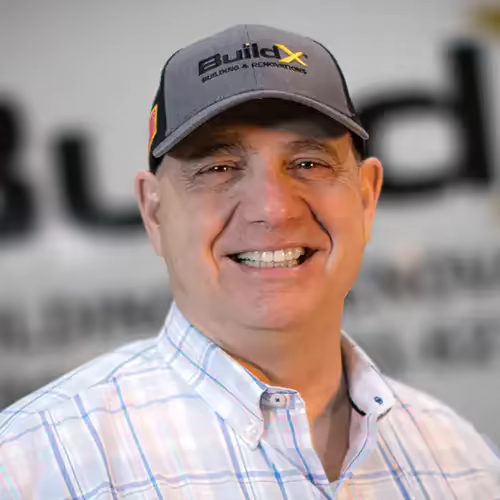
Buz Artiano
"My name is Buz Artiano, owner of BuildX. At BuildX we're more than a home builder. While building is what we do, the relationships that are created in the process are what drives our passion to transform your dream into a reality. That is why we strive to give a first-class experience to our clients by listening to their vision and then building their trust with a custom home design that matches their taste and lifestyle."
Get a Call Back
Enter your number and we'll call you in a few seconds.