Can You Build a Health-Safe ADU for Someone with Autoimmune Disease?
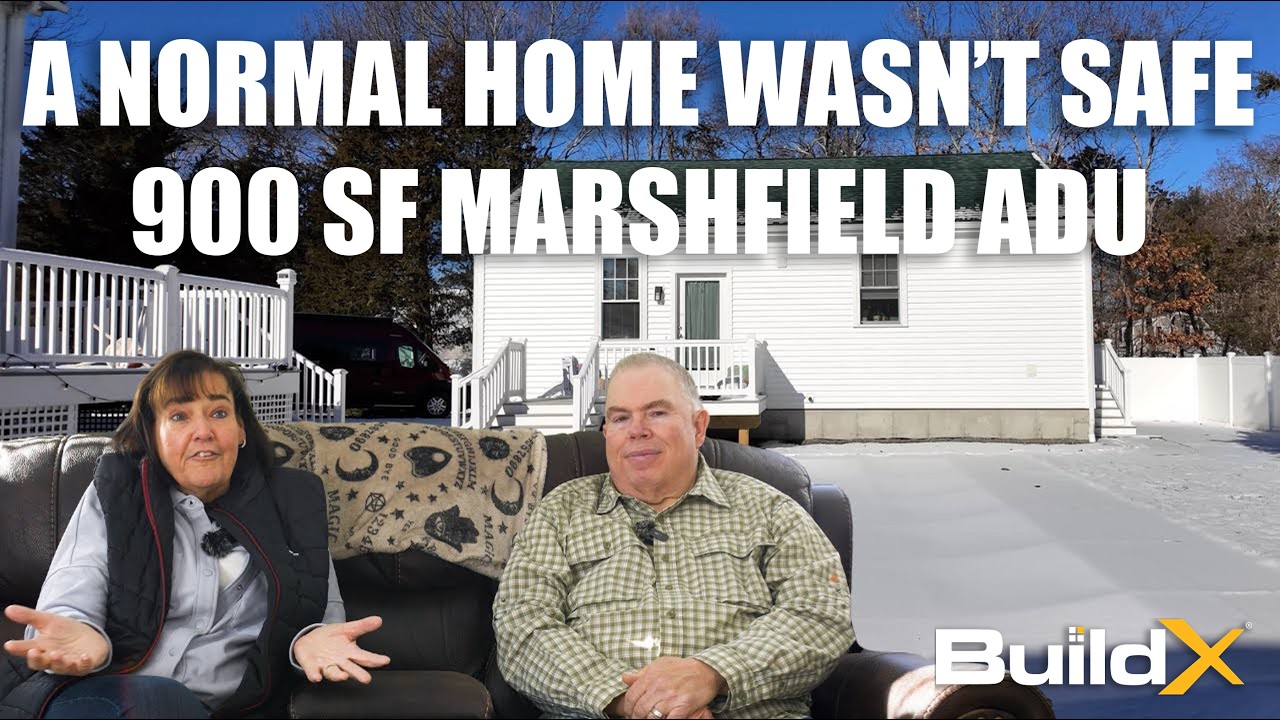
Watch: Why We Built an ADU for Our Autoimmune Daughter
When someone in your family has an autoimmune disease, every decision about their living environment is important. Normal construction materials that most people never think about, particle board, adhesive-heavy plywood, conventional insulation, can release dangerous organic compounds that cause immune responses, make symptoms worse, and make a home not safe for the person it’s supposed to protect. If you have been checking if a builder can actually deal with severe chemical sensitivities in a new ADU, you are asking the right question. And the answer isn’t as simple as choosing low-VOC paint off a shelf.
My name is Buz Artiano, and I am the founder of BuildX. We’ve built dozens of ADU projects across Massachusetts, mostly around the South Shore and Plymouth County areas. We are the only team you need: we do the design, permitting, and construction. So we see every phase of a project from the first site visit up until you move in. We evaluate septic constraints, zoning issues, utility connections and the requirement to get a permit from the city. When Dean and Alice Copeland came to us with an issue most builders haven’t faced, which was building a chemically safe home for their daughter Christina, we didn’t think of it as a special request. We treated it as part of the job.
Dean and Alice Copeland are BuildX clients and we built their 900-square-foot detached ADU in Marshfield, Massachusetts, specifically designed for Christina, their adult daughter with autoimmune disorders. Every choice of materials and insulation, and every decision as to what adhesive to use in the building was made with Christina's health as the absolute standard.
You should expect us to share stories from families who’ve had a good experience. We are sharing the Copelands' story because their situation is one that most builders would not know how to handle, and their honest viewpoint on what the building process was like is more useful to you than anything we could say about ourselves.
Quick Answer: Yes, you can build an ADU that is safe for a family member with autoimmune disease, but it needs to have careful material substitutions from the beginning of the project, not later on. The Copeland family's ADU in Marshfield didn’t have particle board, used natural pine boards inside of plywood subflooring and rockwool insulation instead of standard fiberglass. Unnecessary adhesives were taken out and only low-VOC paints and finishes were used. Christina hasn’t had any health problems since she moved in. The important thing is to find a builder who’s willing to research your family member's specific sensitivities and make building decisions accordingly, before construction actually starts.
In This Article
- Can a Builder Actually Accommodate Severe Chemical Sensitivities?
- What Specific Materials Were Changed for the Copeland ADU?
- Why Does the Builder's Approach Matter More Than the Materials List?
- What Does the Process Look Like When You Build for Health Sensitivities?
- Did the Health-Safe Approach Actually Work?
- Is a Health-Safe ADU the Right Solution for Every Family?
- What Would a Health-Safe ADU Look Like on Your Property?
Can a Builder Actually Accommodate Severe Chemical Sensitivities?
Yes. But you need a builder who understands that construction that’s health-safe isn’t just one product substitution. It’s a system of decisions on what materials to use that begins at the subfloor and goes through insulation, adhesives, paints, and finishes. When Dean Copeland first talked to us he was direct about what Christina needed. As Dean told us, they explained from the first that they didn’t want any particle board, and that they needed to be very careful with adhesives and low-VOC paints. From that starting point, we added to the changes in material besides what the family had first considered.
What matters is that autoimmune conditions and chemical sensitivities are not the same for everyone. What causes a reaction in one person may not affect another. A builder who makes a checklist of pre-approved "green" materials to deal with this challenge might still miss the specific things that cause problems for your family member. The Copeland project worked because we dealt with it like a specific health issue instead of just a selection of different materials.
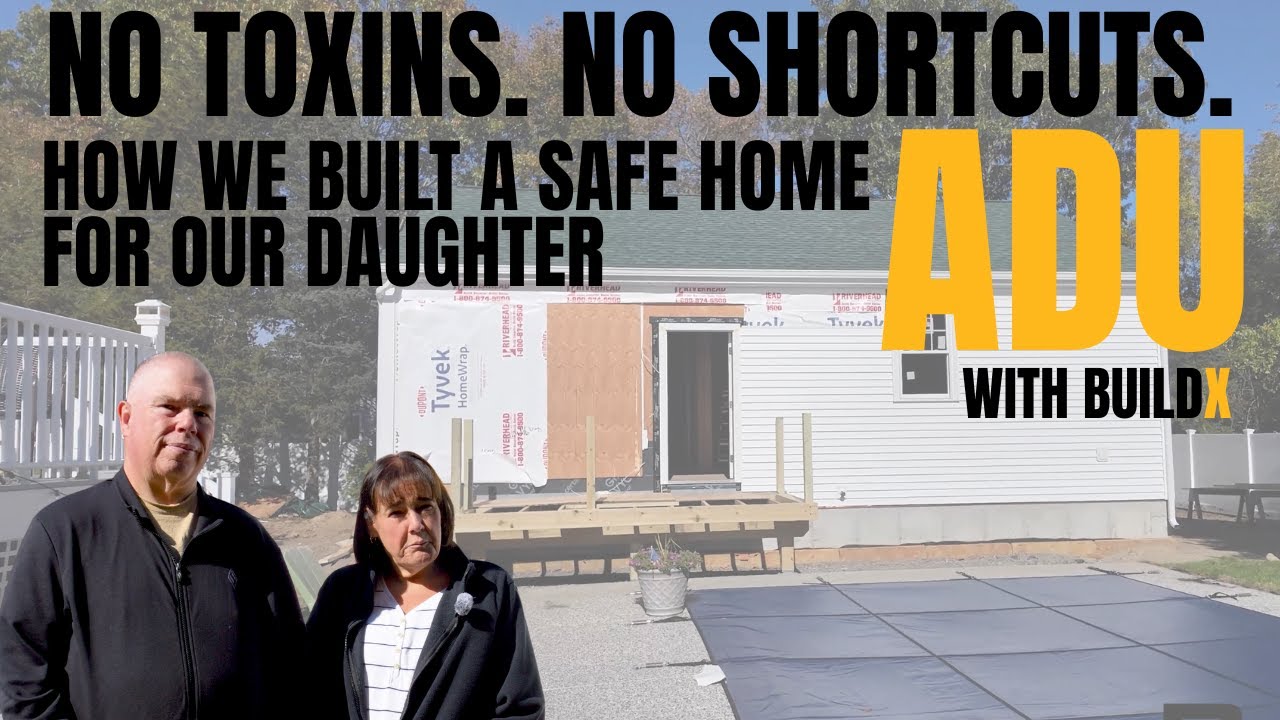
Watch: A Home Built for Health: An ADU Designed for Our Daughter's Needs | Customer Testimonial
What Specific Materials Were Changed for the Copeland ADU?
For the Copeland ADU we had to use substitutions in four different categories. Each change was for a specific source of off-gassing, which is the release of unstable organic compounds from building materials into the inside air over a period of time.
Particle board was eliminated entirely. Particle board is an engineered wood product made by binding wood chips and sawdust with formaldehyde-based adhesives. It is one of the most common sources of indoor off-gassing in a new ADU. For Christina's ADU, we used just plywood and solid wood in every application where particle board would normally be used.
Plywood subflooring was replaced with natural pine boards. Even plywood, which is a step up from particle board, contains adhesive layers that can be a source of off-gassing. Dean said that the adhesives in plywood off-gas, and Christina would be allergic to that. We suggested replacing the plywood subfloor completely with natural pine boards, and that got rid of the adhesive layer from the largest surface area in the ADU.
Standard insulation was replaced with rockwool. Rockwool insulation which is also called mineral wool is made from natural stone fibers. It is resistant to mold and mildew and doesn’t have any of the binding agents that are in standard fiberglass batt insulation. Dean said that using this as insulation takes care of all that could harm his daughter.
Adhesives were reduced or eliminated throughout the build. Besides the subfloor, we checked every place in the building process where adhesives were used and either got rid of them or used a low-emission one instead. Low-VOC paints were also used for every painted surface.
Why Does the Builder's Approach Matter More Than the Materials List?
A materials list is a starting point, not a solution. The Copeland ADU worked, but not because we knew we should use rockwool insulation from the first. It was because we treated Christina's health as a condition when we were designing the ADU and that influenced all the choices later on. When we found out about her sensitivities, we did research of our own. Alice Copeland said it like this: Buz would call and say he found something on the internet, that he did some research and found a product they could use. She said they were surprised that he was going that extra mile, finding out about things they had never heard of.
We deal with every project involving sensitive health issues in the same way. We begin with the family member’s personal triggers, research choices in materials that deal with those things, and then make sure each substitution will work with the structural and code requirements for the project. A wall that gets rid of off-gassing but won’t pass a moisture test isn’t a solution. A subfloor that doesn’t use adhesives but also won’t meet load requirements isn’t a solution. The builder has to understand both the health needs and the building science, and make them work together. That’s a skill that comes from building enough projects to understand how materials will work together in real life, not from reading a product brochure.
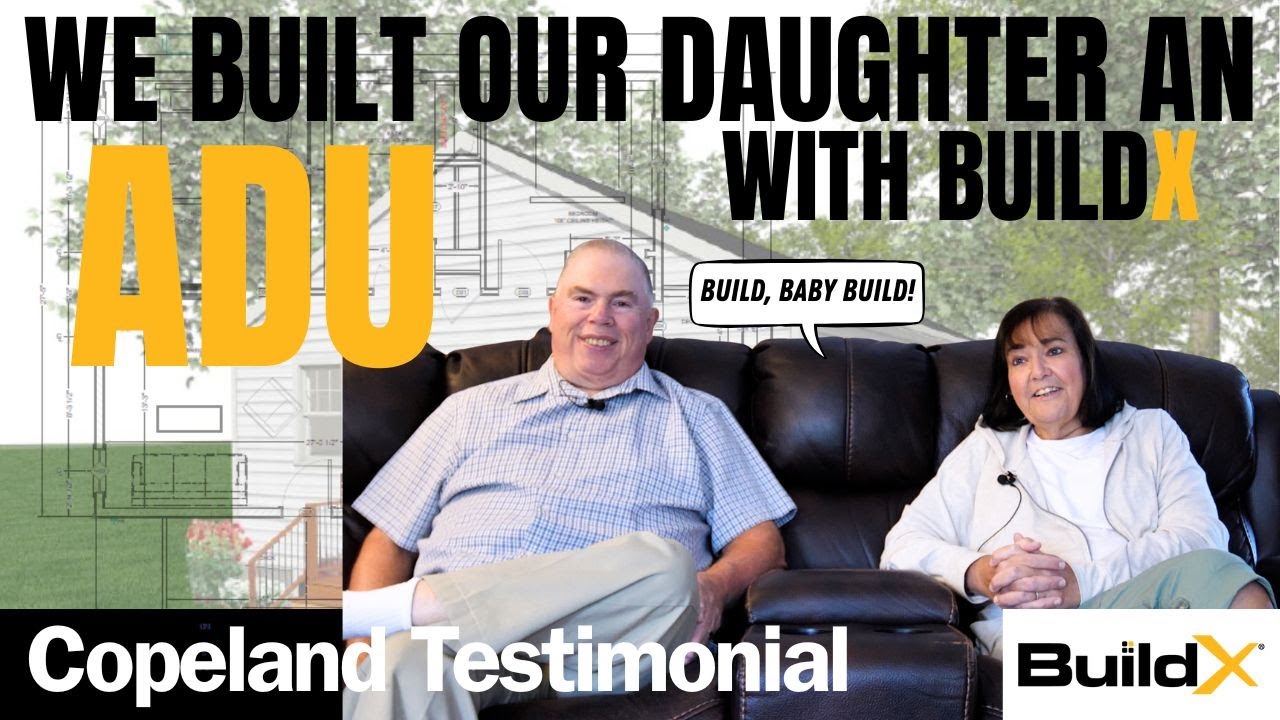
Watch: Building Independence for Our Daughter | The ADU Solution
What Does the Process Look Like When You Build for Health Sensitivities?
The Copeland project followed certain clear steps that show how a health-safe build is different from standard construction.
First, we talked with Dean and Alice at their kitchen table in Marshfield. Other builders they contacted were automated and Alice couldn’t even get someone on the phone. We came to their home, and spent about an hour discussing what they wanted, what they needed, and what their concerns were. That conversation outlined the health needs before any design work began.
Second, we researched on our own. After learning about Christina's autoimmune conditions, we checked out different material choices on our own. Alice said it wasn’t just a matter of telling the builder what they wanted and having it put in. We came back with our own ideas, choices the family hadn’t thought of. As Alice put it, we weren’t just doing what they asked, we were taking the extra step.
Third, every decision about material was made before the construction started. We described our approach to Alice: when we built this ADU for Christina, we didn’t want to find out two years later that she couldn’t live in it any longer. The space needed to be clean from the first, because Christina wasn’t going to have any toxins that were present in the family's existing home without anyone knowing about it.
Fourth, the project was finished in less than 100 days, with work done every day and constant communication from project manager Justin. The health-safe materials didn’t upset the timeline or create gaps in the construction schedule.
Did the Health-Safe Approach Actually Work?
Christina moved into the finished ADU and hasn’t had any health issues since. Dean said she is very comfortable and hasn’t had any bad reactions. She is living in a healthier environment than she had in the family's main house.
Beyond the health issue, the ADU gave Christina something her family had been working to provide: independence. Alice said that before the ADU was built, Christina's needs weren’t being met, and the family was having trouble figuring out what to do about it. They’d thought about buying a condominium or renting an apartment, but they couldn’t control the building materials and because the units next door were unpredictable those choices wouldn't work for someone with chemical sensitivities.
Now Christina has complete control over her home environment. She pays her own bills, manages her own ADU, and can feel like an independent adult but can still stay close enough to her parents for the support she still needs. Alice said it’s the way it’s supposed to be. Your kids are supposed to grow up and move on, and they are hoping this normalizes things a little bit more.
Is a Health-Safe ADU the Right Solution for Every Family?
No. A health-safe ADU makes sense when the family member has sensitivities that usual construction materials are likely to provoke and when the family is able to build on their existing property. If your family member's health issues doesn’t involve chemical or environmental sensitivities, a regular ADU built with conventional materials will work well without the additional material substitutions.
It is also worth saying that the Copeland project was a joint effort. The family came to us with some knowledge of what Christina needed and we built on that knowledge with independent research. If you are thinking about this idea, start by working with your family member's medical team to identify the specific issues. The more specific the list is, the more specific the material substitutions can be. A builder who says they can make any home "healthy" but doesn’t ask what specific conditions they are building for, is not dealing with the problem in the way it needs to be.
Massachusetts allows homeowners to build one ADU by right under the Affordable Homes Act. You can review the full requirements at mass.gov. Building code, health code, and dimensional requirements still apply at the city level, so checking on the local rules is a necessary early step no matter what materials you select.
What Would a Health-Safe ADU Look Like on Your Property?
If someone in your family is dealing with autoimmune disease, chemical sensitivities, or environmental health challenges, the question isn’t if a safe living space is possible. The Copelands proved it is. The question is if you can find a builder who will treat your family member's health as a design requirement instead of an afterthought. That is the conversation worth having.
We will sit down with your family, learn about your specific health requirements, and give you a clear picture of what material substitutions your ADU project would involve.
Tour a completed ADU in person or Request a Free Consultation
Call us: (781) 627-7000