
Should You Build the In-Law Apartment and Remodel the Main House at the Same Time?
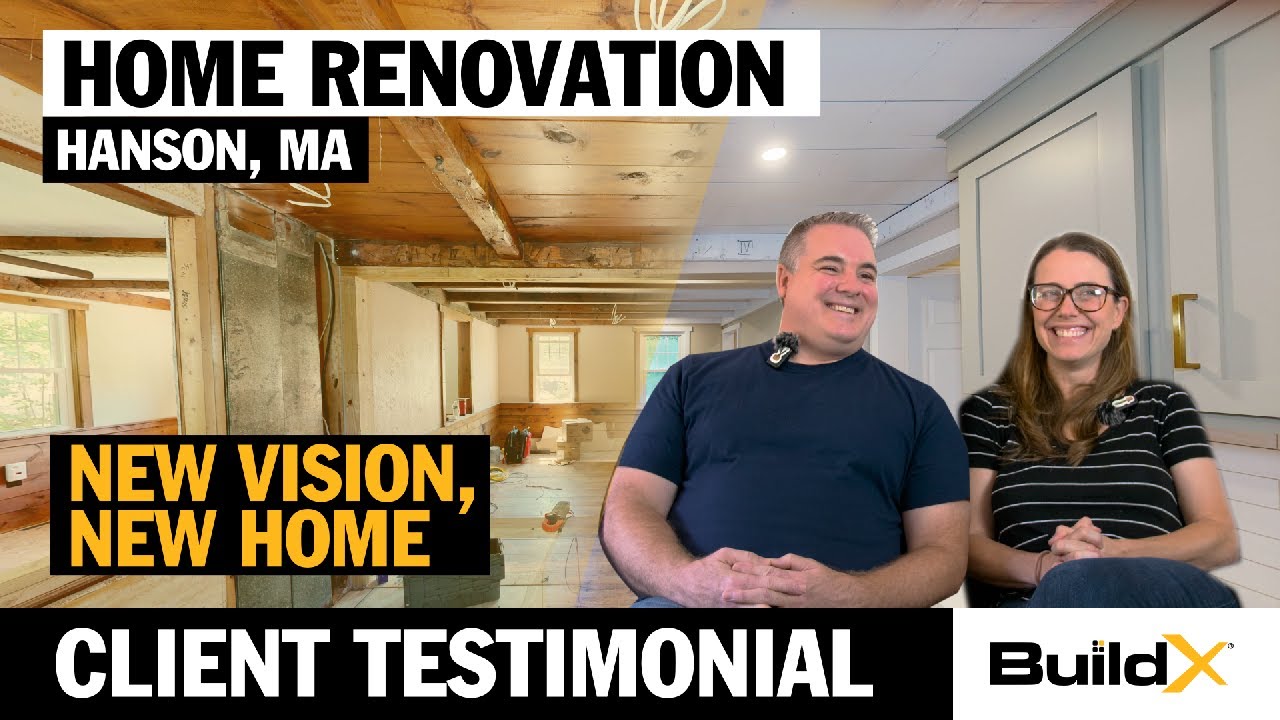
Watch: In-Law Apartment Plus Whole-Home Remodel | Client Testimonial
Your in-laws need a place to stay close to you and you have enough space to build the house next to you, but you're already planning to remodel your older home. Families in this situation ask us all the time: "If we take on both jobs, will it be too much?" "Will we be living in a full-on construction zone for the next year?" Here at BuildX, we'll do the worrying so you don't have to.
My name is Buz Artiano, founder and CEO of BuildX. We have designed and built dozens of ADUs, or accessory dwelling units, attached in-law apartment additions, and also done whole-home remodels across South Shore and Plymouth County, Massachusetts. We design the units, get all the permits, and handle the construction. Every project we do goes through the building department of the town it's located in. And the question of "Who sleeps where? When?" is the first question we answer.
Greg and Talia Mehra are two former BuildX clients. They had two things they wanted to accomplish: build an in-law apartment that's connected to the main house for Greg's parents, and also remodel the current house for their three kids. So their question was how to do that and make sure the kids weren't living with sawdust and paint, and that both sets of parents could sleep comfortably. That's where we come in.
Quick Answer: An in-law addition and main house remodel CAN run as one project, if they are done in two separate parts, one after the other one, instead of all at once. For the Mehra project, we built the attached in-law apartment first, and Greg's parents kept living in the main house. After the addition was built, the parents moved in, and then we remodeled the main house with the Mehras living in it. It took about six months, and we gave them one person as a point of contact throughout the entire process, and an online schedule as well. The lesson here is to choose the order that provides a place to live for your family that's not seriously under construction.
In This Article
- Long Answer: Can You Run Both Jobs, Under One Project, WITHOUT Living in a Construction Zone?
- Which Phase Should Go First?
- What Changes When One Team Owns Both Scopes?
- Why the Finished In-Law Makes the Second Phase Possible
- How Do You Know If Your Family Can Handle Both Phases?
- When Should You Split the Two Jobs Instead?
- Deciding the Order on Your Own Property
Long Answer: Can You Run Both Jobs, Under One Project, WITHOUT Living in a Construction Zone?
Yes you can, and the reason is that a project talks about the contracted work not each separate demolition by itself. A combined project on one single property does one active work zone at a time. Phase one will be built while the rest of the property stays unchanged and lived in. Then Phase two will begin after phase one is finished and somebody is living in it. Nobody will have to sleep between two open work areas, because two open work areas won't exist.
Most Massachusetts families considering this aren't really deciding between one job or two jobs. They're choosing between one builder running two different projects one after the other on a single schedule, or two separate projects at least a year apart, each with its own crew, its own start date and its own start-up, and its own disturbance to the same family. The second idea spreads the disruption out but it doesn't take it away and it makes the family move around twice.
Talia described the plan for their property this way: step one was to get the in-law addition built, and the second step was renovating the main house, getting them moved in and comfortable. That's the whole plan. Two different phases, one after the other, agreed on by everyone before anyone broke ground.
Which Phase Should Go First?
The order of it is the entire decision, and it's decided by one question instead of a preference: where does each part of your family physically live while each phase is being done? If you answer that then the question of the order is answered.
Two orders will work on most properties. Both parts of the project will get built but each one requires different things of the people living there, and they have different risks if the schedule stretches out.
Running the In-Law Addition First
The new construction part will be built on ground nobody's living on, so the main house stays undisturbed and livable during the whole first phase. When the addition is finished, the people going to live there can move in. That move is what frees up the space that is needed for phase two. On the Mehra property, Greg's parents lived in the main house while the in-law apartment was built, then they moved into the in-law apartment when the crew changed over to renovating the main property.
In this order the family has to agree to living beside ongoing construction during the first phase, and it has to have the addition be completely finished, not just close, before the second phase can start. It works for families who can't move a parent off the property, and families who don't want to pay for somewhere else to live while their house is being remodeled.
Running the Main House Remodel First
This is where the main house is remodeled before anyone new moves in, so the family moves back into a finished home and then the addition next to it is started. The remodeling is the disruptive part, and it involves the household with the most people in it.
This schedule requires that the family solves its own housing during the remodeling work, because there isn't a finished addition yet to fit anybody in. This works for families with somewhere nearby to stay, or a remodel timeline short enough to live with. It's the harder way to do it when an elderly parent is already on the property and needs to stay there.
What Changes When One Team Owns Both Scopes?
When just one builder is doing both jobs, there isn't an issue with the handoff. There isn't a second bidding round, no second mobilization, and no argument about which crew is responsible for something that started in phase one and then becomes a problem in phase two. There's one schedule that's for both projects and just one person to talk to about any part of it.
On the Mehra project that person was Kevin Healy, our point man for the property. Greg said that they always had a point man to go to, that Kevin would delegate their concerns out, and the problem would be fixed. There was also a consistency with the people who showed up as well. Greg said there was somebody at the property almost every week, including Sundays, and that the schedule was available online so the family always knew what the plan was for the week ahead.
There were still some concerns. Greg said so directly and he also said that an answer came back within a matter of days. He never says exactly what those concerns were so think of it like this: a family reporting response time as they were going through it, not just a documented list of problems. Response time is the part of the job you can actually require of the builder before you hire them. These are the four commitments that you should talk about when one company asks to do both projects.
- One named point of contact who will handle both phases
- One published schedule that shows both of the projects on the same calendar
- One crew that works on phase and then phase two without a gap
- One response that's standard for questions that are brought up during the work
Why the Finished In-Law Makes the Second Phase Possible
When you are doing a remodel of the entire home the crew needs the house empty enough to work in. Gut work makes kitchens and bathrooms out of service, opens walls, and puts dust and cold into rooms that people need to sleep in. That's why the remodel part is the one that displaces a household, and it's why so many families put off their decision to do it. They price the work and then find out that there is another invisible cost, which is six months of living somewhere else.
We schedule the addition first whenever the property will let us, because the finished addition becomes the swing space, which means it will be a place for the family to live while their home is being worked on. It's the one part of a combined project that gets used twice. First it's the place the whole job was designed around. Then, on the day it's finished, it becomes a place to live that keeps everybody on site during the loudest phase of the work. If you put this order in reverse, the family will have to pay to be somewhere else.
On the Mehra property that's exactly what happened. Greg's parents didn't have to move off the property during the project, even through the winter, and Greg says the crew became part of the family for that six-month period. If you have a parent that can't reasonably be moved twice, or a family that has nowhere to go for a period of time, the first order we talked about is the one to map out on paper before you look at anything else.
How Do You Know If Your Family Can Handle Both Phases?
This isn't a question about tolerance or grit. It comes down to five checks you can use for your own property with family members, before a builder gives you a quote on anything. Each one talks about something that fluctuates, like where people sleep and which spaces have to be empty for someone to work in them. If you put them in order then you won't need to debate if that is the right way to go.
| What to check on your property | Why it decides the phase order |
|---|---|
| Where every person sleeps during phase one and phase two | A phase that leaves someone without a bedroom can't be the phase that goes first |
| Which space has to be empty before work starts in it | Gut work needs empty space. New construction on open ground doesn't |
| Whether someone needs quiet, stable access, and a predictable routine | An occupied phase requires more of elderly parents and young kids than a vacant one does |
| What is the schedule for both projects | Two builders means two schedules and two starts with a gap between them |
| Who you call when something needs fixing in the middle of a project | One point of contact is what makes a concern turn into a repair and not a debate |
The Mehras answered the first check before anything else, and the rest followed from it. Greg's parents were staying put on the property, so the phase that required an empty house had to be the second one. That single answer set the order, the move-in date, and the sequence the crew worked in.
When Should You Split the Two Jobs Instead?
We build both scopes and we would rather build both, which is exactly why this next part is worth hearing from us. Combining them is the wrong call when the property has no swing space in it. If the addition is being built for someone who does not live on the property yet, and the household doing the remodel has nowhere to go, the combined project does not create the housing that makes the second phase survivable. In that case, splitting the work and giving the household a real place to land beats compressing the calendar.
The other case for splitting is an undefined second scope. If the in-law apartment is drawn and the main house remodel is still a conversation about what you want to do someday, running them together turns one project into a moving target. Get the second scope drawn, or run it later as its own job. When you interview builders, ask them about the sequence and where your family lives during each phase before you ask them for a number. The builders worth shortlisting will have an opinion about the order, and they will tell you when your property does not support one.
One more honest limit. The Mehra project is a single family on a single property in Hanson, with one household in the main house and parents moving into a new attached apartment. What carries over to your property is the logic of the order, not the specifics of theirs.
Deciding the Order on Your Own Property
The decision you have to make isn't whether to do both projects. It's which one goes first and where your family lives during the construction. When the people who will live in the new in-law apartment already live on the property, building the addition first is a way to keep everybody housed and allows the swing space you will need for the remodeling. When they are not, you need to carefully consider the order before you decide on one combined schedule.
That decision is easier to make when you are actually on the property rather than just reading about it. Bring us the two plans and we'll lay the order with you.
We'll walk your property, see where each part of your family can live during the addition and during the remodel, and then lay out the phase order that keeps everyone on site from the first day to the last.
Walk through a completed BuildX home or Request a Free Consultation
Call us: (781) 627-7000