
Is Building an ADU Cheaper Than Paying Rent?
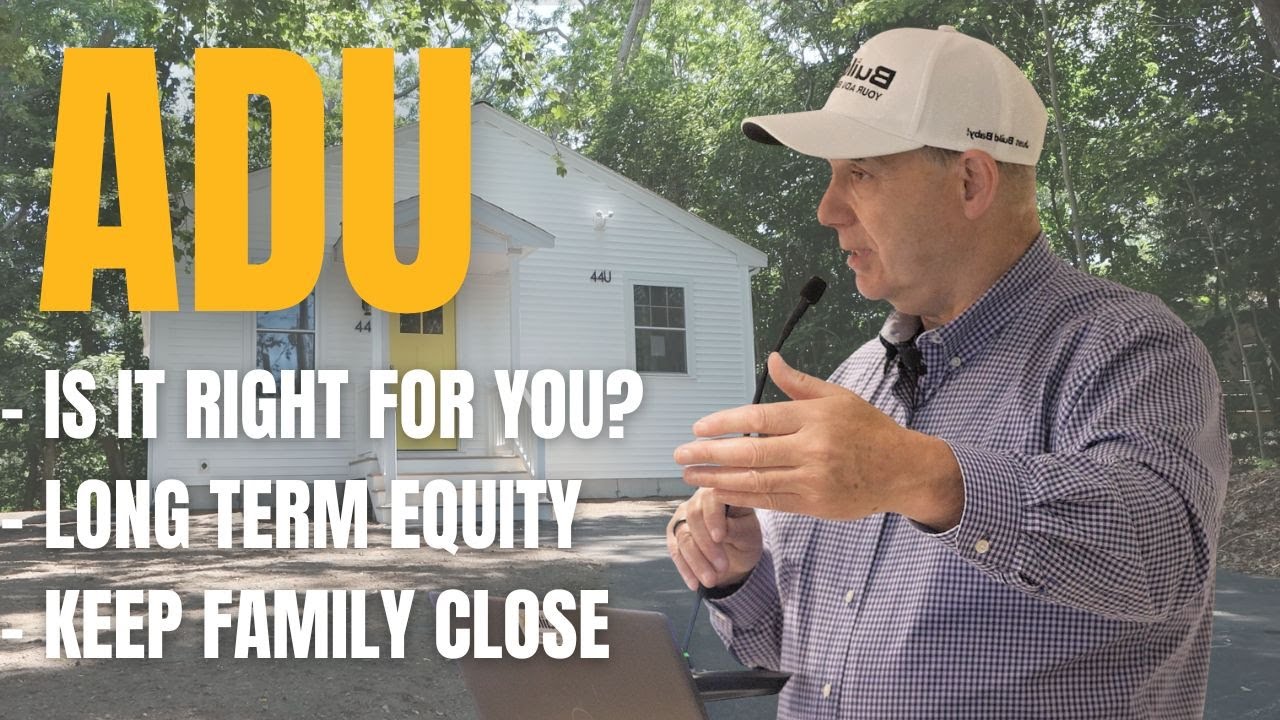
Watch: Why is an ADU Right For You in Massachusetts
If you are paying rent right now, you already know the numbers don't work in your favor. Every month, you pay another $2,500 to $3,500 out of your bank account and it goes straight into someone else's mortgage. After five years, you will have paid $150,000 to $210,000 and not have anything to show for it: no equity and no ownership with no control over your housing situation. The rent keeps going up and the difference between what you are paying and what you could be building just gets bigger.
My name is Buz Artiano, and I am the founder of BuildX. We've built dozens of ADU projects across Massachusetts, mostly around the South Shore and Plymouth County areas. We are the only team you need, we handle design, permitting, and construction. So we see every phase of a project from the first site visit up until you move in. We deal with septic constraints, zoning issues, and the state's new ADU laws. Almost 25 percent of the families who call us are young adults between 25 and 40 who are tired of renting and want to put their monthly payment toward something they actually own.
We hear this same thing from all these families: we are just throwing money away. They are right. The question is whether the cost of building an ADU on a family member's property can compare with rent on a monthly basis, and if the long-term amount will justify the initial investment. That is what this article talks about.
Quick Answer: For many Massachusetts renters paying $2,500 to $3,500 per month, an ADU that is financed with a home equity line of credit can give the same or lower monthly payment while building real equity. A completed ADU in Massachusetts usually costs $250,000 to $400,000 depending on site conditions, septic, and finishes. If it is financed with a HELOC at current rates, monthly payments could be close to what most renters are already spending. The difference is that every payment goes toward an asset that your family owns.
In This Article
- Can Your Monthly ADU Payment Actually Be Lower Than Rent?
- Why Does Renting Feel Like Throwing Money Away?
- What Does It Actually Cost to Finance an ADU?
- How Does the Long-Term Math Compare?
- What Are the Real Downsides of Building an ADU Instead of Renting?
- Is an ADU the Right Move for Every Renter?
- What Would Your Money Build If You Stopped Paying Rent?
Can Your Monthly ADU Payment Actually Be Lower Than Rent?
In many cases, yes. The average rent in Massachusetts is approximately $2,800 to $3,200 per month depending on the rental and its location. In the Boston city area, a two-bedroom apartment averages over $3,400 per month. On the South Shore and in Plymouth County, rents have gone up steadily and show no signs of going down.
A completed ADU in Massachusetts usually costs between $250,000 and $400,000. The three things that will affect the price are septic and utility connections, site conditions such as slope, ledge, and access, and size and the type of finishes. An ADU up to 900 square feet is allowed by right by Massachusetts law (mass.gov).
If a family member has enough equity in their home, a HELOC is often the least expensive way to finance. Most home equity lines are interest-only during the period of the draw and closing costs are hundreds of dollars instead of thousands. On a $300,000 HELOC at current rates, the interest-only payment could be between $1,800 and $2,500 per month, depending on the rate. That is close to what most Massachusetts renters are already paying, with one crucial difference: the renter builds nothing, and the ADU owner builds equity every month.
Why Does Renting Feel Like Throwing Money Away?
We hear this phrase from nearly every young adult who contacts us. Families tell us they are just throwing away $40,000 a year. That money goes straight to a landlord so they're not building any equity or getting a stake in ownership. And the quality of life in many rental situations is not ideal. There are shared walls, noise from upstairs neighbors, not enough parking and yearly increases in rent that they can't control.
The emotional issues are just as important as the financial ones. If you are renting you are always living with someone else's decisions. The landlord decides on lease renewals, maintenance timelines, pet policies, and noise levels. An ADU that is built on a family member's property gets rid of all those concerns. Especially when the ADU is detached, it really feels like your own house, because it is.
What Does It Actually Cost to Finance an ADU?
The financing options for ADUs are still changing, but several of these options already in place work well. The most common ones include:
Home equity line of credit (HELOC): This is the least expensive way to go if the homeowner has enough equity. Most HELOCs are tied to the prime rate, and will offer interest-only payments during the draw period, and have closing costs in the hundreds of dollars. If the homeowner's property is worth $900,000 and they owe $500,000, they possibly could access $200,000 to $220,000 at standard lending limits of 80 percent loan-to-value. Newer loans are going toward 90 to 95 percent.
Construction-to-permanent loan: This kind of loan will pay for the building of the ADU and then will change over to a standard mortgage. During construction, you'll pay a small monthly fee which is around $150 per month in some programs, instead of full principal and interest. After the construction is finished the loan will change over to interest-only for a draw period, usually 10 years, before changing to a fully amortizing mortgage. There isn't any prepayment penalty.
FHA 203(k) rehabilitation loan: This loan is good for borrowers with less equity or higher debt-to-income ratios. FHA programs will allow higher ratios than conventional lending. After six on-time payments, you could qualify for refinancing at a lower rate without having to fully re-qualify.
The main point for renters is that with a HELOC loan, you aren't making a principal-and-interest mortgage payment from the first day. Instead you're paying interest only on the amount used, which keeps monthly costs lower during and right after construction.
How Does the Long-Term Math Compare?
Let's say there is a renter that's paying $3,000 per month. Over five years, that is $180,000 with no equity and over ten years, $360,000. With the normal amount of years that a young adult might rent before buying, the total can easily be more $400,000.
Now suppose there is a family that builds a $300,000 ADU and finances with a HELOC. Their interest-only payment might be $2,000 to $2,500 per month depending on the interest rates. They can decide to make additional principal payments on their own schedule, and there is no prepayment penalty. Every dollar of principal they pay builds equity in an ADU on property their family owns.
There are also costs that renters do not have to pay. Property taxes on the improved value of the land, homeowner's insurance, and maintenance are real costs. But you can predict these costs and they come with ownership. The renter's $3,000 per month comes without any benefits and the uncertainty of annual rent increases.
We will check the financing options before we give a quote, because the monthly payment matters as much as the total cost of the project. A family paying $3,200 per month in rent doesn't care if the ADU costs $280,000 or $320,000 if they both have a monthly payment below what they're already spending. What they care about is if the payments works with their budget and if they are building something that is real. We build our proposals with these things in mind, because we have seen families walk away from building an ADU that they could afford, because nobody talked about the cost in ways they could compare to their current rent.
What Are the Real Downsides of Building an ADU Instead of Renting?
This is not a decision without drawbacks, and you should understand them before making a commitment.
Upfront commitment: An ADU needs either a large home equity or a construction loan. If the homeowner doesn't have 20 percent or more equity in the property, the options for financing get smaller and the rates go up. This way doesn't have a zero-down-payment.
Site dependency: You have to have a family member's property that has enough lot size, setback clearance, and a large enough utility or septic. Not every property has those things. Just the septic by itself can add $40,000 to $60,000 to the project if the current system isn't big enough to handle the extra flow. We inspect the septic before we give a quote, because that one single thing can decide if a detached ADU is financially possible on your lot.
Construction timeline: Even with a capable builder, you will have a permit and construction timeline that'll take months, not days. You'll probably end up paying rent at the same time as construction costs during the transition period.
Family dynamics: Living on a family member's property works for many people, but it isn't for everyone. That closeness that makes it convenient also means there is less physical separation than you would have with a rental that stands alone. We always build detached ADUs if the lot will allow, just because that separation matters.
Is an ADU the Right Move for Every Renter?
No. Building an ADU makes sense when three conditions are met: a member of the family has a property that has the right kind of lot and enough equity, the renter can commit to staying in one place for at least five to seven years to get back the upfront investment, and the monthly is the same or less than current rent.
If you need flexibility to move for work, if no family member has a property that will qualify, or if the financing won't work, then continuing to rent might be the best thing for now. We are not in the business of talking families into projects that don't make financial sense. When we talk with families, the first thing we discuss is if the finances work, not about what we can build.
You should also talk to more than one builder and more than one lender before making any commitments. Get your own HELOC quotes and make your own comparisons. The families who make the best decisions are the ones who do their homework first.
What Would Your Money Build If You Stopped Paying Rent?
Every month that you write a check for rent, your money goes into someone else's equity. For families with the right property and the right financial position, an ADU can take that same monthly payment and put it toward ownership, stability, and a physical building that your family controls. The math is not just an abstract number. It is a comparison you can make with real numbers from a real lender on a real property. The question is whether you are ready to make that comparison.
We will take you through your family's equity position, connect you with lenders who specialize in ADU financing, and help you compare the real monthly cost of building with continuing to rent.
Tour a completed ADU to see what you are building toward or Request a Free Consultation
Call us: (781) 627-7000