
What Should You Check on Your Insurance Before Building an ADU?
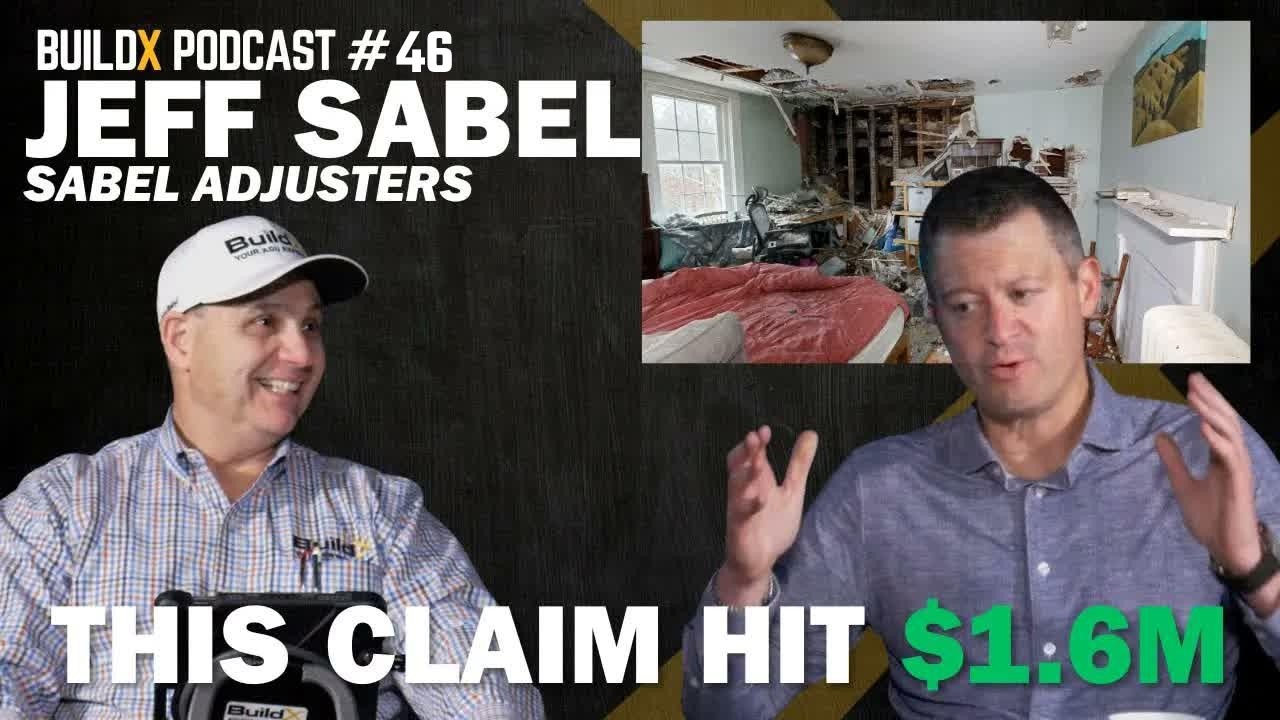
Watch: A Fire, a Blown-Out Wall, and a 2-Year Rebuild: The Insurance Truth Nobody Tells You
You are about to invest $250,000 or more in an ADU. You've evaluated your lot, looked into financing, and started talking to builders. But have you opened your homeowner's insurance declarations page? Most people don't even think to look at that. They pay their premium every year, assume they are covered, and never look at the details. That assumption can be detrimental if something goes wrong with their existing home during or after construction.
My name is Buz Artiano, and I started BuildX. Since then we've built dozens of ADUs all over Massachusetts, but most of our builds have been around the South Shore and Plymouth County areas. We handle all the design, permitting, and construction ourselves, including dealing with septic constraints, lot coverage limits, and local zoning requirements. I've also been on more than a thousand fire scenes over the course of my career. That experience has taught me something that most builders never talk about. The biggest financial risk to your ADU investment is not construction cost going too high, it's your existing home being underinsured.
In this article we will talk about specific items you should go over on your insurance declarations page before starting any ADU project. We're not insurance agents, and we are not selling policies. We are just builders who have watched families lose hundreds of thousands of dollars because nobody told them to check their coverage before they started building. We do not want that to happen to you.
Quick Answer: Before building an ADU, open your homeowner's insurance declarations page and check four things: Coverage A (dwelling) at a minimum of $350 per square foot, code coverage at 25 percent or higher (not the standard 10 percent), contents replacement cost coverage (look for endorsement 0490 or 70 percent of Coverage A), and additional living expenses at 20 percent of Coverage A. These four items determine whether your family can rebuild if something happens to your primary home.
In This Article
- What Should You Actually Look for on Your Declarations Page?
- Why Does 10 Percent Code Coverage Fall Short in Massachusetts?
- How Do You Know If Your Dwelling Coverage Is High Enough?
- What Are Endorsements 0502 and 0490, and Do You Need Them?
- Should You Use a Local Insurance Agent or a Big-Box Insurer?
- Is Reviewing Your Insurance Really Necessary Before Building an ADU?
- Your ADU Investment Deserves a Protected Foundation
What Should You Actually Look for on Your Declarations Page?
Your declarations page is a page that basically sums up your homeowner's insurance policy. It lists every category, the dollar amount that is covered for each one, and any extra endorsements your agent has added. Most people never read this, but you need to before you commit to an ADU project.
There are four categories you need to look over with your agent. Each one has very specific numbers, and if any of them fall short, that can create a gap that no amount of ADU planning can fix.
Coverage A: Dwelling. This is the amount your insurance will pay to rebuild your primary home. Insure your home at a minimum of $350 per square foot. If your home has upgraded finishes, custom millwork, or high-end kitchens, insure at $450 per square foot. Your insurance company has a formula they use to estimate the value of your house, but it doesn't always show what the actual rebuild would cost in today's market. Ask your agent to walk through the math with you.
Code Coverage (Law and Ordinance). This covers the cost difference between what your house was originally built with and what today's building codes require. Standard policies typically include 10 percent of the value they assigned to your home for upgrades to bring it up to current code, but that's not enough. Get a minimum of 25 percent. If your policy does not offer 25 percent as a standard option, you might have to pay for an endorsement. The cost for that endorsement is usually pretty minimal, a lot of times it's less than $200 per year, but the protection it gives you can be worth hundreds of thousands of dollars.
Contents Replacement Cost. Standard contents coverage pays the depreciated value of your belongings, not the cost to replace them. You want to make sure you have replacement cost coverage. Look for endorsement 0490 on your declarations page, or check whether your contents coverage is set at 70 percent of the home's value. If your policy shows 50 percent, you probably don't have replacement cost coverage and should ask your agent to add it.
Additional Living Expenses. If your home becomes uninhabitable, this is what pays for temporary housing, meals, and other expenses while you are not able to live in your house. The standard is 20 percent of the home's value. If your dwelling coverage is at the right number, 20 percent should give you plenty of living expense protection. Some premium policies offer unlimited living expenses, but those policies can cost $10,000 to $30,000 per year and are really meant for very high-value properties.
Why Does 10 Percent Code Coverage Fall Short in Massachusetts?
Ten years ago, 10 percent code coverage was sufficient, but not anymore. Massachusetts has significantly increased its energy code requirements, electrical standards, and septic regulations. When a home built in the 1890s or even the 1970s suffers a major loss, the cost to rebuild to current code is going to be much much higher than the cost to build exactly what was originally there.
We worked on a fire loss involving an 1890s building that still had partial knob-and-tube wiring, barely any insulation, and single-pane wooden windows. The original code coverage on the policy was $70,000, which was 10 percent of the value of the house. But the actual cost to rebuild to code was $360,000, which is more than five times what the insurance would have originally covered. That would have been catastrophic if they hadn't had the right endorsements in place.
The reasons behind such high costs are specific to Massachusetts. Current energy codes in a lot of places in Massachusetts make it extremely difficult to rebuild with gas heat. Electrical needs for modern homes can require a lot more amperage than older panels gave you. If your septic system fails during a loss event, you need a Title V inspection and potentially an entire new system. In a nitrogen-sensitive area with a well, an alternative septic system can cost $50,000 to $75,000. All of these costs are mandatory.
This is why we tell everyone we work with to review their code coverage before even thinking about starting an ADU project. If the main home is underinsured for code upgrades, if something happens during or after construction, it could wipe out all the equity you just invested in your ADU.
How Do You Know If Your Dwelling Coverage Is High Enough?
Most homeowners assume their insurance company has calculated their home's value correctly, but that's a very risky thing to assume. Insurance companies use automatic cost estimators that factor in square footage, construction type, and regional averages. But they don't usually account for what materials or labor currently cost, or the specific code requirements in your area.
We recommend multiplying your home's square footage by $350 to get the correct value. If your home has higher-end finishes, use $450 per square foot. Then compare that number to the Coverage A amount on your declarations page.
On that fire loss case we mentioned, the home was insured at roughly $690,000. That sounded pretty good until we assessed the actual damage. The building repair alone was $1.3 million! Without the endorsements on that policy, the family would have been short by more than $600,000 to re-build. They would have had to sell the property and try to find something else cheaper in a market where homes under $600,000 barely even exist.
Your agent can run a replacement cost analysis for your specific property. Ask them to do it before you start your ADU project.
What Are Endorsements 0502 and 0490, and Do You Need Them?
Insurance endorsements are add-ons to your standard policy that give you extra coverage. Two endorsements are worth asking your agent about specifically.
Endorsement 0502 is a guaranteed replacement cost endorsement. When you have this, it increases your coverage in all categories (dwelling, contents, code, and living expenses) based on the actual and current cost to rebuild, not the face value of the policy. This endorsement is kind of rare, but when you have it, it can be the difference between a full rebuild and you being forced to sell the property. On the fire loss we worked on, they had that endorsement 0502 and it doubled their coverage for all four categories. Without it, the family would have been in serious financial trouble, but instead they ended up having enough coverage to rebuild completely.
Endorsement 0490 is a content replacement endorsement. Without it, your contents coverage pays a value that has gone down over time, so basically the insurance company assigns a used value to your belongings. But when you have replacement cost coverage, the policy pays what it actually costs to replace your items at today's prices, not what you would get if you sold them.
Both of these add ons are usually fairly inexpensive. The guaranteed replacement cost add on and the contents replacement cost add on together might add $100 to $200 per year to your premium. That is a small price for coverage that could be worth hundreds of thousands of dollars if you have a claim.
We look at insurance preparedness the same way we do septic or zoning before quoting an ADU project. If a family is going to pay $250,000 to $375,000 for an ADU and their current home is insured at $200 per square foot with 10 percent code coverage, there is a difference that no ADU design can fix. We mention this early because we have watched families get unpleasantly surprised by it. Two checkboxes on a policy, costing less than $200 per year, can give you hundreds of thousands of dollars in additional protection. That is the kind of detail that separates a local agent who understands your property from just a call center that processes your payment.
Should You Use a Local Insurance Agent or a Big-Box Insurer?
This isn't a question we take lightly. The family in the fire loss case we talked about was saved by two checkboxes their local agent had added to the policy. Those additions probably cost an extra $100 to $200 per year but without them, the family would have lost their home.
Big-box insurers and policies you get online compete mostly with price. They can often offer lower premiums because they take out the add ons, reduce code coverage to minimums, and limit things like water damage at $10,000. For a family who is paying $2,500 per year with a local agent, and changes to an online policy that costs $1,200 per year it seems like a savings of $1,300. But that savings can disappear with just a single claim.
A good local agent understands what the specific risks are in your area. They know which add-ons are important for the homes in your town, they know how Massachusetts building codes have changed, and they can explain your policy declarations page line by line. When the family in this case had their fire, their agent immediately referred them to a public adjuster because the agent understood how complex the loss was. That level of personal help doesn't come from a 1-800 number.
We recommend that every family building an ADU sit down with their insurance agent, go over their declarations page, and specifically ask about the endorsements that are discussed in this article. If your agent can't explain what endorsement 0502 or 0490 does, that tells you something about the relationship.
Is Reviewing Your Insurance Really Necessary Before Building an ADU?
We are builders, not insurance agents. We don't sell policies or get referral fees from insurance companies. So you might wonder why a construction company is writing about homeowner's insurance at all.
The answer is simple: we've seen what happens when families put hundreds of thousands of dollars into building an ADU and then find out their existing home is underinsured. The money you put into an ADU doesn't disappear if the main house has a fire, but the family's finances can collapse if the insurance doesn't pay them enough to cover the rebuild. We bring this up because it is part of the whole picture, and no one else in the ADU industry is talking about it.
If you review your declarations page and find out that your coverage is enough, you haven't lost anything but 30 minutes. However, if you discover problems, you have the chance to fix them before they turn in to a catastrophe. Either way, the review is worth doing.
Your ADU Investment Deserves a Protected Foundation
Building an ADU is one of the largest investments a Massachusetts family can make. Protecting that investment begins with making sure the home it sits beside is properly covered. Look at your declarations page, check your Coverage A at $350 per square foot minimum, make sure your code coverage is at least 25 percent and that you have replacement cost on contents, and review your living expenses. Then call your agent and ask about endorsements 0502 and 0490.
That process takes less than an hour, and the protection it gives you lasts as long as you own the property.
We will walk through your property, assess your lot and existing home, and help you understand what your ADU project requires from permitting to insurance preparedness.
Tour a completed BuildX ADU in person or Request a Free Consultation
Call us: (781) 627-7000