
Does Checking Your ADU Financing Options Hurt Your Credit Score?
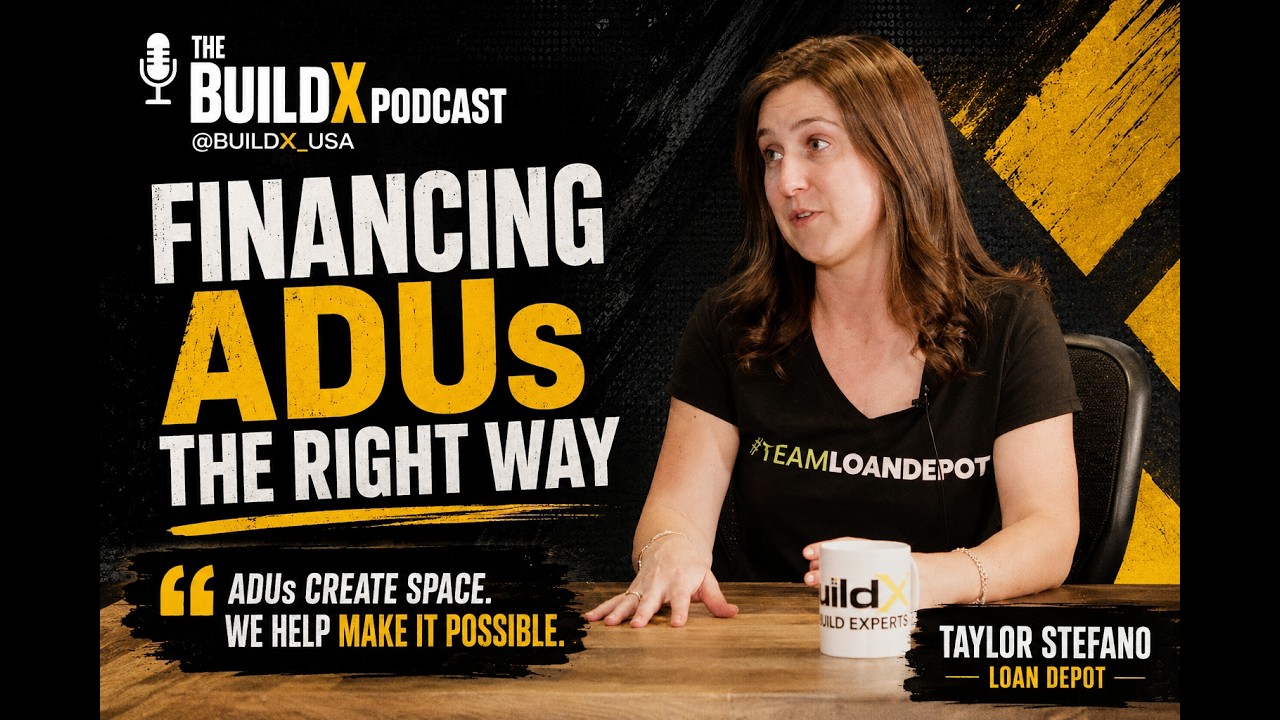
Watch: ADU Financing: How Families Are Building Together Without Buying Another House
You've been checking the numbers on building a backyard ADU. You want to know what it would really cost to build one and if the monthly payment amount is one you could afford. There's one thing that keeps you from picking up the phone and that's the worry that if the lender looks at your credit score, that score will be hurt. So you wait, but the only thing that waiting costs you is the answer.
My name is Buz Artiano, and I am the founder of BuildX. We've built dozens of ADU projects across Massachusetts, mostly around the South Shore and Plymouth County areas. We are the only team you need: we do the design, permitting, and construction. So we see every phase of a project from the first site visit up until you move in. We evaluate septic constraints, zoning issues, utility connections and the requirement to get a permit from the city. We are part of the financing conversation on almost every building we do, whether it's from a home that's paid off to one that was bought last year with almost no equity in it. We're not a lender and we don't check anyone's credit. But we hear about this worry more than any other question about money, so we talked to a loan consultant with five years of experience to settle it once and for all.
Here's the honest answer. A credit check that happens when you first ask about financing doesn't lower your score at all. The one that can move it doesn't cost you much at all and recovers quickly. The real damage to a credit score comes from something else completely, and it's the one mistake we see homeowners make when they are in the middle of an ADU being built. Read through all of it below and you'll be able to see exactly where you stand without any risk to your credit score.
Quick Answer: A soft credit pull is the kind that a lender uses when you first ask them about financing. It gives them your scores from all three bureaus in about 30 seconds and doesn't lower your credit. Only a hard pull, which is a formal check when you actually apply for the mortgage, can lower your score, usually by a handful of points that will recover in just a few months. It doesn't hurt it to check your own credit. What actually damages a score is if you miss a payment or add a new debt in the middle of the building process. Asking the lender a question doesn't. You can find out exactly where you stand before you make a commitment to anything.
In This Article
- Will Checking My Financing Options Lower My Score?
- What's the Difference Between a Soft Pull and a Hard Pull?
- How Much Does a Hard Pull Actually Cost Your Score?
- What Actually Damages Your Credit During a Build?
- How Can You Check Your Own Credit Before You Call Anyone?
- When Should You Wait Before Starting the Conversation?
- Ready to Find Out Where You Stand?
Will Checking My Financing Options Lower My Score?
No, when you first sit down to talk about financing an ADU, a lender will run what's called a soft pull, and a soft pull doesn't affect your score. It's not something to be worried about at the beginning of the conversation.
A soft pull will give real information. The lender will see your scores from all three of the major credit bureaus, and what your existing debts are and it takes only about 30 seconds. That's enough for a lender to tell you what loan you can get and what your payment would be. A soft inquiry only shows up on the version of your report that you can see. A lender who looks at your file later can't see that you checked. In other words, you can get actual numbers without anyone else ever knowing.
What's the Difference Between a Soft Pull and a Hard Pull?
The word pull covers two very different actions, and the difference between them is the entire reason this fear isn't necessary. A soft pull, or soft inquiry, is just a look at your credit for information. It happens when you check your own credit, when a lender pre-qualifies you, or when a company you are doing business with reviews your account. It doesn't affect your credit score and you are the only one that can see. A hard pull, or hard inquiry, is when you formally apply for new credit, like a mortgage. It's the one that can change your score, and even then just by a little.
Here is how the two compare side by side:
| Soft pull | Hard pull | |
|---|---|---|
| When it happens | First financing talk, checking your own credit, pre-qualification | A formal application for a mortgage or new credit |
| Effect on your score | None | A small, temporary drop |
| Who can see it | Only you | You and future lenders |
| What it is for | Getting real numbers before you make a commitment | Approving an actual loan |
The Consumer Financial Protection Bureau puts the same difference between the two and the same advice confirms your right to pull your own reports for free. You can review the details at consumerfinance.gov.
How Much Does a Hard Pull Actually Cost Your Score?
Not much, and not for very long. When a mortgage lender does a hard pull, it usually drops maybe a handful of points, often somewhere between five to ten, and the effect goes away within a few months. Most credit companies stop counting a hard inquiry after about a year, even though the inquiry will show up on your report for up to two years. For a single mortgage application, this is nothing to worry about.
You are also protected when you shop around. If you make more than one mortgage inquiry in a short amount of time, like a couple of weeks to about 45 days, they are grouped together and will count as one inquiry. That means you can get several quotes for the same loan without getting separate dings, so comparing lenders doesn't work against you. People get into trouble when they apply for lots of different kinds of new credit at once, or even more important, miss payments. One hard pull for a mortgage isn't a big deal. The two things below are.
What Actually Damages Your Credit During a Build?
A few things do real damage to a score, and none of them is asking a lender a question.
- Missing a payment. Your history of payments is the one biggest factor affecting your credit score. Just one missed monthly payment can cost you far more points than a hard inquiry does and it lasts. If you don't do anything else while your ADU is being financed, pay every bill on time.
- Taking on new debt mid-process. This is the one we see people make a mistake with. Once you're in the middle of financing a large purchase, going out and financing a new car, a boat, or a room of furniture adds more debt to your profile at the worst possible time and can risk you getting an approval. The order is important: get the money for the ADU first, then go buy the car.
- Stacking several new applications at once. Opening a handful of different kinds of new credit in a short period of time, store card or a personal loan there, an auto loan on top of those, looks like a risk and can pull your score down further than any single mortgage inquiry. Shopping for a loan from different banks is protected but that doesn't apply to a bunch of unrelated accounts. While the ADU is being financed, wait on new credit you don't need.
There's a twist that catches careful people by surprise and we've seen it happen. You'd think that paying off every debt and have no balances would make you the perfect borrower but it can actually do the opposite. Lenders want to see active credit that's managed well, instead of the lack of credit, and they like you to have a couple of open accounts to judge you on. After a business was sold and every last debt was paid off, an attempt to open new credit was flatly denied for the reason that there wasn't anything left on the file to score. The way to fix it was to get a secured card, the kind where you put your own money down first, use lightly and the pay off for a few months until the person has enough credit to qualify again.
So if your credit is thin, the best thing to do is to carry a small, well-managed balance. If you have a credit card with a small limit, put a couple hundred dollars a month on it and then pay off the balance in full every single month, that will be a positive for your credit. That one thing will do more for your credit than almost anything else, and it's just exactly the kind of thing worth setting up months before you plan to build.
How Can You Check Your Own Credit Before You Call Anyone?
You don't have to wait for a lender to find out where you stand. Federal law gives you the right to a free credit report from each of the three nationwide bureaus, Equifax, Experian, and TransUnion, through the federally authorized site, AnnualCreditReport.com. Since the pandemic, those reports have been available for free every week instead of just once a year, and that access has been made permanent. The Consumer Financial Protection Bureau confirms that you can get this free weekly report. Checking your own credit never lowers your score, no matter how often you look.
One point is worth clearing up, because it confuses a lot of people. A free report and your exact mortgage score aren't the same thing. The free report shows what's on your credit, meaning your accounts, balances, payment history, and inquiries. It doesn't always include a credit score, and the free scores you see in a banking app or a service like Credit Karma sometimes use different scoring and a shorter part of your history than the one mortgage lenders use. So treat those numbers as a useful estimate but not the exact figure a lender will see. To see the specific mortgage scoring rules you can pay a small fee through a score service. That's the one place you will find the precise number a lender actually uses.
And if you truly have no idea what your score is, that's okay. A good lender would rather start with an accurate score than just a guess because the number that people think is accurate is often nothing like the real one.
When Should You Wait Before Starting the Conversation?
Here is where we will be straight with you, even though it's not the answer that gets us a phone call. A soft pull is close to risk-free, but it's not a magic wand. If you have missed any payments recently, your cards are close to maxed out, or your credit is very thin, then the credit score that you get may not be the one that lets you move forward yet, and no amount of checking will change that. The way to fix it is time and habits, not another check.
We build ADUs. We aren't a credit-repair shop, and we'd rather you spend a few months improving your credit and then call us when the number is right, instead of starting a process that stops halfway through. Finding out where you stand is still the first thing to do. Sometimes what you learn is that the smartest next step is to wait for awhile, and that is a win too, because you will have made the call with real information instead of fear.
Ready to Find Out Where You Stand?
The one thing you can't afford is to keep guessing. A soft pull will give you answers to the question that's been holding you back, give you real scores from all three bureaus in about 30 seconds, and doesn't hurt your credit at all. Whether the answer lets you start planning or tells you to spend a few months getting ready, you'll finally be working from facts instead of a fear that wasn't true.
We'll connect you with a lender who can run a soft pull, hand you real scores from all three bureaus in about 30 seconds, and map an ADU budget to your equity, all before anyone touches your credit for a formal application.
Walk through a completed ADU or Request a Free Consultation
Call us: (781) 627-7000