
How Do You Convince Parents Who Refuse to Downsize? (An Only Child's Plymouth ADU Story)
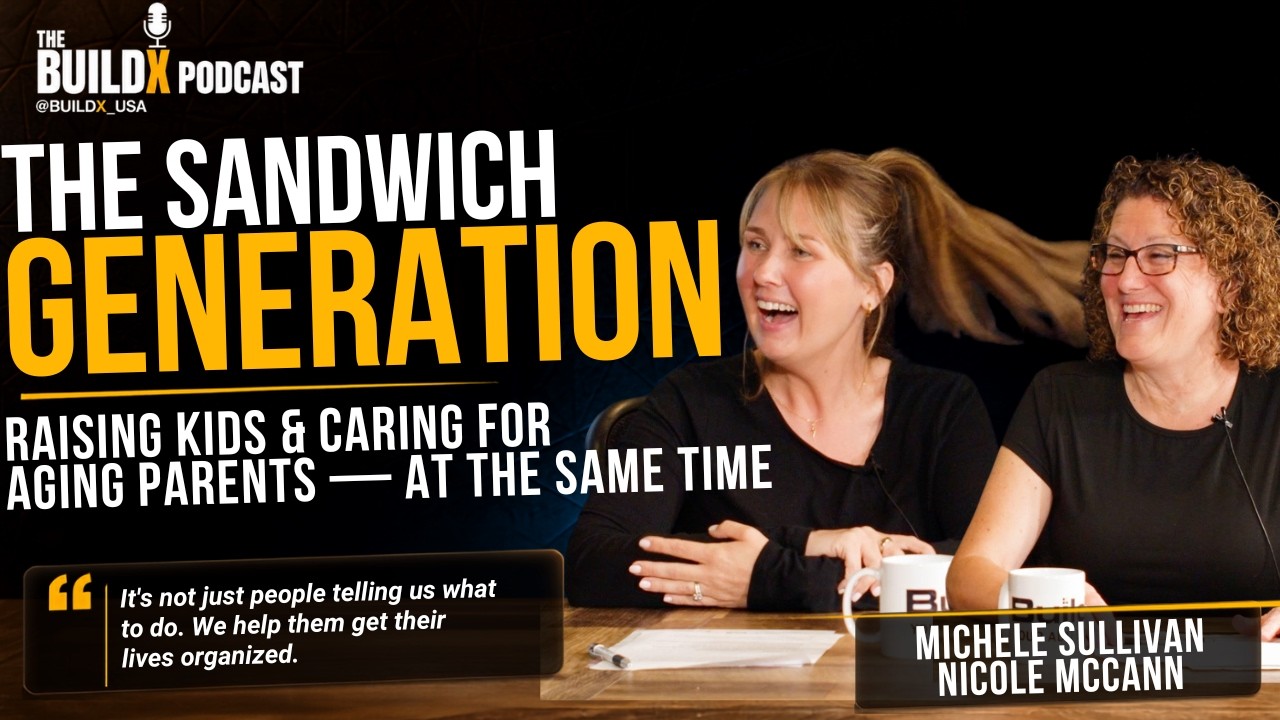
Watch: Downsizing a Whole House Into 900 Square Feet, Who Actually Helps You Do That?
You've talked about this with your parents more times than you can count. Their house is too large and the yard is too much to take care of. They're half an hour away and not getting younger. Every time you bring it up their answer is not yet and then one of them tells you privately that it's the other one that doesn't want to move. So three years go by and nothing changes.
My name is Buz Artiano, and I am the founder of BuildX. We've built dozens of ADU projects across Massachusetts, mostly around the South Shore and Plymouth County areas. We are the only team you need: we do the design, permitting, and construction. So we see every phase of a project from the first site visit up until you move in. We evaluate septic constraints, zoning issues, utility connections and the requirements for a permit from the city. Massachusetts allows one accessory dwelling unit by right in single family zoning areas, although municipal building code, health code, and dimensional requirements still apply to every project. You can review the state requirements at mass.gov.
What we have learned all we build ADU's is that the zoning isn't usually what stops a family. The parent is.
Nicole McCann is a BuildX client. We built a detached 900 square foot, two bedroom, one bath ADU on the Plymouth property she owns with her husband, and her parents moved into it after they sold their house in Pembroke. Nicole's an only child so there aren't any siblings to argue with, no other opinions and no one to decide the argument when the answer stayed no. She spent a long time trying to talk her parents into it before they agreed.
You should expect us to tell experiences from families who had a good outcome. We're this one because it took years, to persuade the parents, it didn't go smoothly, and Nicole is honest about the parts that were hard. Her story of what stalled her parents is more useful to you than anything we could say about ourselves.
Quick Answer: Parents who won't downsize are almost never stalling about the house. They stall over two things: each one privately blames the other one, and the parent who resists the most is worried about independence, not their own. Nicole McCann spent years arguing with her parents before they had a health issue that changed things. What finally convinced them wasn't another argument. It was a direct discussion about boundaries, space separation and then a walk through a finished ADU where her father could ask the builder questions directly. Her parents sold their Pembroke house and moved into a detached 900 square foot ADU in her Plymouth backyard.
In This Article
How Long Does It Take to Convince a Parent Who Keeps Saying No?
Longer than you want to hear. Nicole was wanting them to downsize long before Massachusetts had a by right ADU law to work with. In her words, she'd been trying to convince her parents to move, and downsize, for a while. When we asked whether she'd been wanting them to build an ADU before there were ADUs, she said yes.
The persuasion was just repeated and went nowhere. As she put it, "So it was conversations we just had over and over and over again."
That timeline matters for your planning, and not only for your patience. If you're making a budget for an ADU to be built next spring and your parents haven't agreed yet, you're not scheduling a construction project: you're scheduling a decision nobody's agreed to. The families who postpone are those where the adult child is still trying to convince them while design meetings are being scheduled.
Why Do Your Parents Keep Blaming Each Other?
Because it works: it's the most effective stall way to stall in the entire process and most adult children never realize it, because they only hear one half of it at a time.
Nicole heard both halves. "And both my mom and dad on separate occasions were like, it's your dad that doesn't want it. It's your mom that doesn't want it." Her own conclusion for that was: "So I'm throwing them right under the bus here. So, you know, it was everybody else's fault."
Think about what that situation gets them. Each parent gets to stay reasonable and agreeable with you and at the same time still refusing. Neither one of them says no, and nobody has to defend a position. And because you're getting the objections secondhand from the wrong person, next you have to argue against a position neither one of them actually holds.
What changes this pattern isn't a better argument. In this family it was two specific things, and neither one of them was having another conversation about the house.
What Is the Real Objection Behind the Refusal?
For Nicole's father it wasn't about the house, the money, or the move. It was her.
"So my dad's biggest thing was he did not want to invade Jason, my husband and I's space. And he was like, I just don't ever want to be that parent."
You might want to read that twice, because it flips around what most adult children expect. Instead of trying to protect his own independence he was trying to protect hers. Every argument she's been making about how much easier his life would be was dealing with a concern he didn't have.
Her father is also, as she describes it, an extremely capable person who had trouble with the idea that life was slowing him down. That fact that he was capable and didn't want to be a burden were the hardest parts of this idea to win. The more self-sufficient the parent is, the more an ADU in the backyard seems like a step toward dependence instead of away from it.
The answer she gave him wasn't reassurance. It was specific facts. "And I was like, we've discussed this to death. Like, we're okay with it. We're ready for it. You're still separated from us. You'll have your own space. We both respect each other's boundaries."
Separated. Own space. Boundaries. Three physical facts, not three feelings.
This difference is why we encourage families to build a detached unit whenever the lot allows it. On a floor plan, an attached in-law suite with its own entrance gives a parent the same privacy. But it doesn't have the same answer to this objection. A parent who's afraid of intruding thinks about the walls and distance between, not about bedrooms and bathrooms. When the unit is a separate structure, you don't have to talk them out of their fear of invading your space because the building has already dealt with it. Nicole's parents live in a detached unit. On this project that wasn't just a design preference, it was the solution.
Why Does Buying a Smaller House Fail as an Alternative?
Before the ADU came up, they did what most families do and went looking at houses.
"They had been, we had been to open houses of houses that are out there," Nicole said. What killed it was the cost: "It was just the price of the house and then the work that needed to be done."
Her first thought was the one every capable adult child has. "And of course, I was like, I can fix it. I can fix it. I, you know, I've done this before. But the price of the house for what you were actually getting."
And there was a third problem that wasn't about the building at all. "Also, the whole idea that a lot of these places that they were looking at were still at least a half an hour away from me."
That's the issue about downsizing to a smaller house plan. You end up paying market price for a house that still needs work, you have another property to take care of, and you haven't solved any of the issues of living close to each other that began the discussion. As we told her at the time, all you are doing is trading one pain for another.
We'll show your parents a finished detached ADU and answer the questions they have been using to put off the decision, so you can now talk about a building instead of an idea.
Walk through a completed ADU or Request a Free Consultation
Call us: (781) 627-7000
What Actually Changed Their Minds?
Two things, in this order.
The first was a health issue. Nicole's father had one while her husband was deployed, and in her words it was a real step on the brakes time for the whole family. We won't talk about the details, because it's her father's medical history and not ours to discuss. But what matters there is that a health issue won't necessarily settle the argument about building an ADU but it will make the argument urgent, and it brings the discussion from the future to right now.
The second was a walkthrough. Her mother heard us talking on the radio first. Then her parents did a walkthrough of a finished ADU on Bartlett Road, and that open house is where we first met them. Her father didn't tour it quietly. In Nicole's words, "And he fell in love with all of your stuff. And, you know, grilled you six ways to Sunday about every aspect of it."
That's what a tour accomplishes that an argument cannot. A parent who's spent years refusing on principle visits a finished unit and stops evaluating just a concept and starts to evaluate an actual building. We've held open houses at finished ADUs across the South Shore, and the questions we get from a skeptical parent aren't always polite ones. A parent interrogating us about the details of the construction is past the point of whether to do it or not.
Then it happened quickly. "So it was finally, you know, I sit down. My dad's like, you guys, sure, you're sure you're okay with it? And we're like, yes, let's do it. And they put their house on the market and called you and we started our meetings."
Nicole also had something most adult children don't: she knew someone who'd already been through the process. Her business partner, Michelle Sullivan, lives on a subdivided family property in Pembroke with her parents, who are 83 and 84. Michelle's information wasn't a sales pitch. "She's like, Nicole, I did it. Like, I moved it. It's the best thing. She's like, it's the hardest thing. Building is hard."
Where Does the Persuasion Actually Stall?
Over the years Nicole spent on this, the refusal wasn't just for one reason, there were four arguments and the underlying causes are different for each one. The table below shows what she was up against and what was actually causing it. It's all from her account of this build, not from a survey, so you can see which one you are dealing with before you have another discussion.
| The pattern you keep running into | What is actually underneath it |
|---|---|
| Each parent tells you privately that it's the other one | No one has to defend the refusal out loud, and you spend the next time arguing with the wrong parent |
| "I just don't ever want to be that parent" | The parent that's resisting is trying to protect your independence, not their own |
| Shopping for a smaller house instead | The distance problem isn't solved and the repair list just goes to a new address |
| Having the same conversation again | Years go by with no decision, and the build calendar can't start until one is made |
There were two things that changed it for this family, and both were concrete. A direct talk about separated space and mutual boundaries, and then a walk through a finished ADU where the parents that's resisting could question the builder in person. Neither one was a new argument about the house. The results came later, and from the parent who had refused the longest. "And, you know, it's literally the best thing that we've ever done. My dad, you know, pretty stoic for the most part about stuff. But we're sitting out in the backyard. He's looking at his ADU right now. And he's like, I can't thank you guys enough for this. I am so lucky."
When a Backyard ADU Is the Wrong Answer for Your Family
We build these for a living, you don't need to consider our enthusiasm. There are families we discourage from doing this, and there are times when the argument shouldn't be won at all.
If your parent's objection is that they don't want to live that close to you, that isn't a problem of stalling. That's a preference, and building an ADU in your backyard won't change it. Nicole's father objected to invading her space but he never objected to being near her. Those are two different problems and just one of them has an answer that's about construction.
If you and your parents haven't had a discussion of boundaries, you need to do so. Michelle Sullivan's warning to Nicole is the honest version of this: it's the best thing, and it's also the hardest thing. Building is hard and families who think that an ADU will fix an already strained relationship are those who end up unhappy after spending lots of money.
And if the property doesn't work for an ADU, none of the rest matters. Lot coverage, setbacks, and septic capacity will make the decision if a detached unit is possible before anyone's feelings matter. We'll look at that first, because there's no reason to spend a year winning an argument about building an ADU that can't go there.
What Your Next Conversation With Your Parents Should Sound Like
If you've been using the same argument for two years, the problem isn't that your parents won't listen, it's because you are talking about a concern they don't have. Find out which parent actually has the objection, and find out whether it's about their independence or about yours. Then stop describing the building and put them inside one.
We'll take your parents through a finished ADU, answer every question they have for us, and evaluate whether your lot can carry a detached unit before you spend another year on the same conversation.
Walk through a completed ADU or Request a Free Consultation
Call us: (781) 627-7000