
How Much Does It Cost to Put Solar on an ADU?
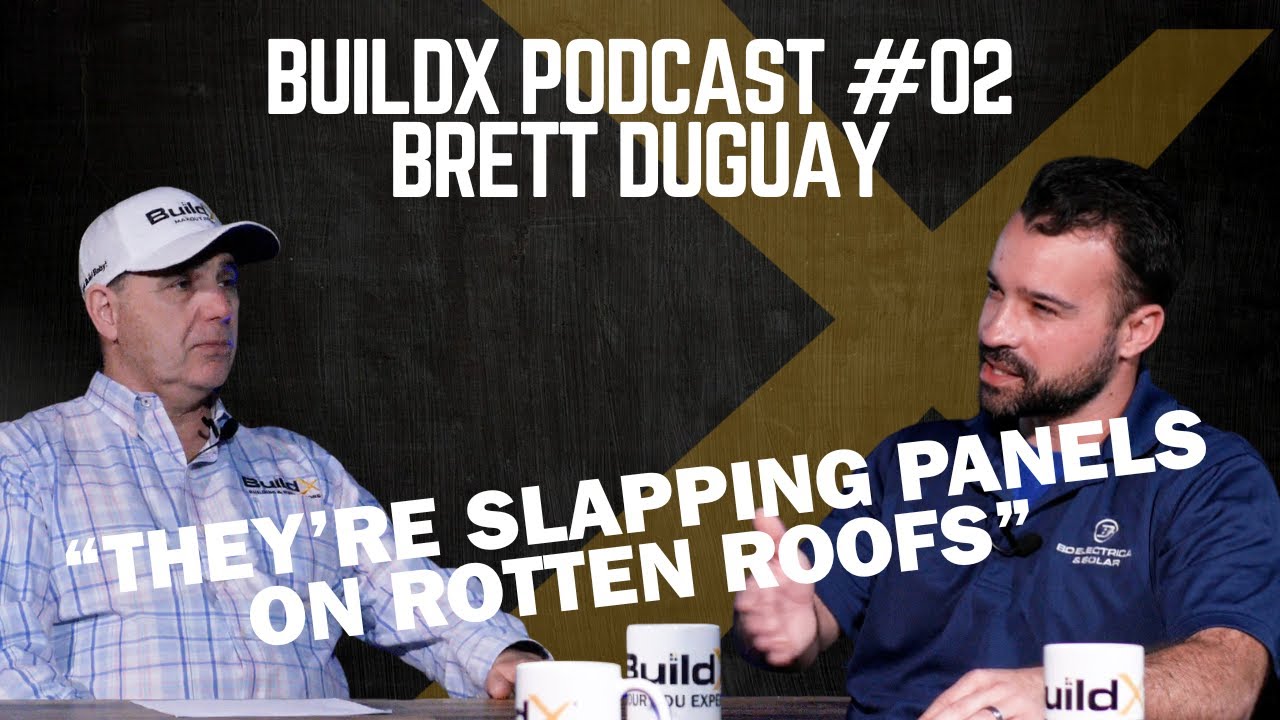
Watch: Solar Truth Bombs, Battery Myths & The Real Cost of "Free" Power w/ Brett Duguay | BuildX Podcast #02
You've already committed to building an ADU and worked out a budget and you're working on the design. But when someone brings up solar, you know solar is a good idea, but what you really need to know is how much it's going to cost on top of everything else, and can you justify the extra money.
My name is Buz Artiano, and I started BuildX. Since then we've built dozens of ADUs all over Massachusetts, but most of our builds have been around the South Shore and Plymouth County areas. We handle all the design, permitting, and construction ourselves, including dealing with septic evaluations, lot coverage constraints, and local bylaws and regulations. On every one of our projects we have a discussion about solar. We talk about what it costs and why, and whether to include it now or worry about it later. We handle all the design, permitting, and construction ourselves, which means we deal with the solar stuff as well as septic evaluation, lot coverage constraints, and by-right permitting from the start.
The real cost of solar on an ADU isn't the same on every project. It depends on which way your roof faces, how much electricity you use, your power company's interconnection requirements, and whether you plan to own the system or lease it. In this article we'll talk about all the things that determine cost that we see on our Massachusetts projects so you can get an accurate idea before you commit to anything.
Quick Answer: The total cost of adding solar to an ADU depends on system size, which way your roof faces, interconnection requirements, and whether the roof needs to be replaced or fixed before installation. On most ADUs, the average system generates around 6,000 to 8,000 kilowatt hours annually, which is plenty to offset the full electric load of a 900-square-foot all-electric unit over 12 months. The most cost-effective way to do it is to roll solar into your ADU construction financing and own the system outright. Hidden costs, including utility interconnection fees and potential transformer upgrades, can add $4,500 to $20,000 or more if your property's grid connection has to be modified or upgraded.
In This Article
- What Drives the Cost of Solar on an ADU?
- What Are the Hidden Costs Most Solar Quotes Leave Out?
- Can I Roll Solar into My ADU Construction Financing?
- Should I Own My Solar System or Lease It?
- How Long Does It Take for Solar to Pay for Itself on an ADU?
- Is Solar the Right Choice for Every ADU?
- Your Solar Budget Starts with Your ADU Design
What Drives the Cost of Solar on an ADU?
Solar pricing for an ADU is not the same as solar pricing for a regular sized home. The system has to be smaller, you have limited shapes and layouts you can do, and timing the solar install with the rest of the construction can make it take longer. Every project we build has the same variables. You need to understand them before you start getting quotes so that you can see the difference between a realistic price and one that will be an ugly surprise.
The main things that determine the cost of ADU solar are in five categories. It depends on system size and how many panels you need, the condition of your roof and which way it faces, utility interconnection requirements, permitting and inspection fees, and whether you own or lease the equipment. All of these things have the potential to change the overall cost significantly, and they interact with each other. A south-facing roof with no shade will give you a lot more power per panel, which means you don't need as many, which of course saves you money. A property with a lot of shade trees on the south side means you'll need a bigger system or it will produce less.
The most important design decision is which way to face the roof. On our ADU projects, we run the roof ridge east to west whenever possible so that the main slope faces due south, because that's the ideal setup to get the most out of your solar panels. When site constraints prevent us from facing the roof south, the solar panels become less productive, and you have to have a bigger system to accommodate for that, which is going to add to the cost.
What Are the Hidden Costs Most Solar Quotes Leave Out?
The quote you get from a solar company is almost never a complete number. On our projects, we've learned that there are three major things that can up your cost, and most people don't think about them or maybe even know about them.
Utility interconnection. Before any solar system can feed power back to the grid, the utility must approve the connection. This is a completely separate process from your building permits, but they happen at the same time. In most cases, interconnection approval is pretty simple. But if the transformer serving your property can't support any more solar capacity, the utility company will have to do a whole review. That review fee alone is $4,500, and it is non-refundable. If the review comes back and says that the transformer has to be upgraded, the homeowner is responsible for that cost, and it can cost $10,000 to $20,000. So you could be the last house on that circuit to go solar, which means your neighbors connected without having to pay for a transformer upgrade, and now you're left with the bill because you were the last one.
Roof replacement under the array. A reputable installer will not mount panels on a roof that's older than 10 or 12 years. If your ADU roof is older than that, then you have to replace the sections where the solar panels will be mounted. If you skip this step, you end up paying thousands of dollars to remove and reinstall panels when the roof fails in five to seven years. On a new ADU build, it's not an issue because the roof is brand new. But if you are adding solar to an existing structure or deferring the installation by several years, you have to factor in the condition of the roof.
Fire code setbacks. Current fire code requires a three-foot pathway on the roof for firefighter access. Which means there is less usable roof area for panels. On a 900-square-foot ADU with a 40-foot roof, losing three feet on each end of one side or both sides takes up the space of two to four panels. Fewer panels means they produce less electricity, which makes it take longer to pay off the panels. But unfortunately it's a code requirement, you don't have a choice, and it applies to every installation in Massachusetts.
Can I Roll Solar into My ADU Construction Financing?
Yes. This is actually what we recommend, and it is one of the strongest financial arguments for including solar in your ADU project from day one rather than adding it later.
When you finance your ADU through a construction loan, the solar system can be wrapped right up in the loan. So you only have one loan and one monthly payment. Also, since you own the system outright, you collect all the incentives, you control the equipment, and you increase the property value. You don't have to have a separate solar loan and you have no lease obligation, which also means no third-party company with a claim on your roof.
If bundled financing is not available or you'd rather just finance the solar separately, local banks in Massachusetts offer loans specifically for solar. Cape Cod 5 and UMass Five, for example, both give you 100 percent financing for residential solar installations. A HELOC is another option if you have equity in your main house.
Mass Save also offers a 0 percent interest loan for battery systems, which is worth considering if you are adding battery storage alongside solar. The battery discussion is separate from the solar cost, but the financing programs overlap, and planning both at the design stage saves money compared to retrofitting later.
We include solar conduit in every ADU we build, running from the crawl space to the attic so that everything is all ready when the homeowner decides to install panels. We also run a cable on the outside for a future electric vehicle charger. Putting the infrastructure in at the beginning costs almost nothing during construction but saves thousands of dollars over adding it all after the walls are closed. The reason we do this on every project, even if the homeowner doesn't necessarily plan to install solar immediately, is that it's much cheaper to do it before the walls are finished than to run conduit later. We've seen enough families defer solar at construction and regret not having the infrastructure ready.
Should I Own My Solar System or Lease It?
Own it, that's the only answer. The benefits of owning the panels is very clear, and leasing is risky.
When you own the system, you collect the federal tax credit, the state incentives, and the net metering credits. Since you own the equipment, you control it. When you sell the property, the whole system goes with the home as a feature that makes the property worth even more. It's very simple, the buyer gets the house and the solar and all the benefits that go with it.
When you lease your solar system, the solar company owns your roof and they are the ones who collect the tax credits and the incentive payments. You agree to buy electricity from their panels for 25 to 30 years at a discount of 20 to 30 percent off retail rates. Which sounds good until you try to sell the home. The buyer has to take over your lease for the remaining term. Deals have fallen through because buyers don't want to take on a lease obligation they didn't sign up for.
The way these big solar companies try to sell you, advertising zero-down, sounds like you're getting something for free, but you're really not at all. If you can't pay for the system outright, finance it through your ADU construction loan, a HELOC, or a solar-specific loan from a local bank. You'll pay less over time, you'll keep all the incentives, and there's no resale complications that come with a lease.
How Long Does It Take for Solar to Pay for Itself on an ADU?
Payback depends on system size, energy consumption, and your utility rate. No honest installer can even give you an exact number without looking at your property, your electrical load, and your usage patterns.
What we can tell you from our projects is that a properly sized system on a south-facing ADU roof can generate 6,000 to 8,000 kilowatt hours annually. For context, a typical all-electric 900-square-foot ADU that pulls 20 amps can be cancelled out in a year using net metering. That means the system produces more power in the sunny months than the ADU uses, but you get credited for the extra to help pay for the winter months.
And what's even better is when you think about the long-term protection against utility company rates that are constantly going up. Massachusetts electricity prices have done nothing but go up, and a solar system locks in your production cost for 25 years (the typical panel warranty period). For families building ADUs for aging parents or young adults who make limited money, it's great for their finances to have that stability for so long.
A reputable installer will look at the numbers and give you an idea of the payback period, the approximate yearly savings, and the total savings over the system's lifespan. That should include details for your specific roof, your specific usage, and your utility company. If an installer gives you a generic payback estimate without evaluating your property, that is a red flag.
Is Solar the Right Choice for Every ADU?
No. And we tell our clients that upfront.
If your ADU site has a lot of shade trees on the south side and you don't want to cut them down, the panels might not produce enough to justify the investment. If the utility company says they'll have to upgrade the transformer to add you to the grid, that can add so much to the cost that it's not worth it anymore. If your ADU is mixed-fuel with gas heating and gas cooking, the electrical load is lower, and the solar offset is smaller.
Solar makes the strongest financial case on an all-electric ADU with a south-facing roof on a lot with minimal shading. If you've got those three things, solar is probably the right choice. If you don't, or you're not sure, you can put off adding solar, just keep the conduit infrastructure in place so it's easy to install later. We plan for the future on every ADU we build, so you don't have to make a decision on solar right away, pick the right time, and the infrastructure is there.
We also encourage everyone to get multiple quotes, don't just go with the first company that knocks on their door, or the first ones you call. The solar industry has a track record of high-pressure sales from national companies that are more interested in numbers than providing quality services. Over 100 solar companies went bankrupt in the U.S. last year, which means all those customers have nobody to service their systems now. Working with a local, established installer who will be around for the 25-year lifespan of your system is absolutely necessary.
Your Solar Budget Starts with Your ADU Design
The cost of solar on an ADU is something you have to account for at the beginning, not afterwards. It's a design decision that starts with the way the roof faces, electrical use planning, and site evaluation. You will always get the best outcome from solar if you plan for it during the design phase, even if they choose to do the installation later.
If you're planning an ADU in Massachusetts and want to understand what solar would cost on your specific property, the conversation starts with your site, your goals, and your budget.
We will evaluate your property's solar potential, assess roof orientation and shading, and give you a clear picture of what adding solar to your ADU project will cost before you commit.
See a completed ADU with solar-ready infrastructure or Request a Free Consultation
Call us: (781) 627-7000