
Are There Grants or Tax Incentives for Building an ADU for Elderly Parents in Massachusetts?
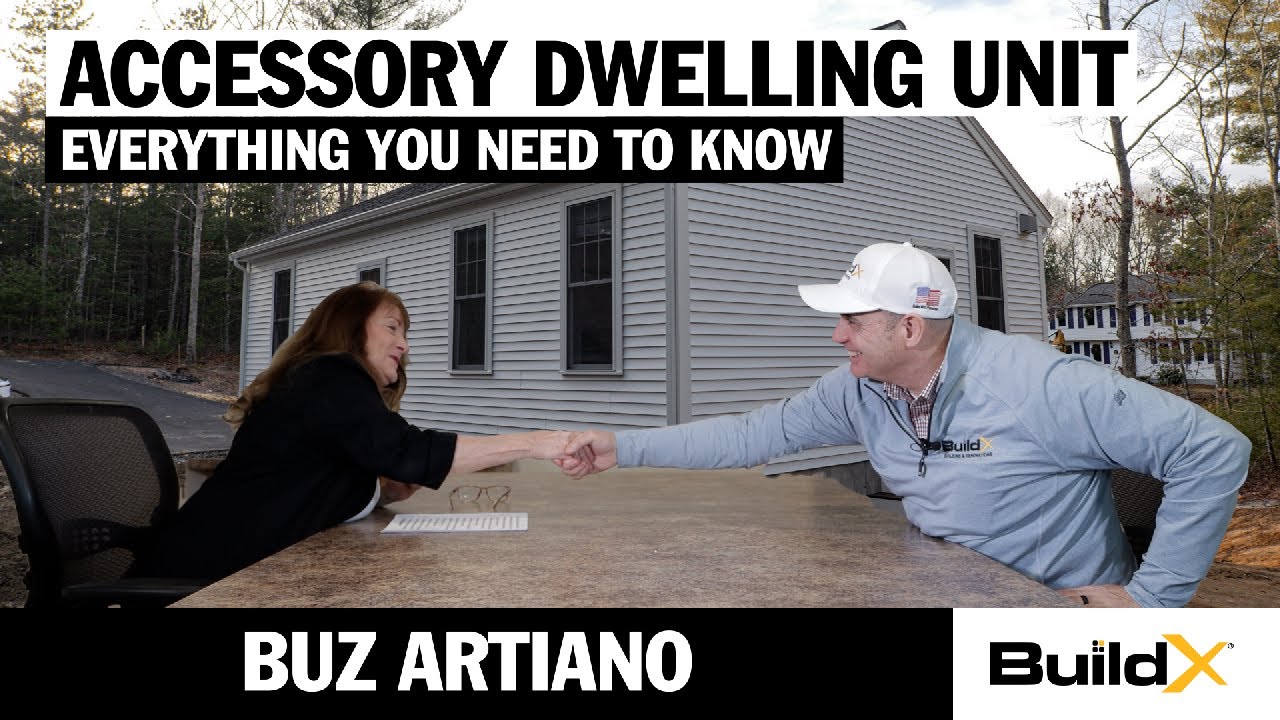
Watch: ADUs: Revolutionizing Housing Opportunities in Massachusetts
You have already decided that building an ADU for your aging parent is exactly what you want to do. You know that it can take quite some time and the cost is somewhere upwards of $250,000. Now you need to know whether Massachusetts offers any financial assistance to help you with that investment. You’ve looked for grants, tax incentives, and government programs, but all you can find is stuff about other states or information that has no helpful details. This is where a lot of people get stuck.
My name is Buz Artiano, and I started BuildX. Since then we’ve built dozens of ADUs all over Massachusetts, but most of our builds have been around the South Shore and Plymouth County areas. We handle all the design, permitting, and construction ourselves, which means we deal with septic evaluations, lot coverage constraints, and permitting requirements on every project. We’ve helped families navigate state and local programs ourselves, including connecting them with the Massachusetts Home Modification Loan Program for accessibility-related builds.
Massachusetts really does have financial programs for families building ADUs for elderly or disabled family members. But the details are important for something like this. Some programs are just loans that are made to look like grants. Some have eligibility requirements that most people can’t meet. And new state incentive programs are still underway and being released. We’re going to talk about exactly what exists, who qualifies, and how to access each program so you can make an informed financial decision before you commit to building.
Quick Answer: Massachusetts offers the Home Modification Loan Program (HMLP), which provides 0 percent interest deferred-payment loans of up to $50,000 for accessibility modifications, which includes ADUs, for households with a disabled or elderly member. The state has also launched a $10 million ADU Incentive Program through Massachusetts Housing Partnership, which should start providing some technical and financial assistance in spring 2026. There is no direct ADU construction grant in Massachusetts right now. Property tax relief programs for seniors exist in certain towns, but they won’t help with the cost of construction.
In This Article
- Are There Direct Grants to Build an ADU for an Elderly Parent in Massachusetts?
- What Is the HMLP Program, and Do I Qualify?
- What New State Programs Are Launching for ADU Construction?
- Do Property Tax Programs Help Offset the Cost of Building an ADU?
- What About the $5 Billion in Federal Fair Housing Funding?
- When Do These Programs Not Apply?
- How Do You Find Out What Your ADU Project Qualifies For?
Are There Direct Grants to Build an ADU for an Elderly Parent in Massachusetts?
There is currently no statewide grant that will cover the cost of an ADU in Massachusetts, so that route isn’t an option. We want to be clear on this because the word "grant" gets used loosely in online searches and even in conversations with families we work with. What Massachusetts does offer is a few programs that can reduce your out-of-pocket cost if your project is eligible.
The most established program is the Massachusetts Home Modification Loan Program (HMLP), given out by MassAbility and managed through local provider agencies. HMLP provides 0 percent interest, deferred-payment loans of up to $50,000 for homeowners making accessibility modifications to their primary home. The loan does not require monthly payments and is only repaid when the home is sold or transferred. If you’re building an ADU for an elderly parent or a family member with a disability, HMLP lists ADUs as an eligible project type. You can review the full program details at mass.gov.
One of our BuildX clients, Pam Myette, described this program as a "$50,000 grant" because that’s what it felt like to her family. It definitely gave them some financial relief, but technically it’s a deferred loan, not a grant. The balance is repaid when the property changes hands. For a family planning to keep the home long-term, it feels like a grant because there are no monthly payments and no interest. But you need to understand when and if repayment kicks in before you factor it into your budget.
What Is the HMLP Program, and Do I Qualify?
The Home Modification Loan Program has been operating in Massachusetts since 1999. It’s funded by the state and has helped more than 3,000 people finance accessibility improvements. The program is not limited to ADUs. It covers ramps, lifts, accessible bathrooms and kitchens, sensory integration spaces, fencing, and other modifications that can help someone function on their own on a daily basis.
To qualify for HMLP, your project must meet these criteria:
- Disability or age requirement: A household member must have a documented disability or be over 60 years old. The modification has to be related to that person's ability to function in the home.
- Primary residence: The home that’s being modified has to be the primary residence of the person with the disability or the elderly household member.
- Income eligibility: HMLP has income guidelines based on total household gross income. The program has pretty loose income limits that help most people qualify, but you’ll need to confirm current limits with a local agency.
- Loan amount: Up to $50,000 for homeowners. Up to $30,000 for manufactured or mobile home owners. Landlords with fewer than 10 units may qualify for a 3 percent interest loan for an eligible tenant.
The application process goes through a local provider agency in your area. For southeastern Massachusetts, you can start by contacting MassAbility or visiting the Community Economic Development Assistance Corporation (CEDAC) at cedac.org/hmlp for a list of providers by town. Your contractor will need to complete a bid form and scope of work as part of the application. HMLP will not approve work that has already been completed, so make sure that you apply long before you start building.
We’ve helped families through the HMLP application on a lot of our projects. The program works, but it does add 60 to 90 days to your pre-construction schedule because you need agency approval before any construction can start. We factor that into our project planning from day one. If you’re building an ADU for a parent with mobility limitations or a family member with a disability, we evaluate HMLP eligibility during our initial site assessment so you know whether that $50,000 is something you can count on before you commit to a budget.
What New State Programs Are Launching for ADU Construction?
In December 2025, Governor Healey announced three new initiatives to make ADU construction more accessible across Massachusetts which are still in the development phase, but they represent the most significant state investment in ADU support since the Affordable Homes Act passed in August 2024.
- ADU Incentive Program (Massachusetts Housing Partnership): Backed by $10 million from the Governor's fiscal 2026 to 2030 Capital Investment Plan, MHP is developing a statewide program to promote ADU construction through outreach, education, and technical and financial assistance to eligible property owners. MHP plans stakeholder information sessions in early 2026 with the full program launching in spring 2026.
- MassHousing ADU Construction Loan Program: MassHousing has authorized up to $20 million for activities that deal with homeownership, some of which will help pay for low cost mortgage loans to finance ADU construction. This program is mostly for people with low to moderate income who may not have access to traditional home equity financing. This support should be available in early 2026.
- ADU Design Challenge: Launched in December 2025, this program invites designers and architects to send in high quality ADU plans that can be easily replicated and adapted by homeowners and local builders. The goal is to reduce initial design costs and streamline permitting with pre-approved designs.
These programs are not yet giving out money, so you can’t count on them in a current project budget. But if your timeline extends into mid-2026 or later, they might be available to reduce your upfront costs. You can track updates at mass.gov.
Do Property Tax Programs Help Offset the Cost of Building an ADU?
Massachusetts has several property tax relief programs for seniors, but they do not directly offset ADU construction costs. They reduce ongoing tax obligations after the ADU is built, which matters for long-term affordability but does not help with the upfront investment.
- Senior Circuit Breaker Tax Credit: Massachusetts residents age 65 and older who own or rent their primary residence may qualify for a refundable state income tax credit of up to $2,820 for tax year 2025, based on the amount of property taxes or rent that is more than 10 percent of their income.
- Local Elderly Property Tax Exemptions (Clause 41C): Many Massachusetts cities and towns offer property tax exemptions for people 65 and older who meet income and asset limits. The exemption amount and eligibility criteria is different depending on your town. You have to apply each year through your local assessor's office.
- Senior Tax Work-Off Program: Some towns let seniors earn property tax credits by volunteering for the town. Credits range from $500 to $2,000 per year depending on the community.
None of these programs are designed to help with the actual cost of construction. They are for ongoing housing costs for seniors already living in the home. If your elderly parent moves into the ADU and the property assessment increases, these programs could mitigate the tax increase, but they don’t fund construction in any way.
What About the $5 Billion in Federal Fair Housing Funding?
You may have seen references to $5 billion in grants under the Fair Housing Act for elderly and disabled housing accommodations. It’s a real thing, but it’s not a single grant program that you can apply for directly. The Fair Housing Act funds are distributed through HUD to state and local agencies, nonprofits, and public housing authorities that administer specific programs.
For Massachusetts homeowners, you’ll see this federal funding show up in programs like HMLP, which receives state bond funding partly supported by federal housing allocations. It also supports programs that help pay for accessible bathroom construction, ramp installation, and other modifications for elderly and disabled residents. But you will not find a single application to get a share of the "$5 billion in ADU grants." The money is distributed through an assortment of programs, each with its own eligibility rules and application process.
If your ADU includes a fully accessible bathroom, grab bars, zero-threshold showers, or other ADA-compliant features for an elderly or disabled family member, those specific parts of the build could qualify for HMLP funding or other accessibility-focused programs. But it’s important to document the medical or functional need before you apply.
When Do These Programs Not Apply?
We want to make sure we are clear about the limitations. If you are building an ADU purely as a rental investment property or for a young adult child with no documented disability, most of the programs we just talked about won’t apply to you. HMLP requires a documented disability or an age-eligible household member. The upcoming MHP and MassHousing programs are still deciding who’s eligible, but early guidance suggests they will focus on affordability, not investment returns.
If your ADU project doesn’t qualify for any assistance programs, the construction cost is yours to finance through home equity, construction loans, or savings. We work with lenders who specialize in ADU financing, and we can help you understand what the real cost is before we start the process. But we will not tell you a program applies when it does not.
How Do You Find Out What Your ADU Project Qualifies For?
The gap between what you read online and what actually applies to your property can be significant and cost you quite a bit of time. Your eligibility depends on who lives in your household, your parent's medical documentation, your income, and the specific modifications your ADU needs. The easiest way to confirm all that is a site evaluation where we assess your property, review your family's situation, and connect you with the right program administrators before you commit to a budget.
We will evaluate your property, review your family's situation, and help you identify which state and local programs your ADU project qualifies for before you commit to a budget.
Tour a completed ADU and see what your investment looks like or Request a Free Consultation
Call us: (781) 627-7000