
What Happens If My ADU Doesn't Meet Setback Requirements in Massachusetts?
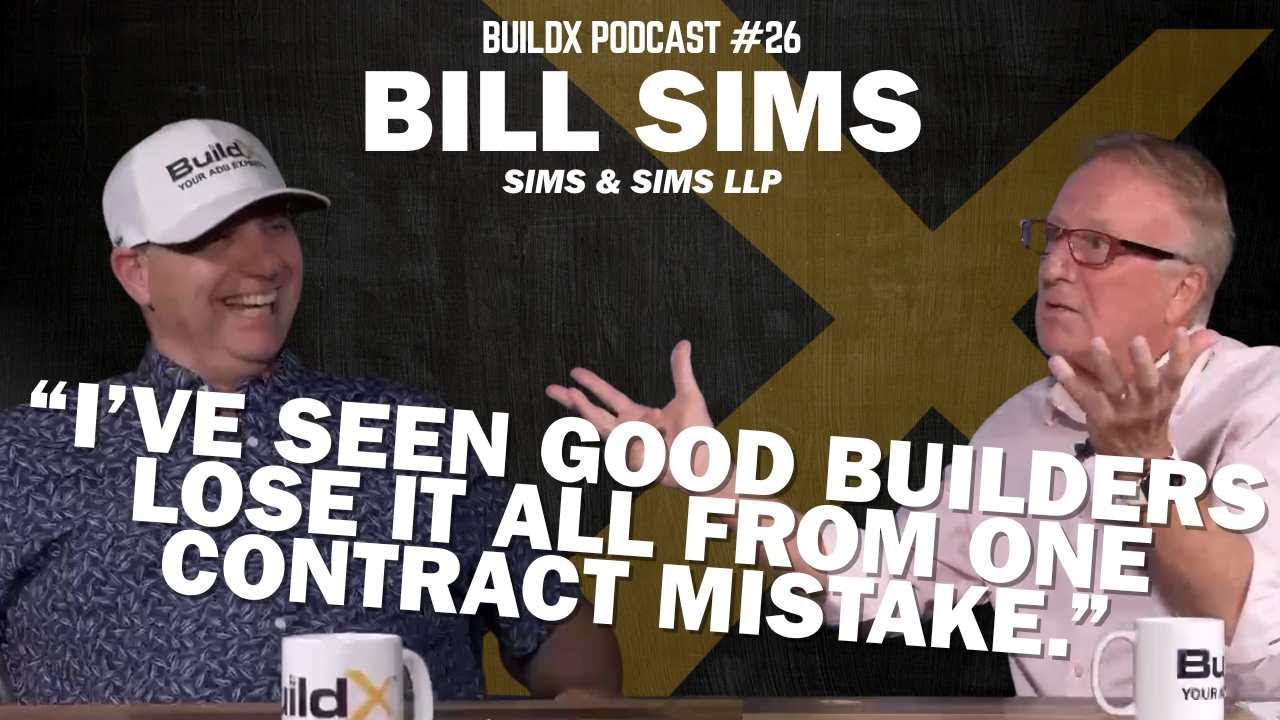
Watch: Bill Sims: What Builders Get Wrong About Real Estate Law | BuildX Podcast #24
You measured your lot, checked the setback lines, and the math doesn't add up. The ADU you want is four feet too close to the property line, or the shape of your lot will make it impossible to build a detached ADU without crossing a boundary. So now you are wondering whether that limitation will cancel the whole project, or whether there is another way to make it work.
My name is Buz Artiano, and I am the founder of BuildX. We've built dozens of ADU projects across Massachusetts, mostly around the South Shore and Plymouth County areas. We are the only team you need, we handle design, permitting, and construction. So we see every phase of a project from the first site visit up until you move in. We deal with septic constraints, zoning issues, and the state's new ADU laws.
Because you must deal with getting permits and evaluations for the septic system and there are limits for lot coverage, setback problems are one of the most common challenges that have to be dealt with. The first question besides cost that we get from families considering an ADU is whether it will fit on their lot. That question deserves an honest answer, and not a guess. In this situation, a setback limitation doesn't necessarily stop the discussion. There are zoning relief choices that are available in Massachusetts, and understanding them before you put money into the design and engineering is what will make a well-planned project instead of an expensive surprise.
Quick Answer: If there isn't enough setback on your property that doesn't mean that you are necessarily disqualified from building your ADU in Massachusetts. If your planned ADU is less than the required setback distances, you can apply for a special permit with the local Zoning Board of Appeals (ZBA). A special permit is easier to get because it doesn't make you prove hardship. Things like the shape of your lot, the size of the shortfall, and whether an attached ADU would qualify will all affect the ZBA's decision. At BuildX, we check on whether the setback is possible before giving families a quote so they know their realistic options before spending money on design or engineering.
In This Article
- Does a Setback Shortfall Kill My ADU Project?
- What Is the Difference Between a Special Permit and a Variance?
- What Criteria Does the ZBA Use to Evaluate a Special Permit for Setback Relief?
- How Does BuildX Evaluate Whether Your Lot Will Work?
- Is a Special Permit the Right Path for Every Setback Shortfall?
- What Can You Do Right Now to Find Out If Your Lot Qualifies?
- Your Setback Shortfall Deserves an Honest Feasibility Answer
Does a Setback Shortfall Kill My ADU Project?
No. Lack of an adequate setback means you need zoning relief, not that the project is dead. In Massachusetts, the way to get relief for a detached ADU that can't meet setback distances is to get a special permit from the Zoning Board of Appeals. This special permit is much easier to get than a variance is. The distinction matters. To get a variance you have to show that there's a hardship connected to the land itself. That's a much harder case to make, and so there are much lower approval rates. A special permit on the other hand, doesn't need hardship. The ZBA checks to see if your situation meets a set of qualifications, and for most situations like this, the shape of your lot is one of the strongest arguments in your favor.
Here is a real example from our work: we had a property where the required setback was 15 feet, and the most we could do was 11 feet. That meant we needed four feet of relief. Instead of giving up on the project we submitted a special permit application with the ZBA. The argument was based on the fact that the shape of the lot was one of the qualifying criteria. An experienced zoning attorney said that the likelihood of success was favorable, specifically because the request was a special permit and not a variance.
What Is the Difference Between a Special Permit and a Variance?
These two terms sound like they are the same, they each have very different levels of difficulty. Understanding which one your project need will decide whether you have a realistic way to move forward.
A special permit is a form of zoning relief where the ZBA checks your application for a certain list of qualifications. You don't have to prove that your property has a specific kind of hardship. You present your case, the board reviews it using that criteria, and then they make a decision. For ADU setback issues in Massachusetts, this is the normal path. The ADU law was written so special permits could be used when dimensional requirements can't be met, which shows that the legislature anticipated these situations.
A variance requires you to show that there are conditions unique to your property that cause a hardship. The legal standard is higher. The language in the statute talks about conditions "owing to the land," and the person applying has to prove it. Approval is harder to get, and ZBA boards are less willing to give variances because they are farther from the normal zoning code.
Bill Sims, a real estate attorney with 42 years of experience in Plymouth and Brockton, said this when he talked with us: if you can qualify for a special permit rather than a variance, your likelihood of success is far greater. We count on that difference when talking with families about whether their setback shortfall will work.
What Criteria Does the ZBA Use to Evaluate a Special Permit for Setback Relief?
The ZBA checks special permit applications against a set of qualifying conditions. While those conditions can be different depending on the city, there are common factors that apply to ADU setback issues across the whole state of Massachusetts.
The shape of your lot is many times the biggest factor when you are applying for setback relief. Lots that have an irregular shape, are narrow or have lots of topographical restrictions can make it physically impossible to put a detached ADU inside normal setback distances. This is not a hardship argument but is a factual description of the property's shape.
The size of the shortfall matters. Requesting four feet of relief on a 15-foot setback is much different than requesting 10 feet of relief. Smaller shortfalls will show that the person applying is making a good-faith effort to comply and is asking for a reasonable accommodation.
The idea of an attached alternative may be brought up during the hearing. If the ZBA decides that an attached ADU would meet setback requirements, they might ask why the applicant needs a detached ADU at all. That is a fair question, and one we help our clients to answer. Some families have good reasons for a detached structure: privacy for an aging parent, separate entrances, the physical layout of the existing home, or where the septic system is located.
At BuildX, we discuss these criteria during our first feasibility meeting. We use mapping software that shows setback lines, lot boundaries, and placement for the ADU and that helps us give families a realistic idea before they spend money on engineering, design, or legal fees.
How Does BuildX Evaluate Whether Your Lot Will Work?
Before we quote an ADU project, we do an assessment of feasibility that begins with the lot. The first thing we do is schedule a meeting where we use the mapping software and overlay the property's setback requirements, lot boundaries, and available building area. This tells us quickly whether the ADU fits, whether we are close, or whether we have to make a big change.
We give a probability to every assessment. If the lot looks like an 80 or 90 percent likelihood, we tell the family to go forward with confidence. If it is 70 percent, we explain what the risk is. And if it drops below 50 percent, we are honest about it. We tell the family that unless they're prepared to spend $5,000 to $6,000 going forward at risk and with no guarantee of approval, this may not be the thing for you to do. We would rather lose the project today than have a family spend thousands on engineering and permits only to hit a wall at the ZBA hearing.
That evaluation done at the first also shows secondary obstacles that affect the setbacks. Wetlands, streams, and environmental buffers can cut down on the buildable area even more than just the setback lines. On one recent project, we identified what appeared to be a natural stream running along the edge of an abandoned cranberry bog next to the property. Before spending a dollar on design, we recommended the family spend $200 to $300 for a professional wetland opinion. If that was still considered a stream, the detached ADU wouldn't work regardless of setback relief. We baby step the front end so families do not spend $5,000 to $7,000 before finding out they can't build after all.
Is a Special Permit the Right Path for Every Setback Shortfall?
No. There are situations where getting a special permit does not make sense, and we tell families that directly.
If the setback shortfall is large, for example needing 10 or more feet of relief on a standard 15-foot setback, the ZBA has a legitimate basis for not allowing someone to build an ADU. The argument gets much weaker if the difference between what you need and what the code requires is a lot. In those cases, an attached ADU that meets setback requirements might be a better way to go.
If the lot has additional restrictions like wetlands, conservation restrictions, or easements that add to the setback issue, the total difficulty can make the project not financially practical even if the ZBA grants relief. The legal fees, engineering costs, and hearing preparation for an application that is being contested could add $5,000 to $10,000 to a project before construction even starts.
We also tell families that outcomes with ZBA can't be guaranteed. Bill Sims, who has 42 years of experience and has sat on zoning boards himself, admits that he has not yet completed a ZBA hearing just for a detached ADU setback. These are new issues for most boards. The laws support the application, but every board is different, and every hearing is uncertain.
If it looks like your ADU situation is going to have a contested hearing and the outcome is uncertain, we recommend that you talk to a zoning attorney before committing to design and engineering. At BuildX, we work with attorneys who specialize in Massachusetts zoning relief, and we will make that referral as part of our normal process.
What Can You Do Right Now to Find Out If Your Lot Qualifies?
You should always start with the facts about your property before making assumptions. The process does not have to be expensive or time-consuming in the first stages.
Check your property's setback requirements. These are set by your town's zoning code. Your town's building department or zoning office can give you the dimensional requirements for your zone. Under the Massachusetts ADU law, towns can't put setback requirements on ADUs that go over those applied to other buildings on the same lot. You can review the state's ADU framework at mass.gov.
Get a survey or use available mapping tools. A property survey gives you exact lot dimensions. If you already have one from when you purchased your home that might be enough for the first assessment. We use professional mapping software during our meetings that overlays zoning requirements on satellite imagery so you can see the issues visually.
Identify secondary constraints early. Wetlands, streams, septic reserve areas, and easements can all reduce the size of your buildable area in addition to the setback requirements. If any of these are found, address them first. A $200 to $300 professional opinion on a wetland question could save you thousands of dollars in wasted design and engineering costs.
Talk to a builder who evaluates feasibility before quoting. At BuildX, we do not charge for the first conversation about feasibility. We will tell you the likelihood based on what we see, what the obstacles are, and what the sensible way forward would be. If your lot does not work for a detached ADU, we will tell you. If it does, we will show you how to get where you want to go.
Your Setback Shortfall Deserves an Honest Feasibility Answer
A setback shortfall is not a dead end. In many cases, it is a problem that we can get around with an outlined process and a reasonable chance of being resolved. The key is knowing your actual numbers, understanding whether you need a special permit or a variance, and getting an honest evaluation before you spend money on design and engineering.
That is exactly what we do at BuildX. We evaluate the lot first, give you a realistic probability, and coordinate with zoning attorneys when the project needs relief. Families who work with us know the likelihood of success before they commit a dollar to construction planning.
We will evaluate your property's setback requirements, lot shape and size, and secondary constraints to give you a clear answer on whether it's going to work before you spend on design or engineering.
See how we handle setbacks in a completed ADU or Request a Free Consultation
Call us: (781) 627-7000