What Are the Hidden Problems with Solar Installations That Most Companies Won't Tell You?
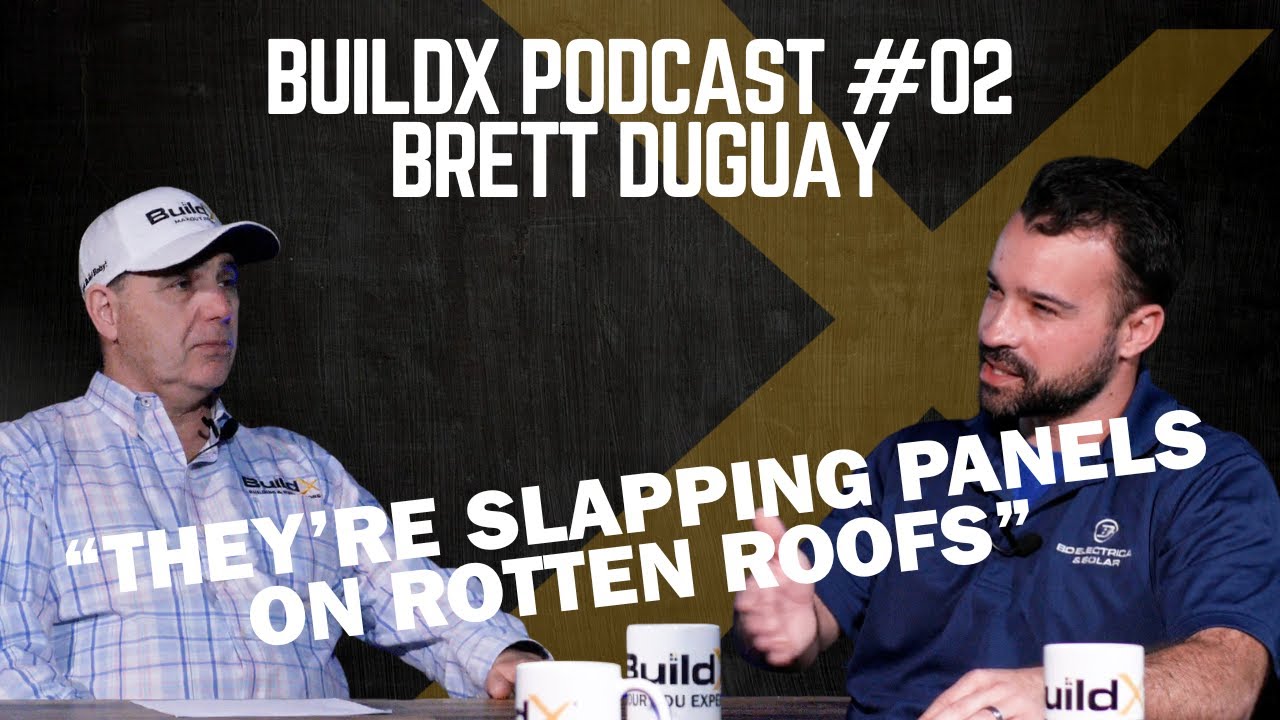
Watch: Solar Truth Bombs, Battery Myths & The Real Cost of "Free" Power w/ Brett Duguay | BuildX Podcast #02
You have been researching solar for your home or your ADU, and the more you read about it, the less you trust it. One company will promise panels with no money down and savings from the first day. Another one sends over a door-to-door sales rep with a tablet and a presentation that seems too polished. In the meantime you have read the headlines about the scams in Massachusetts that are happening to homeowners and how they are stuck with systems that don't work. The question bothering you isn't whether solar works or not. It is whether the company putting the system in will still be in business five years from now to honor the warranty.
My name is Buz Artiano, and I am the founder of BuildX. We've built dozens of ADU projects across Massachusetts, mostly around the South Shore and Plymouth County areas. We are the only team you need: we handle design, the permits, and construction in one place. Every project we work on involves planning for the electric, and that means we work together with solar companies that are licensed installers. We also work through city permit requirements and see for ourselves what happens when someone cuts corners with the electrical side of things. Part of our responsibility is to make sure families understand the risks before they sign a solar contract.
Solar is a valid technology that can reduce your energy costs for years to come. But the solar companies have a problem with being straightforward, and the families we work with should get honest answers before they make a commitment. This article deals with the particular problems we run into when dealing with solar companies: the business failures, the shortcuts with the installation, the misleading cost estimates, and the red flags that separate a trustworthy installer from one that will leave you stuck in the middle of the project.
Quick Answer: Solar installations don't work when companies put panel count over the actual energy production. Over 100 solar companies went bankrupt nationally last year, leaving homeowners with systems they couldn't get service for. The most common problems are when shading is not figured into the design, not properly managing the wires that can cause ground faults, systems that fail within 10 years from poor installation, and lease agreements that are high-pressure and complicate home sales. These are not problems with solar technology: they are problems with bad installers that use bad business practices. The right installer does away with every one of these risks.
In This Article
- Is Solar Really a Scam, or Is It Just Bad Companies?
- What Does "Panels Over Production" Mean, and Why Should You Care?
- What Goes Wrong When Solar Systems Are Installed Poorly?
- How Do Zero-Down Solar Leases Create Problems When You Sell Your Home?
- What Happens When Your Solar Company Goes Out of Business?
- Is Every Solar Problem the Installer's Fault?
- How Do You Protect Yourself Before Signing a Solar Contract?
- What Will Your ADU's Solar Setup Actually Need?
Is Solar Really a Scam, or Is It Just Bad Companies?
Solar is not a scam. The technology works, and if your system is put in properly it will produce reliable electricity for 25 years or more. The problem with the solar industry is that there are a large number of companies that are using bad business practices to sell systems that do not perform well, underperform, break down, or burden homeowners with contracts they do not fully understand.
The scope of the problem is real. More than 100 solar companies went bankrupt nationally last year. Those failures caused thousands of homeowners to be stuck with what's called legacy systems. That means there are panels on the roof, but no company to service them, and the warranties for them are no good. When a homeowner calls us about adding solar to an ADU and says they've heard that solar panels are a rip off, these are the things they are hearing about. They are not wrong to be skeptical. They just need to know what is the difference between a good installation and a bad one.
The problems we see are in a few certain categories. They are shortcuts in design that cut back on production, quality problems with the installation process that will shorten the life of the system, leases that cause long-term financial problems, and companies that disappear before the warranty period is over. Each of these can be prevented if you know what to look for.
What Does "Panels Over Production" Mean, and Why Should You Care?
The one most common problem with solar installations is what those with experience call "panels over production." This happens when a company looks at your roof and just asks one question: how many panels can I put up there? They don't take into consideration the shade from the trees close by and don't think about the age or how many solar panels the roof can handle. They don't think about the direction of the slope in relation to the south. They just measure square footage, suggest the maximum number of panels, and then propose how much it will cost based on that number.
The problem is that panel count doesn't equal energy production. If they don't take into account the amount of shading in the early design, the estimates of the amount of energy produced will be much higher than what the system can actually make. A homeowner who was promised solar panels that will make up for 100 percent of their electricity bill over the next year finds out in six months that their solar system is producing much less energy than they were told it would. The financial savings are taking much longer than promised. And the company that made the prediction isn't answering their calls.
A thorough installer does it differently. Their process will start with a survey of the site and includes a drone scan of the roof, an inspection of the attic to check the load capability of the rafters, and an engineering review. They will also check the tree coverage that will shade the roof at different times of the year. The size of the system depends on actual production potential, not maximum panel count. That contrast is the difference between a system that pays for itself and one that will cause regret in the future.
What Goes Wrong When Solar Systems Are Installed Poorly?
Besides problems with the design, the process of actually installing it can fail. We have seen solar systems that were installed within the last ten years already breaking down: not producing any solar energy, or producing only half of what was expected, errors with the inverter, and worse, panels actually coming loose from the roof.
The basic cause for most of these failures is wire management. If the wiring under the panel array isn't secured well, the cables will lay on the surface of the roof. And roof shingles have a rough surface. So over a period of time, the rough surface wears through the cable insulation, and that causes ground faults. Ground faults can cause your solar system to completely or partly shut down. In the worst cases they can create a fire risk. Modern inverters have a design that's built to protect you from this by shutting down before a fire starts, but the damage to the system is already done.
We see this problem when we inspect a property for ADU construction. A homeowner already has solar panels on the main house and when we check the roof to plan the project, we see conduit running down the front of the house, wiring that hangs over shingles, and mounting hardware that doesn't come up to the current codes. During the first years of the solar industry, there was a gold rush mind set. Companies were starting a solar business without the electrical knowledge to do the job right and the installations that they did are now starting to fail. When we plan an ADU project that includes solar, we work with installers who are licensed and have the same standards of workmanship we have ourselves for the building side of it. A solar system has a 25-year expected lifespan so the quality of the installation should match that timeline.
How Do Zero-Down Solar Leases Create Problems When You Sell Your Home?
Zero-down solar is sold as risk-free: no upfront cost, immediate savings, panels on your roof by next month. But the truth is that a deal with no money down is just a lease or what is called a Power Purchase Agreement (PPA). And a lease means you are agreeing to buy the electricity from those panels for the next 25 to 30 years. The solar company owns the system and they also own your roof. They will get the tax credits, the incentives, and the write-offs. You pay a discounted rate for the electricity the system gives you but you don't own anything.
There is a problem when you want to sell your home. A leased solar system means that the solar company is part of the sale process. The buyer has to agree to take over whatever years are left on your lease contract. If you signed the lease eight years ago, the buyer is getting 17 to 22 years of monthly payments they did not choose. The sale of a home has fallen through because buyers did not want to take on that payment. A prospective buyer who won't go along with taking over the lease decides not to buy the house, and the seller has to either buy out the lease or lose the deal.
When you own the solar system it changes things entirely. When you own the system outright, the panels are an asset that will increase your property value. You can transfer ownership of the solar panels with no cost. And if you can't afford to buy the system outright, there are loans just for solar with 100 percent financing from lenders in Massachusetts. If you own the system it means you get to collect the incentives, you control it, and you don't have all the complications that come with a lease. If you are financing an ADU, you can usually roll the cost of the solar system cost into the construction financing, so you own both assets from the first day.
What Happens When Your Solar Company Goes Out of Business?
When a solar company shuts down, the panels on your roof do not stop working. But the guarantee that came with your systems is now worthless. The panels might have a 25-year manufacturer warranty, but the workmanship warranty that deals with problems in the installation, poor wiring, and roof penetration failures, goes away with the company.
This is not just a supposition. More than 100 solar companies went bankrupt in a single year. The homeowners that bought solar from those companies are now stuck with systems they can't get service for through the original installer. It is difficult and expensive to find another company that's willing to service a system they didn't put in. Specific parts might not be available, and paperwork may be incomplete. And the new service provider doesn't have any obligation to uphold the original terms of the warranty.
The lesson is very simple: the financial health of the solar company matters just as much as the equipment they install. A local installer who has been in business for a long time, who works in your area, and who provides the service for the systems they install is a very different risk than a national company that operates on venture capital and aggressive growth targets. When we deal with solar installations on our ADU projects, we work with installers who have proven track records in Massachusetts, because our clients are building something they want to live in for a long time.
Is Every Solar Problem the Installer's Fault?
No. Solar technology has real limitations that even honest installers admit to right from the beginning. The physical position of the roof matters. Shade from the trees can reduce solar output. The winter months in Massachusetts produce less energy than the summer months, and to be able to meet the financial predictions depends on saving summer credits to offset the lack of sunlight in the winter. A system that is built to offset 100 percent of your usage over 12 months means you will still have energy bills in January, February, and March.
BuildX is not a solar company. We are a construction firm that does the designing and building of the ADU. We work with solar installers as part of our ADU projects. We do not install panels, and we do not sell solar systems. That means we have no financial reason to suggest a solar system for a family if their property isn't a good fit for one. If your roof faces north, if you have lots of trees that block the south exposure, or if the lot limitations that affect your ADU also restrict where you can put your solar panels, we will tell you. Not every property is a good fit for solar, and pretending otherwise is just the kind of dishonesty that created the problems this article talks about.
When solar is a good idea for your property, it is a truly valuable addition to an ADU. An all-electric ADU that uses about 120 amps with everything running can be made up for by a properly sized system on a roof that faces south. But the way it turns out depends on honest design, a quality installation, and a company that will be around to guarantee their work.
How Do You Protect Yourself Before Signing a Solar Contract?
The problems in the solar industry are real, but they can be avoided. The families we work with at BuildX protect themselves if they ask the right questions before they sign anything. They need to know how long the installer has been in business, what their site survey will include, and how the solar company is determining the size of their system. Is it based on production or the number of panels? Also, will they give them a structural engineering certification before they install even one panel on the roof? These are the questions that will make the difference between a company that will be around for the life of the system and one that will not.
If you are building an ADU and thinking about solar as part of the project, the best time to plan for it is during the design phase, not after the roof is on. We help families make that decision with correct and understandable information, not sales pressure.
What Will Your ADU's Solar Setup Actually Need?
We will investigate your property's solar potential as part of the ADU design process, including the way the roof faces, shading, and electrical load, so you know exactly what to expect before you commit.
See how we integrate solar in a finished ADU or Request a Free Consultation
Call us: (781) 627-7000