
What Legal Documents Do You Need Before a Parent Moves Into Your ADU?
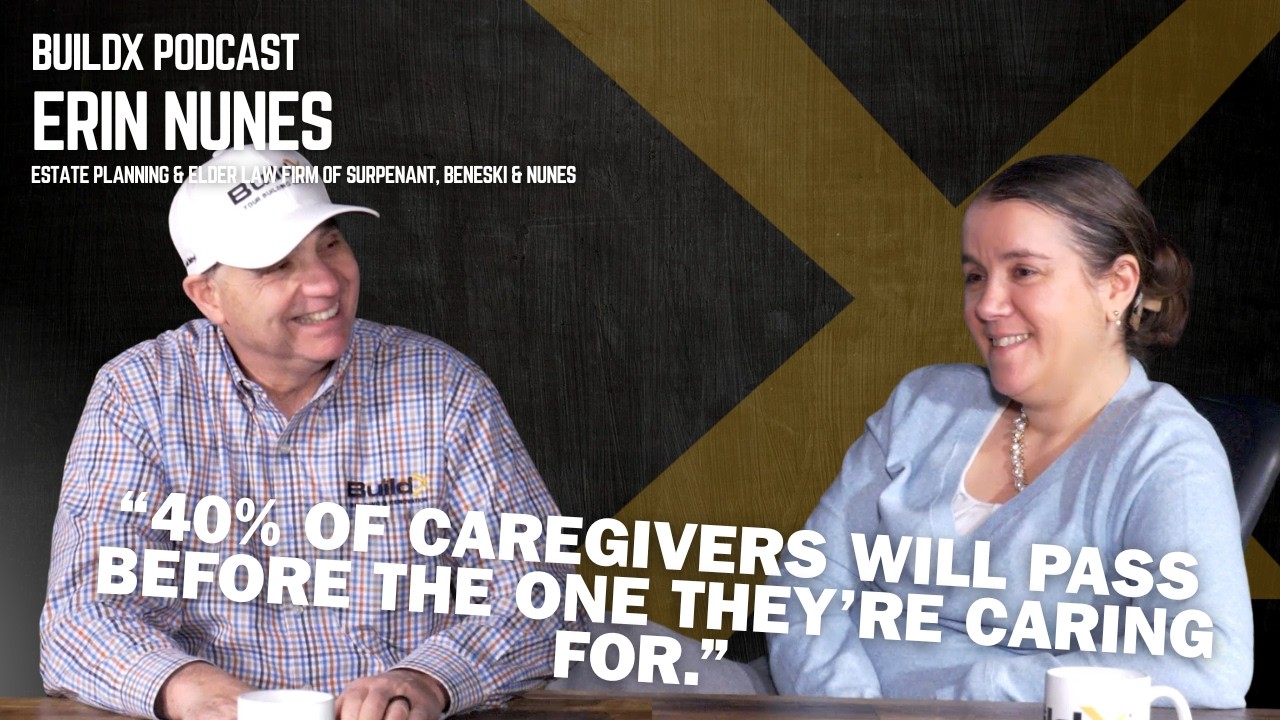
Watch: 40% of Caregivers Pass First... Here's Why That Matters for Your Family
You've got your land, and you have a plan. Maybe you've already talked to a builder about putting an ADU in the backyard for Mom or Dad. But somewhere in the back of your mind you keep asking yourself what happens if something goes wrong and you can't make decisions on their behalf. If a parent's mental health declines without the right legal documents in place, their adult children can't sell their home, manage their finances, coordinate their medical care, or even file a MassHealth application. The only way to move forward at that point is probate court, and that process costs thousands of dollars and months of waiting.
My name is Buz Artiano, and I started BuildX. Since then we've built dozens of ADUs all over Massachusetts, but most of our builds have been around the South Shore and Plymouth County areas. We handle all the design, permitting, and construction ourselves, including navigating septic issues, lot coverage constraints, and local zoning requirements. After working with enough families through this process, we noticed a pattern. The families who struggle the most started construction without getting their legal paperwork in order first.
That is why we tell every client to talk to an estate planning attorney before they sign a building contract. The documents you need aren't complicated or expensive, and they can prevent a major legal crisis that can't be fixed on the construction side of things. In this article we'll go over the specific legal documents your parents need before they move into your ADU, what happens when you don't have them, and why one detail in the power of attorney, if overlooked, could create a conflict of interest that throws off the entire plan.
Quick Answer: Before a parent moves into your ADU, they need three legal documents: a comprehensive power of attorney, a healthcare proxy, and a HIPAA authorization. These documents let you sell their existing home, manage their finances, coordinate medical care, and file benefit applications on their behalf. Without them, you'll have to go through probate court, which means conservatorship proceedings that cost thousands of dollars and can take months. If you're also the property owner where the ADU is built, the power of attorney must include a self-dealing provision. You'll want to budget $1,500 to $3,100 for estate planning.
In This Article
- What Are the Three Legal Documents Every Parent Needs Before Moving Into an ADU?
- What Happens If My Parents Do Not Have These Documents?
- Why Does the Power of Attorney Need a Self-Dealing Provision?
- How Much Does It Cost to Get These Documents in Place?
- Should I Get These Documents Before or After Signing a Building Contract?
- Is Estate Planning Always Necessary for an ADU Project?
- The Paperwork That Protects Everything You Are About to Build
What Are the Three Legal Documents Every Parent Needs Before Moving Into an ADU?
There are three documents that you need in order to have a good legal foundation for any parent moving into an ADU. Without all three, the adult children who are managing things for their parents will not be able to make decisions on a parent's behalf when needed.
The first is a durable power of attorney. This document authorizes someone to make legal and financial decisions for the parent. In the context of an ADU project, that means the authority to sell the parent's existing home, use that money for the ADU construction, sign contracts, and manage ongoing finances. The word "durable" is a big deal because a standard power of attorney expires when the person's mental health declines, which is exactly when you need it most. A durable power of attorney remains in effect even after the person is no longer able to make decisions on their own.
The second is a healthcare proxy. This document names someone to make medical decisions for the parent when they can no longer make those decisions themselves. For ADU families, this is very important because the parent's health is often the reason the ADU exists in the first place.
The third is a HIPAA authorization. HIPAA (the Health Insurance Portability and Accountability Act) restricts who can access a person's medical information. Without a signed HIPAA authorization, you can't contact your parent's insurance company, access their medical records, or file a MassHealth application on their behalf. Even with a healthcare proxy, the HIPAA authorization gives you the permission you need to gather the medical information you need to coordinate medical care and apply for benefits.
What Happens If My Parents Do Not Have These Documents?
If a parent's mental health declines and there are no estate planning documents in place, their children can't do anything on their behalf. They can't sell the family home to fund the ADU or sign a lease or a construction contract. They also can't coordinate medical care or apply for MassHealth services.
The only option at that point is probate court. That means filing for conservatorship or guardianship, which is expensive and takes forever. Even in a best-case scenario, you are looking at 90 days or more before a judge grants the authority you need to make decisions. During that time, you can't do anything or move forward at all.
There's another cost beyond time and money. When you go through probate court, a judge decides who gets to make decisions for your parent. That's not the same thing as your parent choosing the person they trust. A comprehensive estate plan lets the parent decide, while they still are still mentally sound, who will handle their finances, their medical care, and their living arrangements.
Why Does the Power of Attorney Need a Self-Dealing Provision?
This is the detail that catches most people off guard, and it's one of the reasons we insist that clients work with an estate planning attorney before we break ground.
If the person named as power of attorney also owns the property where the ADU is being built, that can be a conflict of interest. As the power of attorney, they are acting on behalf of the parent, but as the property owner, they are acting on behalf of themselves. When the parent's money goes toward building something on the child's property, that can cause issues.
We see this situation on most of our ADU projects. The adult child owns the property, the parent is paying for it using the money from the sale of their home, and the child has the power of attorney. In our experience, it's best if families deal with this upfront with their attorney and have the correct paperwork done that protects everyone. When people skip this step, it creates a situation where any sibling, any court, or any MassHealth auditor can question the transaction. A durable power of attorney that includes a self-dealing provision explicitly authorizes someone to conduct transactions that benefit both the parent and themselves. Without that, the entire ADU project is on shaky legal ground.
The key word in all of this is "comprehensive." A one-page, blanket power of attorney that says "this person can do everything for me" is not enough and it won't hold up. The document has to be very specific. It needs to specify that the person has authority to sell property, transfer funds, and engage in transactions where the agent has a personal interest. If your parent signed a power of attorney 15 or 20 years ago, it definitely needs to be updated before you start an ADU project.
How Much Does It Cost to Get These Documents in Place?
The cost of foundational estate planning is one of the most common questions families ask, and it's actually more affordable than most people think.
For a single person who needs foundational documents only, which is just a durable power of attorney, healthcare proxy, and HIPAA authorization, it costs about $1,500. For a married couple it goes up to $3,100. If your situation requires more advanced planning, such as trust structures to protect against MassHealth recovery, divorce scenarios, or sibling inheritance disputes, it can be up to $10,000. That would cover complicated multi-party situations, not the standard documents most ADU families need.
Let's put it in perspective. A contested guardianship proceeding in probate court can cost much more than $10,000, take months, and leave the family with a court-appointed decision-maker instead of someone in the family that the parents had already chosen. The cost of prevention is a fraction of the cost of the crisis it prevents.
Lots of estate planning firms will give you a free initial consultation, usually about 90 minutes long, where they assess the family's situation and outline what documents are needed. That consultation is the first thing you should do before committing to an ADU project.
Should I Get These Documents Before or After Signing a Building Contract?
Always before.
We tell every client that an ADU project requires three professionals that work together from the very beginning. You need a mortgage professional, a good estate planning attorney, and a great builder. All three need to be on the same page before construction starts. The building is actually the easy part. The legal and financial structure is where families get stuck.
If a parent's health changes between signing a building contract and completing the ADU, and no legal documents are in place, the family is in trouble. They can't access the parent's money to pay for construction, or make medical decisions that affect the timeline. They also can't sell the parent's existing home to get the money they planned on for the ADU.
In our experience, approximately 30 percent of families who want to build an ADU cannot get past the family logistics, and the project never moves forward. Building an ADU is roughly 70 percent family dynamics and 30 percent construction. The legal documents are what hold the family dynamics together when circumstances change.
Is Estate Planning Always Necessary for an ADU Project?
Not every ADU project involves aging parents or a complicated family situation. If you're building an ADU as a rental unit, a home office, or for a young adult child who is healthy and financially independent, the estate planning documents aren't so urgent. The foundational documents we just talked about are especially important when an aging parent is selling a home, moving onto your property, and relying on family members to manage their care and finances.
Even in simpler situations, having basic estate planning documents in place is still a good idea. But the self-dealing provision, the HIPAA authorization, and the capacity-related protections are very important when the ADU is being built for parents who will need caregiving. If your situation doesn't involve a parent moving in, you may not need all of these documents before you start any construction. Talk to an estate planning attorney so you know what documents apply to your specific family.
The Paperwork That Protects Everything You Are About to Build
The ADU itself is a structure. The legal documents are what protect the people who live there. A durable power of attorney with a self-dealing provision, a healthcare proxy, and a HIPAA authorization give your family the authority to make decisions, coordinate care, and manage finances without having to deal with the courts at all. These documents cost such a small part of the ADU budget, and they only take a couple weeks to prepare, you won't be waiting for months. Get them in place before the first shovel hits the ground.
We will walk through your family's situation, identify the professionals you need on your team, and help you understand what needs to happen before construction starts.
Tour a completed ADU to see the finished product or Request a Free Consultation
Call us: (781) 627-7000