
Which Massachusetts Towns Let You Build an ADU Bigger Than 900 Square Feet?
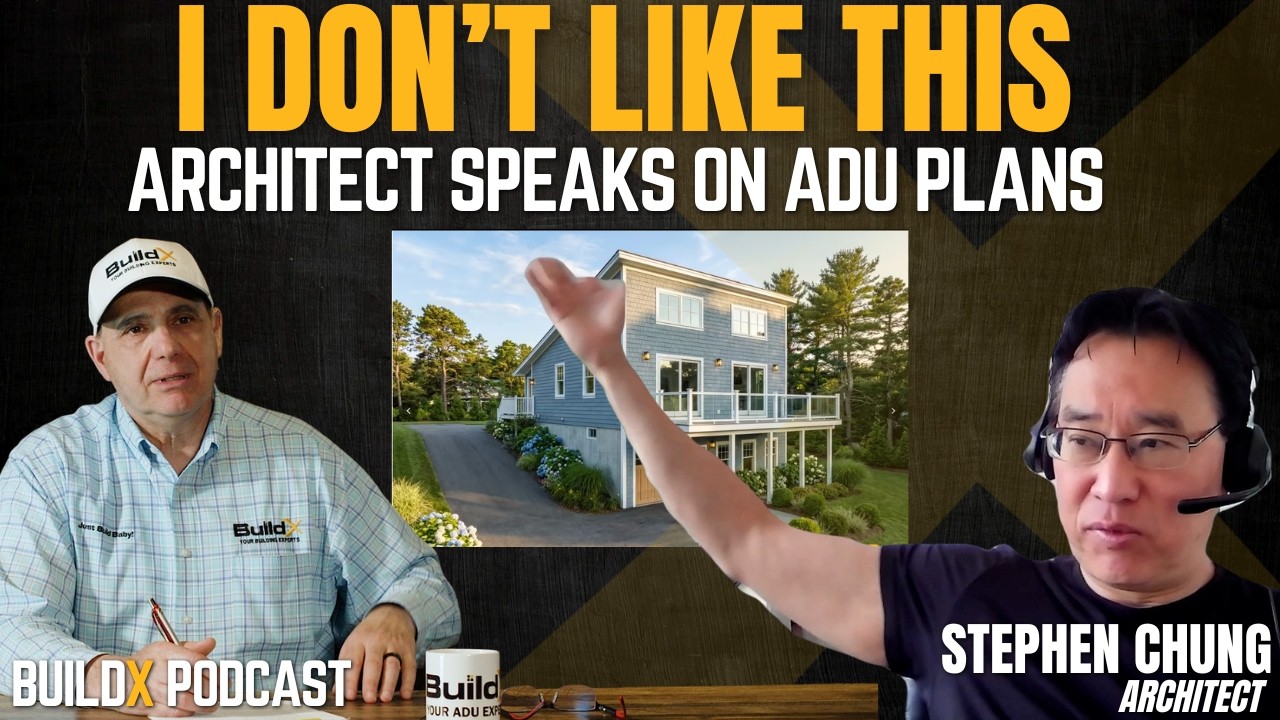
Watch: A Massachusetts Architect Weighs In on ADUs (Stephen Chung on the BuildX Podcast)
When it comes to ADUs, you probably keep hearing the same number over and over: 900 square feet. That 900 feels like a bit of a wall, like a hard line in the sand. If you have a big family, or an aging parent who needs quite a bit of space, or if your main house is really big, then 900 square feet doesn't feel like very much compared to what you're used to. When you're limited to 900 square feet, it can make it feel like there's no point in building the ADU because it's not going to be big enough. And people love to repeat that 900 number without really knowing what it means.
My name is Buz Artiano, founder of BuildX. We've built dozens of ADUs all over Massachusetts, but most of our projects have been on the South Shore and in Plymouth County. That includes all the towns right around Plympton where the size rules are different from town to town. We handle all the design, getting the permits, and construction ourselves, so we deal with these bylaws every week. Things like the by-right permitting, the lot coverage and setback limits, the septic issues, and the size caps that are different depending on where you live. We've also been watching all these towns rewrite their ADU rules since 2025 when the new law went into place.
Here's the cliff notes version. The 900-square-foot number is real, but it is a floor, it's not necessarily a cap. It's the minimum every town has to allow according to the state law. Some towns absolutely let you build a bigger ADU, and people already have. Whether you can build something larger than 900 square feet is up to your specific town though. The number that you keep hearing people talk about isn't the hard line. You have to find out what the current rule for your specific address is.
Quick Answer: 900 square feet, or 50% of your home's floor area, whichever is smaller, is the statewide by-right minimum that every Massachusetts town has to allow. It's not a universal cap on all ADUs. State law leaves it up to the town if they want to permit bigger units, and a few already have. Plympton, for example, allows up to 1,200 square feet through Planning Board site plan review. A lot of towns are still enforcing the 900 cap, so whether you can build something bigger depends entirely on your town. Confirm your town's current rule with its Planning or Building Department before you design anything or get your heart set on anything specific.
In This Article
- Is 900 Square Feet Really the Limit Everywhere in Massachusetts?
- What the Massachusetts ADU Size Rule Actually Gives You
- Which Towns Actually Let You Build Bigger Than 900 Square Feet?
- How Do You Confirm Your Own Town's ADU Size Cap?
- Is a Bigger ADU Always the Right Move for Your Family?
- Start With Your Town, Then Let's Look at Your Lot
Is 900 Square Feet Really the Limit Everywhere in Massachusetts?
It's not a hard limit, which is a good thing to know before you go ruling anything out. Under the Massachusetts Affordable Homes Act, every town has to let you build one ADU on a single-family lot. The rule says that they have to allow a minimum of up to 900 square feet or 50% of your home's floor area, whichever is smaller. That means they have to approve it without a special permit or a public hearing. They just look at your plans to make sure you're in compliance with code, but you're not subject to vote of any kind. That 900-square-foot figure is just the minimum the town has to allow, but they are also free to let you build something bigger if they want, and the state made that very clear. You can read the official wording at mass.gov.
So the honest answer to the big question here is that a bigger ADU is possible, but it's not automatic and not every town is going to approve it. It just depends on whether your town has changed their rules to allow bigger ADUs.
What the Massachusetts ADU Size Rule Actually Gives You
The state rule actually does two things for you at once. First, it guarantees that at the very least, no town in Massachusetts can make you build an ADU less than 900 square feet (or 50% of your main house, whichever is smaller) on a single-family lot. That rule is the same in every town because it was put into place by the state and that's why that number gets used so much.
People forget this second part. The rule is a minimum size, not a maximum. A town can vote to allow ADUs larger than 900 square feet, and a town can also let a larger or additional ADU be built with a special permit. In other words, the largest size allowed is completely up to the town you live in. Most towns haven't raised it yet, so in most places the 900-square-foot unit is all you can get. The towns that have been more lax on this are worth knowing about, because they are why someone two towns over might be building something bigger than the 900 square feet that you were capped at.
Which Towns Actually Let You Build Bigger Than 900 Square Feet?
We need to be specific about this because it's a pretty short list since it's not a statewide rule. Let's talk about Plympton. Its zoning bylaw keeps the standard by-right unit at the 900 square feet, but then they sometimes allow an ADU up to 1,200 square feet through Planning Board site plan review. Just so you know, a site plan review is not the same hassle as the old special-permit process that you might be familiar with. The Planning Board just looks over your plans to see where the ADU will sit on the lot, its access, and its impact. But they follow a set process, it's not a voting situation like you're used to. As with anything, the number and the process can always change though, so make sure you double check the current rule with the actual Planning Board before to get a for sure answer. As of July 2026, the 1,200-square-foot rule is written in.
Be careful with numbers you hear people talk about for other towns though. We checked a couple of the nearby towns we talk about and several of them are enforcing the state's 900-square-foot rule, even though there have been rumors they might increase that. So we want to make sure you are being cautious because if you design a 1,200-square-foot unit for a town that only allows 900, you've wasted a lot of time and money.
Here's our take on why the mechanism matters as much as the number. The by-right 900-square-foot unit is subject to a very simple process. Basically your plans get checked for code and you get your permit. A larger unit that requires site plan review or a special permit is subject to a public hearing and approval with a Planning Board, and they can tack on conditions to the approval as well. We've built both kinds of ADUs. The largest ones are of course more expensive and take longer to get approved, and sometimes the board can add conditions that a building inspector can't. When a family decides they want the extra square footage, we will discuss the pros and cons of that before anyone commits to a floor plan.
How Do You Confirm Your Own Town's ADU Size Cap?
There is no need to guess about this. Three steps get you a real answer for your exact address.
First, read your town's zoning bylaw, and specifically the ADU section. Find the town's name plus "ADU bylaw" or "accessory dwelling unit zoning" and then look for two things: the by-right size and if there is another provision that allows a bigger ADU if there's a site plan review or a special permit.
Second, call the town's Planning Department or Building Department and ask them if the bylaws allow an ADU larger than 900 square feet, and if so, what is the process? The person who answers that phone is the one who approves these permits. So their answer is a lot more reliable than reading about anything online.
Third, ask about the process, not just the size. A town that allows a bigger ADU only if you get a special permit is really only saying maybe not a guaranteed yes. Knowing whether your bigger ADU is by-right, site-plan-review, or special-permit will tell you how long it will take and how risky it is to plan for something bigger.
The red flag to watch for is a number with no source that confirms it. Bylaws across Massachusetts were rewritten through 2025 and 2026, and they are still very different depending on where you live. So just because something was true last year or in another town, doesn't mean that still holds true right now.
Is a Bigger ADU Always the Right Move for Your Family?
We build larger ADUs when a town and a lot allow it, but that doesn't mean we always recommend building a bigger unit because we don't. For a lot of people, the by-right 900-square-foot unit is the better decision, because it's easier to permit and less expensive to build. Going bigger through site plan review or a special permit can add months to your timeline and can be much more expensive. It also gives the board a say in your project.
The families that we recommend try to get approved for the extra space usually have a specific reason like a house that has more than one generation living in it that really needs a second bedroom and a real living area, or a main house big enough that a bigger ADU is still the smaller second home on the property. If your needs can be met by 900 square feet, that's usually the simpler and cheaper way to go. The right answer is the one that works with your family and your lot, it's not necessarily the biggest size your town happens to allow.
Start With Your Town, Then Let's Look at Your Lot
What we want you to remember is that 900 square feet is a minimum, not a hard cap. It's up to your town whether you can build something bigger, and the only number that matters is the current one for your address. So the first thing you want to do is confirm your town's rule and their process. Once you know that, sizing the unit to your lot, your main house, and your family is the part we can help you get right.
We'll check your town's current ADU bylaw, confirm whether you can build above 900 square feet, and size the unit to your lot and your main house before you commit to a design.
Walk through a completed ADU in person or Request a free consultation
Call us: (781) 627-7000