
What Does a Nitrogen-removal Septic System Add to Your ADU Cost?
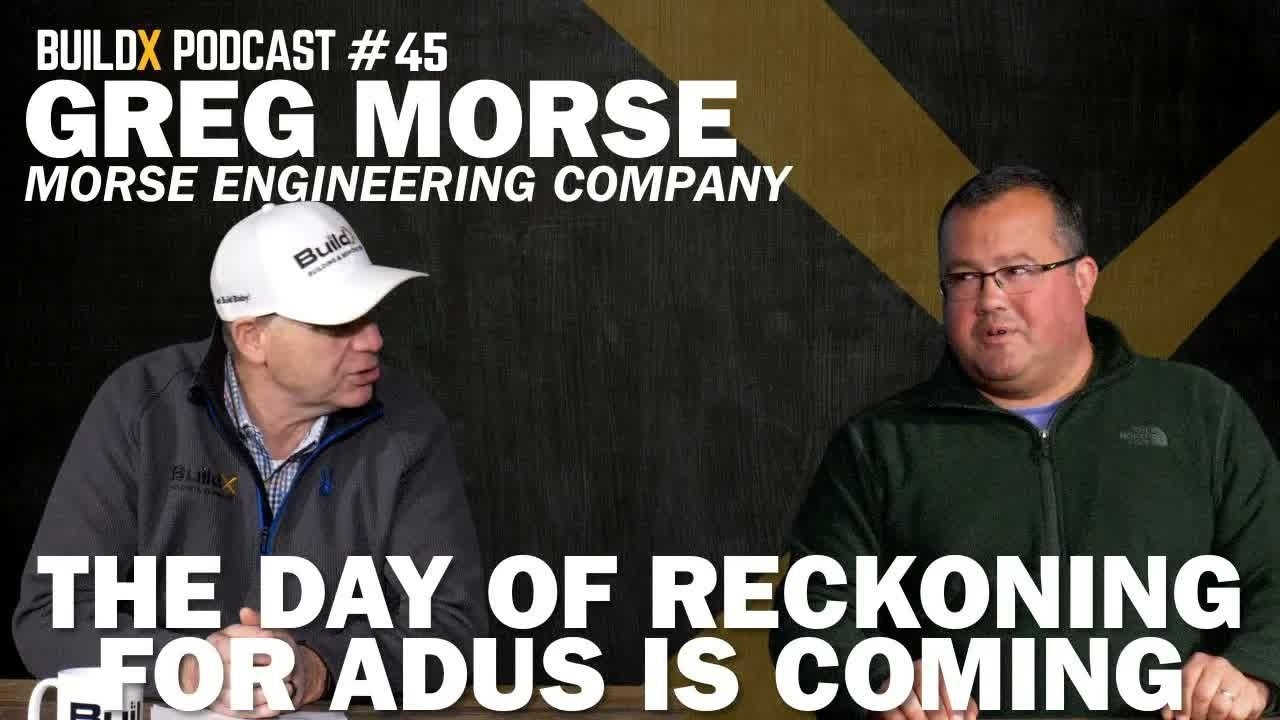
Watch: ADUs, Septics, and Setbacks: The Real Constraints Nobody Talks About
You found out that you live in a nitrogen-sensitive area. That means you're in a place that has a legal limit of how much nitrogen your septic can produce. Usually these nitrogen-sensitive areas are near public water supply wells. Nitrogen removal sounds like something expensive that you'll have to pay for in addition to how much a septic solution an ADU can already cost, and you have to have it serviced regularly, so you end up with an extra ongoing bill as well. Before you can decide whether it's still worth it to build the ADU, you need to know exactly what a nitrogen removal system and its components actually are and what it costs to keep it serviced and running properly.
My name is Buz Artiano, and I am the founder of BuildX. We've built dozens of ADU projects across Massachusetts, mostly around the South Shore and Plymouth County areas. We are the only team you need: we do the design, permitting, and construction. So we see every phase of a project from the first site visit up until you move in. We evaluate septic constraints, zoning issues, utility connections and the requirements for a permit from the city. We price the septic before any commitments are made, because it's one of the biggest variables on an estimate.
Septic truly is the big wild card when we write up an estimate for an ADU, and we've talked about it with clients about 350 times in a single year. Nitrogen removal is one of the biggest reasons for that. The requirements change a lot, it's more than just another tank. You actually have to have a treatment unit, a pump chamber, and a leaching field that sometimes has different requirements than your existing one. You'll also need an installer who is specially trained by whoever you get the system from, electricity to run the unit, and you'll have to pay for regular inspections and maintenance for as long as you have the system. If you already know you're in a nitrogen-sensitive area, you really need to understand what a whole system will cost you before you sign anything.
Quick Answer: A nitrogen-removal requirement means that you need a whole system, it's not just one tank or part. We have a civil engineer we work with and he designs systems where the treatment unit actually replaces the existing septic tank. And in his experience, nine out of ten of those designs have to pump the effluent, which means you will also need a pump chamber ahead of the leaching field (which also might have to be different than your existing one). When you have one of these systems you also need a service contract, power for the unit, and the inspection, testing, and parts schedule set by the stairs. Together, the unit, pump chamber, and a second leach field can push a septic bill to $40,000 quickly. That's just an example of what it could be, that's not a quoted price.
In This Article
- How Much Will a Nitrogen-removal Requirement Add to My Septic Budget?
- What Am I Actually Paying for When the Tank Is Replaced?
- Why Does Nitrogen Removal Bring a Pump Chamber Into the Design?
- What Will It Cost Me to Own the System After It Is Installed?
- Does My Excavation Contractor Need Special Training to Install It?
- How Do I Get a Real Number Before I Sign?
- Is an ADU Still Worth Building When Septic Reaches $40,000?
- Ready to Price the Full Septic Stack on Your Lot?
How Much Will a Nitrogen-removal Requirement Add to My Septic Budget?
Nobody can quote you on a whole system from a phone call, including us. When you need all the parts, a nitrogen-removal unit, a pump chamber, and an alternative leaching field, a septic system can reach $40,000 quickly. We gave that estimate to civil engineer Greg Morse, president of Morse Engineering Company in Scituate, who designs septic systems for a lot of our clients, and his answer was that yes, you can get to $40,000 in no time.
So now you see how fast a nitrogen removal setup adds up. That number isn't a cap on what it can cost and it's not an average either. And remember that it's a combination of parts, not just a nitrogen unit by itself. The cost comes from what is required and what components you need to get there.
What Am I Actually Paying for When the Tank Is Replaced?
In Greg's designs, the nitrogen-removal unit he usually recommends replaces the existing septic tank. He describes it as basically being a miniature wastewater treatment plant all contained inside a single tank. He says that it's also about the same size as a regular tank, so won't take up any extra space in your yard, and it's ready to put in the minute it gets there. The installer basically just puts it in the ground and plugs it in. There are other approved designs and systems that are configured differently, so double check everything with the specific unit you choose.
Inside that all inclusive unit there's an aerator that runs and pushes air into the wastewater to help with the treatment process. That's why it has to be connected to electricity, and in Greg's experience, an aerator motor or a filter has to be replaced every couple of years.
These units reduce the amount of nitrogen, but they don't get rid of it completely. MassDEP approves each nitrogen-reducing technology under Title 5 to its own total nitrogen limit, and the limits can be different depending on where you are. The approved limit for your specific system or unit, along with what kind of approval it gets, sets the performance your system has to provide and the conditions you have to follow, so ask for that specific technology's approval before you agree to the whole design. The full list is at mass.gov.
Why Does Nitrogen Removal Bring a Pump Chamber Into the Design?
Effluent is the liquid that flows out to the leaching field after being treated, and of course the leaching field is the network of pipe and stone that disperses it back into the soil. In Greg's experience, nine out of ten of his nitrogen-removal designs pump the effluent, for the most part they don't rely on gravity.
That means having a pump chamber, which is a separate underground tank that holds the effluent and the pump that pushes up and out to the leaching field. So here's the order it goes in: nitrogen-removal unit, then the pump chamber, then the leaching system. The pump is sized to the type of field you have, and so is the size of the pump chamber itself. When the leaching field changes, you have to change the size of both pump and pump chamber.
The field itself doesn't always have to be different just because of the nitrogen-removal unit. There are currently multiple types of fields being used, and the one your engineer picks will be based on the type of soil you have, your groundwater, and how much room you have on your lot.
We always have the engineer specify the exact type of leaching field he's designing before we agree to anything, because the size of the pump and the chamber both depend on that. If we just gave you a price on the unit without the field and chamber it wouldn't be a complete price. All three items are part of the septic line on any quote we give, so the family sees the whole system as a single price from the start.
What Will It Cost Me to Own the System After It Is Installed?
We get asked how much the ongoing costs will be quite often because it is a system with a service commitment for the life of the unit. So there is an extra burden as an owner for a system like this, and the approval for your specific technology will tell you exactly what the service requirement is. MassDEP requires owners to follow the inspection and testing schedule that the nitrogen system's manufacturer specifies. That means you have to follow their guidance on how often the system has to be inspected, if you need to do any effluent sampling, and what the service terms are. The unit Greg uses most often needs to be inspected every year, but other than replacing an aerator motor or filter every couple of years, there really isn't much maintenance.
Other systems can have different schedules and requirements though. Greg told us that ones that have been around for a long time and have good reputations require annual inspections, but there are some newer technologies that have to be inspected quarterly. Before you agree to a design, ask them for that unit's approval letter. You're looking for four things on it: how often it has to be inspected, if you have to do any sampling, how much electricity it uses, and the parts that will need to be replaced later on.
Owners of alternative septic systems in Massachusetts have to have a maintenance contract with a licensed operator, and your local Board of Health can ask you for a copy at any time, so it must stay current. They explain everything at mass.gov.
Inspecting these units has become a whole business of its own, but we don't have any kind of official inspection fee or parts price we can give you. Get the annual service cost in writing from the inspection company that's recommended to you by your installer, before anything gets built, so it's on your budget from the beginning.
Does My Excavation Contractor Need Special Training to Install It?
Yes. The installer has to be trained on the specific unit. The companies that supply these systems send someone out to train the contractor on site, and the product doesn't have to be sold by a dealer. An excavation contractor can buy and install one himself, but the crew has to be officially trained the first time they do an installation.
That gives you a good question you can use to kind of vet a builder or excavating contractor. You just ask them if they've installed that unit before, and if not, are you on the schedule for training? We always confirm that before the install date is set.
How Do I Get a Real Number Before I Sign?
Everybody wants an answer for the septic right away, and we get why, but we have to do some homework before we can even guess at an amount. We start by getting the paperwork on your existing system. The engineers we work with call the Board of Health and get the current septic design for the property so they know exactly what it was permitted for.
The records themselves are what determine how fast this process goes. If you have a 2015 system with good records and we can see the perc rate (how fast water soaks into your soil) and the water table (how deep the groundwater is), it goes fairly quickly. When the file is lacking a lot of important info we have to wait on perc tests, because soil can be drastically different just a short distance away on the same property.
Once you know the design, ask for the septic quote to be shown with three different items on it. It needs to show you the price for the nitrogen-removal unit itself, the pump chamber, and the field. The annual service cost is another separate line item. That's the only way you will get an accurate number that you can compare with other quotes.
Is an ADU Still Worth Building When Septic Reaches $40,000?
Since we build ADUs for a living, you would expect us that an ADU is worth it even if the septic bill gets up that high, but that is not the case. On some lots, a whole nitrogen-removal system can be what makes or breaks the deal, for some families it just adds too much to the cost. We want you to know that because you were shown an accurate breakdown of the system and the costs before we start designing, not after you've paid for or committed to things.
But it works the other way around, too. The unit Greg uses most fits in about the same amount of space as a regular septic tank and requires very little maintenance other than inspections. And once the approval letter is in hand, you can know exactly what that will cost. For a family that knows the cost and it fits in their budget, nitrogen removal is a problem that can be solved.
Ready to Price the Full Septic Stack on Your Lot?
In a nitrogen-sensitive area, the decision comes down to one number you can get before you sign: the treatment unit, pump chamber, and field priced together, with the annual service beside it.
We'll pull your Board of Health septic file, work through the treatment unit, pump chamber, and field your lot needs, and give you the full septic number before you commit.
Tour a completed ADU in person or Request a Free Consultation
Call us: (781) 627-7000