
Can One ADU Solve Housing for Two Generations at Once? (A Kingston Family's Story)
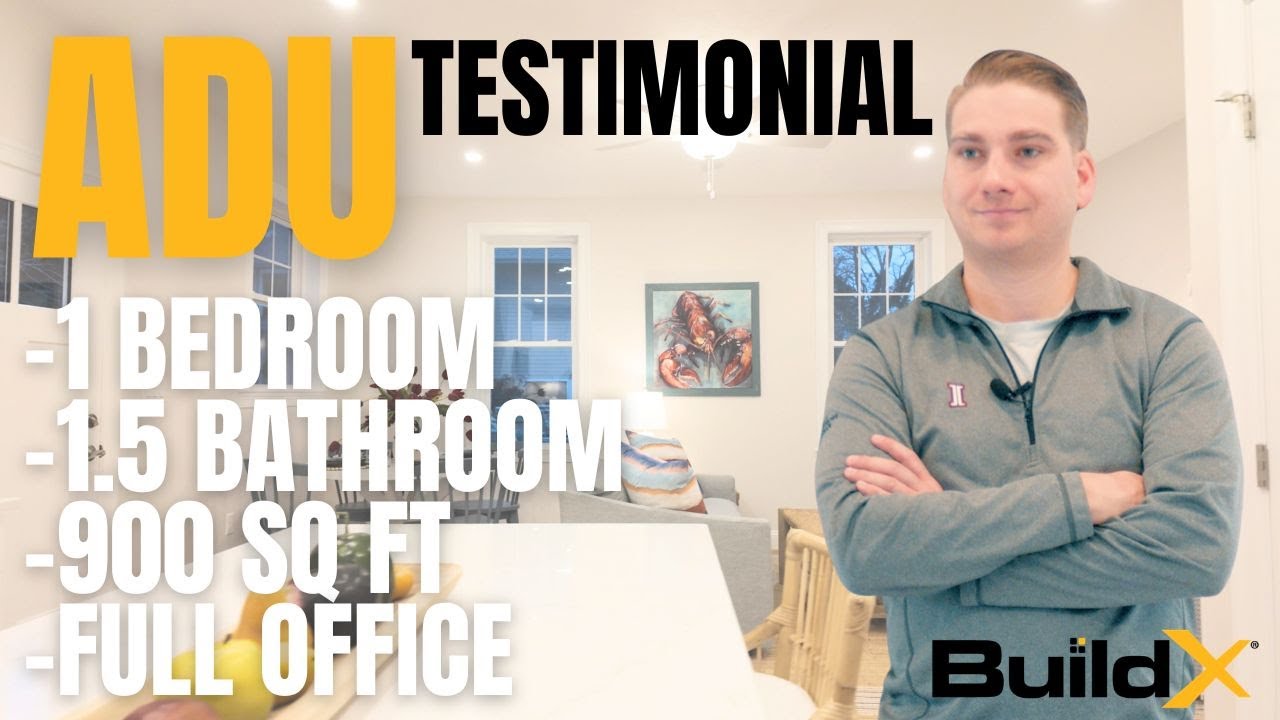
Watch: 900 Sq Ft ADU Solved Their Housing Problem
If you are a first-time buyer looking at the market today. Or a family trying to figure out how to keep aging parents close without moving everyone into one house, you have probably thought of all the same things the May family did. You could buy a separate house you can barely afford, or move your parents somewhere far away. Or maybe try and fit two households under one roof and hope everyone stays sane. None of those ideas seemed like the right one. The question beneath all of this is simple: can a single ADU really be a solution for two generations at the same time, for good?
My name is Buz Artiano, and I am the founder of BuildX. We've built dozens of ADU projects across Massachusetts, mostly around the South Shore and Plymouth County areas. We are the only team you need: we do the design, permitting, and construction. So we see every phase of a project from the first site visit up until you move in. We evaluate septic and zoning issues, and utility connections. We also deal with the things most families don't know about like new statewide ADU laws, town-by-town zoning, lot coverage limits, and whether you can even build a second home on your lot. This particular build was in Kingston, which is where we live as well. This local knowledge is part of why families here trust us with a decision this big.
BJ May and his wife are BuildX clients. They were newlyweds, married last September, and like a lot of people also first-time homebuyers dealing with Boston's competitive market. Instead of trying to find a separate house, they decided to build a full, separate home on their family's lot in Kingston. Their parents sold their own place, downsized, and moved into the main house so there are two generations with one lot, living next door to each other. We built the second home that made that possible.
You'd expect a builder to show you stories from families who were happy with how their build turned out. So here is how it came about. BJ reached out to us with an email. He made sure his lot qualified, looked at a finished ADU and decided on his own that this was the right thing for his family. We're sharing his story because his reasons are more useful to you than anything we could say about ourselves.
Quick Answer: Yes. One well-designed ADU can house two generations permanently, not just on a temporary basis. BJ May and his wife, newlyweds and first-time buyers couldn't afford to buy anything in the competitive Boston market, so they built a full standalone home on their family's Kingston lot using the new Massachusetts ADU law. Their parents sold, downsized, and moved into the main house. Two households now live side by side, and each have their own front door and life but are close enough to help one another. For a family with the space and the right relationship, and a genuine reason to stay close, it's a real housing solution.
In This Article
- Can One ADU Really House Two Generations for Good?
- What Problem Was the May Family Actually Solving?
- How Do Two Generations Share a Lot Without Sharing a Life?
- How Did They Find Out Their Lot Could Even Qualify?
- What Happens When Something Goes Wrong Mid-Build?
- Is a Family ADU the Right Move for Every Family?
- Could One ADU Solve Housing for Your Family, Too?
Can One ADU Really House Two Generations for Good?
Yes, for the May family, one home solved several different decisions at once. Before they built, there were four questions that they didn't have a simple answer to. BJ said it plainly: "we didn't know where we were gonna live, they didn't really know where they were gonna go after they sold and downsized, and then obviously everyone's getting older, and we're looking to start a family in the next couple years." In his words those were "four big kinds of uncertainties that are now more or less put to bed."
The important part for anyone who has doubts, this wasn't just a temporary in-law setup or a bonus room over a garage. It was a complete, permanent home with its own entrance and its own systems, that's built to last for decades. That difference is the whole point. A compromise might solve a problem for a couple of years but a real home solves it for a generation.
What Problem Was the May Family Actually Solving?
Boston and the towns around it have been a difficult place to buy a first home for a long time. BJ described it the way most first-time buyers would: "Boston, Massachusetts in general has always been a really competitive real estate environment." In order to get a separate house you have to outbid many other families for something that wouldn't be next to the people they wanted to stay close to.
At the same time, his parents were ready to sell and downsize, and, like many families, they were all aware that aging is easier when you live close to help. BJ and his wife were also planning to start a family in the next couple of years. So four family members, two generations, and one deadline kept getting closer.
If you're maybe in that same picture, thinking about a bidding war or moving a parent far away, that's exactly the situation the Mays were in. When they found out they could build a home on their family's lot, BJ said, "we decided to look into it." One lot they already had access to solved four separate problems from one project.
How Do Two Generations Share a Lot Without Sharing a Life?
The fear most families have about moving in near their parents isn't about construction, it's about losing independence. Everyone thinks of shared walls, shared schedules and the slow loss of privacy for everyone. That's not what a well-designed ADU does.
BJ talked about the arrangement they decided on: "they're gonna live here, we're gonna live there, we're gonna go about our business separately but help each other out best we can, and it'd be conveniently right next door." Two independent households with two front doors and close enough to watch a grandchild or share a dinner, but separate enough that nobody is living in anyone else's space.
It isn't an accident, but because of the design that we are able to find that balance. When we plan a second home for two generations on one property, we put the entrance, and main living area, and the outdoor space so that each house has its own front door, and its own private outside space. We make sure that the two homes don't look into each other's windows, and we make sure they can come and go without running through the other family's front yard. Those are the details that will decide if two generations feel close or feel crowded, and they come from building enough of these to see exactly where the problems come up.
How Did They Find Out Their Lot Could Even Qualify?
For a lot of families, the first thing to find out isn't about money. It isn't even knowing if their property will work. Mays started with a single email. BJ said, "we reached out via email and then someone got back to us really quickly. They're able to use town line information to view your plot from a satellite image," and from that first look, he was told his family "could definitely qualify for building under the new law."
Massachusetts now allows a single ADU by right on eligible single-family lots statewide under the Affordable Homes Act, though you still need to check local building codes, health requirements, and dimensional rules to see which ones apply. You can review the state's requirements at mass.gov. That law is why an idea like this would have been a dead end just a few years ago but is now a real option for families like the Mays.
After the satellite check, the next step was in person. BJ said, "Buz the owner came out and he walked the plot," and confirmed it was "definitely a possible opportunity for us there." What made them go from just interested to committed was partly the law and partly the person. BJ noticed "the way he presented himself and was able to speak to the law that had passed," along with "his overall passion for helping solve the housing crisis in Massachusetts." It also didn't hurt that as BJ said, "he's a local guy too, so Kingston, that definitely goes a long way for a lot of people."
They toured a finished home before they made a decision about anything. They walked through the model and BJ said they "were blown away." Then he asked the most important question: could you do this for us on that plot of land you saw? The answer was, "of course, no problem." From there it was just small changes and specifications, and then, as he said, "we were breaking ground before we knew it." On their lot, that foundation was put in as an oversized crawl space and the framing was done next.
If you've been wondering about the same thing on your own property, these are the exact steps the Mays took: one email, a satellite check, a walk of the lot, and a tour before any commitment.
What Happens When Something Goes Wrong Mid-Build?
Every honest builder will tell you that no project will go exactly as planned. The lot could hold surprises and plans sometimes change when the digging starts. What's important is what a builder says before that happens, not after.
BJ remembered the conversation that he had with Tom and us. We told him we were going to "run into things when we're digging around, little things we didn't think of in the planning phases," and our promise was this: "We'll get you through it," and "if there's anything you don't like, or you think we didn't get 100% correct, let us know and we'll make it right to the best of our ability."
If your biggest fear is committing to a build and then feeling stuck when a problem shows up, that promise we made before the build started, is what you need to listen for. The Mays wanted to hear it too and they did. Then they watched us keep it.
Is a Family ADU the Right Move for Every Family?
No, and it wouldn't be honest to pretend otherwise. Building a home for two generations on the same property will only work when the following things are true.
You need a lot that has space for a genuine second home. BJ's own rule is that "anybody who has the space to accommodate probably 600-plus square-foot ADU" should consider it, but not every property has that kind of space or the right site conditions. You also need the family relationships to match. Two households living next door to each other means that both sides have to be willing to respect privacy while staying close. When that willingness isn't there, being close turns into problems that no floor plan can fix.
When the space, the site, and the family all work though, BJ's conclusion is hard to argue with. "Especially if you have good family dynamics and parents are getting older, or a younger family that just needs their own space," he said, "anybody who's got the space and resources for it, I think it's just a great investment." Our job is to tell you honestly which, or all, of those important conditions your situation meets before you spend a dollar.
Could One ADU Solve Housing for Your Family, Too?
The Mays began with a competitive market, aging parents, and a desire to grow their own family, but didn't have a simple way to make it work. One home on one lot was the answer and it was a permanent solution. Whether the same idea will work for your family depends on your lot, your site, and the people you'd be living next to.
We will check whether your property qualifies under the Massachusetts ADU law, walk your lot in person, and tell you honestly whether one home can house two generations for your family.
See a finished ADU in person or Request a Free Consultation
Call us: (781) 627-7000