
Can One Trade Ruin Your ADU's Air Tightness After It Has Been Sealed?
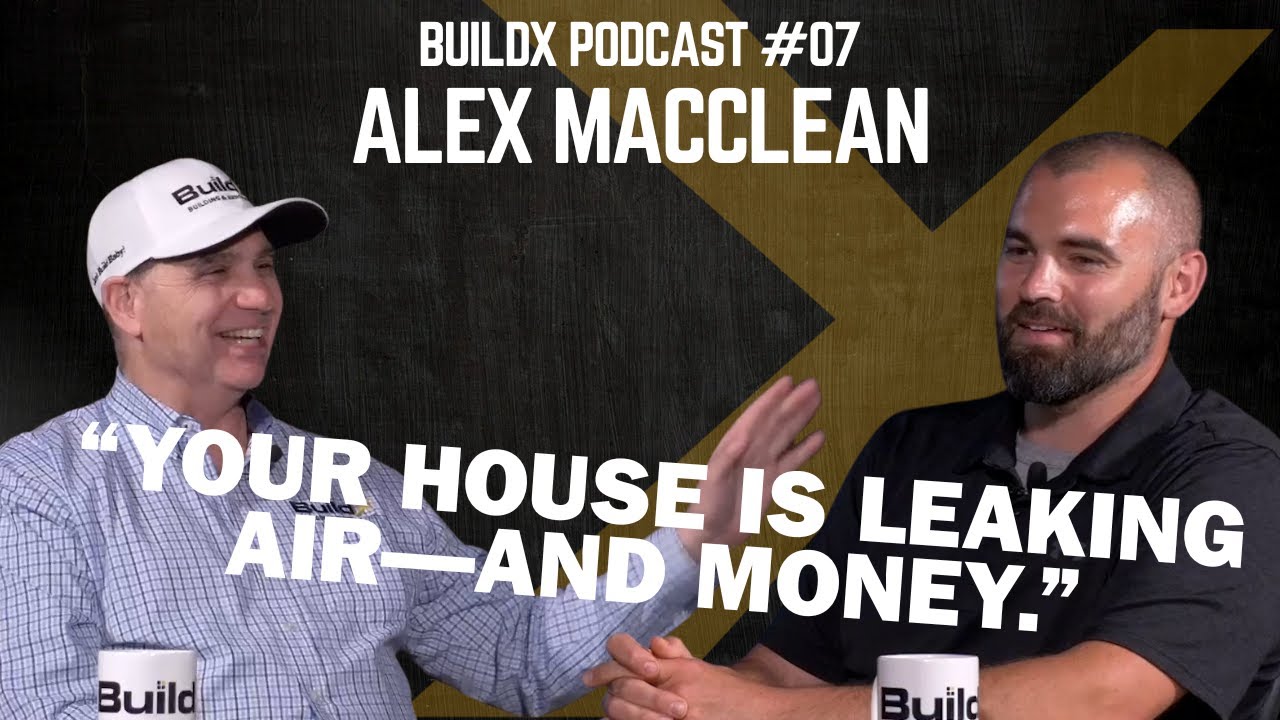
Watch: Your House Is Leaking, Here's How to Seal It Right w/ Alex MacLean | BuildX Podcast #07
The sealing crew is finished and they give you a certificate with a number on it that looks like a good one and you put that page into the folder for the project. But four months later the rater who does the final test on the finished ADU tells you that the reading came back over the limit. Nobody can say which hole did it, the finishes are already done and the certificate of occupancy just needs a number that no one can find.
My name is Buz Artiano, founder of BuildX. We've built dozens of ADU projects across Massachusetts, mostly around the South Shore and Plymouth County areas. We are the only team you need: we do the design, permitting, and construction. So we see every phase of a project from the first site visit up until you move in. We evaluate septic constraints, zoning issues, utility connections and the requirements for a permit from the city. Massachusetts allows one accessory dwelling unit by right in single family zoning areas, although municipal building code, health code, and dimensional requirements still apply to every project. You can review the state requirements at mass.gov. Air tightness is a requirement in the Massachusetts energy code that depends on several trades. There are inspections during the build, but those checks don't catch every hole made after sealing.
A seal certificate is just a checkpoint, not a grade. The measurement that will decide if your ADU gets its certificate of occupancy is done later, by a different person, on a building that's changed since the crew left. Everything in that time gap is handled by your builder, which is why we plan the window before we ever make a date for the sealing.
Quick Answer: Yes. Air sealing goes into the building early, and the certificate the crew leaves with the homeowner tells how the ADU tested on the day of the test, not how it will perform at the end. Every trade that works on the ADU after that can open the framework again, and mid-build inspections don't guarantee the final air tightness result. On our HERS-rated builds, the number that counts comes from the HERS rater's final test, which comes right before the certificate of occupancy. Protecting it involves three things: completing every penetration before the seal, working toward a margin below the code threshold instead of on it, and checking the air sealing before the rater does.
In This Article
- Can One Trade Undo an Air Seal That Already Passed?
- Who Actually Certifies Air Tightness on Your ADU?
- What Your Seal Certificate Is Actually Telling You
- What Happens Between the Seal and the Final Test?
- Why Does One Dented Vent Flap Change Your Result?
- How Do We Protect the Seal After the Crew Leaves?
- What Should You Ask Your Builder Before the Sealing Crew Arrives?
- When Is Daily Monitoring More Than Your Project Needs?
- How to Reach the Final Test Without a Surprise
Can One Trade Undo an Air Seal That Already Passed?
Yes, and it happens more often than the certificate in your project folder would indicate. Aerosolized air sealing is put into the structure early, either at rough framing and sheathing or right after the sheetrock is hung. The crew pressurizes the building, the sealant finds all the leaks, and the reading says the number is down, so everyone signs off on a good result. Then the crew leaves and the rest of the job goes on.
Alex MacLean, the air sealing specialist we talked to on the BuildX Podcast, has personally done well over a thousand blower door tests, which is the test where a fan is put in the door and that measures how much air a building leaks under pressure. When we asked him what the problems with the system are, he didn't talk about the product. He talked about the timeframe: "the bad stuff would just be a lack of monitoring by a builder post seal." The sealing company's guarantee says the same thing. When they leave, your ADU will be under the threshold the tester needs, "barring someone else coming in drilling holes."
This situation that costs families money is completely ordinary. A plumber returns for a day of work, and drills through a top plate or a rim joist to run a line. He thinks nothing of it, because on every other system in the building that's just a normal day. No one re-tests. The number goes in one direction, and the first person to see it is the rater at the end of the job.
Who Actually Certifies Air Tightness on Your ADU?
On our HERS-rated builds, the HERS rater handles that verification. HERS stands for Home Energy Rating System, and the rater is the independent third party who checks the ADU, verifies what was installed, and then does the final blower door test on the finished ADU. Their filing is the completion of the energy code compliance, and it happens at the end of the project, right before the certificate of occupancy that lets the homeowner move in. As MacLean described it, certification "happens about dead last in the entire process of building."
If you compare that with every other system in the ADU you'll see that this runs backwards. The electrician tests circuits and an inspector signs off. The plumber pressure-tests lines and an inspector signs off. All those trades check their own work as they finish it, and so each inspection confirms that a specific part of the building is up to code on the day it was checked. But air tightness is put in early and it stays behind the finished surfaces for months. And the final measurement is taken by a rater who isn't there for every hole drilled after sealing.
The threshold that rater tests have to come up to depends on where you're building. Massachusetts has three levels of building energy code: a base code that applies statewide, plus an opt-in stretch code and an opt-in specialized code that individual cities and towns can adopt on their own. The target for your specific project depends on which level your town uses, and you can confirm which one applies to your town at mass.gov.
What Your Seal Certificate Is Actually Telling You
The certificate shows a measurement, not an outcome. It shows what the building leaked when the crew got there, what it leaked when they finished, and that the structure was under the limit at that moment, with the windows taped off and the ventilation openings sealed. MacLean is direct about the limits of the certificate. He says it's "a good starting point just to at least gauge how everything is operating in the home," and adds that it is "not going to be the exact reading" at the end of the job.
If you look at it as a checkpoint, then the certificate is valuable. It proves the ADU was able to get to a passing number. It shows how much room there was below the threshold. It gives your rater something to compare to later, and that narrows the search to figure out later what changed after that date.
If you think of it as a passing grade, that's dangerous because it certifies a building that no longer exists. Every fixture, vent, wire, and pipe that's put in after the test changed the thing being measured.
What Happens Between the Seal and the Final Test?
Work happens and that's the whole problem. MacLean describes the two timing schedules the same way we schedule them. The crew comes in and does the rough framing and sheathing, or they go in right after sheetrock, and "after each one of those, there's a whole succession of continuous work that's going to happen that this system sometimes cannot fully account for."
On an ADU that progression includes plumbing fixtures and vents, electrical devices and low-voltage runs, mechanical equipment and its wall penetrations, exterior trim and siding details, and any change order the family needs to add along the way. Each one of these means someone with a drill, a hole saw, or a reciprocating saw, working on a building where the air barrier is buried behind finished surfaces and no one on site can see it.
The envelope is easily damaged even while the technicians are still standing in it. MacLean described seeing the numbers go up in the middle of the seal because the plastic and tape over an attic opening didn't hold: "You're sitting there and you can just see a giant spike and you go, oh, no, what happened?" If a covering can fail during the middle of a controlled test, then a top plate can get drilled several months later when nobody is there watching at all.
Why Does One Dented Vent Flap Change Your Result?
Because the leaks that fail a final test aren't usually dramatic. They are hardware, like bath fans, dryer vents, and range hoods that end in outside flappers, and the cheap ones that you get in bulk with no foam seal and a weak spring. A flap that lays flat and tight only leaks a small, predictable amount. MacLean put the difference like this: a flapper that would have leaked five to 10 CFM, which is cubic feet of air per minute, leaks 20 or 30 once the metal is dented.
That's the second half of the problem. The rater's job is to give you a number, not to look for the cause. If you can see the defect from outside while the test is being done, a good rater will flag it. But beyond that, the report will just say that the building failed and needs to be brought up to code. Finding the reason is the builder's problem on his schedule.
That's why vent hardware should be on the specification sheet next to the insulation and the windows. It's a line item almost nobody reads, but just a handful of dented flaps can use up the entire cushion that the sealing crew left behind them.
How Do We Protect the Seal After the Crew Leaves?
Before we let a sealing crew on one of our job sites, we do a penetration checklist: every exterior penetration done, wires poked through, hose spigots through the wall, hood vents, dryer vents, and bathroom vents put in. We don't set a date until the list is finished, and we'll change the date instead of sealing a building that still has holes.
The reason is mechanical instead of administrative. Aerosolized sealing closes the leaks that are there while the fan is running. It can't close a hole that's cut next week, and it can't be added to on a Friday afternoon without setting everything up again. Everything that happens after the crew drives away moves the number one direction. So a builder who schedules the seal early to keep a schedule moving is using up the safety margin before the crew has their turn at it.
The margin's the other part of it. Crews deliberately finish below the threshold, and MacLean explained where that cushion goes: windows get taped, bath fans and dedicated ventilation get taped, "and even when they have dampers on them, they're still going to leak a little bit." Part of the margin of safety is used up by ordinary hardware the day the building is finished, before anyone comes back. We see the gap between the certificate number and the code threshold as a budget for the work that follows, not as a bonus we already received.
The last piece is verification. Somebody has to check before the rater does, whether that's a blower door test that the builder does, or a test by the sealing crew that's called back in. In the closing weeks of an ADU, the question you should be asking isn't whether the seal was good, it's whether anything changed since it was tested, and who worked on the ADU to make that change.
What Should You Ask Your Builder Before the Sealing Crew Arrives?
These questions should be in a specific discussion, before a contract is signed, because every one of them is a decision about the scheduling instead of about a product:
- When will the seal be in the schedule and which crews will have work to do after that date?
- What number are you trying to achieve and how, and how far below the code threshold will that put us?
- Who checks the envelope between the seal and the rater's final test, and with what equipment?
- What hardware is specified for the bath fans, the dryer vent, and the range hood?
- Who carries the cost if the final test comes back over and the leak came from a trade working after the seal?
A builder who has lived through a failed final test answers these in specifics: a date, a target, a name, and a plan for the weeks in between. A builder who answers by handing you the seal certificate has told you something important, which is that they treat the seal as the finish line.
When Is Daily Monitoring More Than Your Project Needs?
We use aerosolized sealing and we build our schedule around it, so you should expect us to argue that every project needs the full protocol. That would be overselling it.
The most forceful type of checking was told to us in an earlier episode, when a guest said that some passive-house builders have their own blower door and run it every day, so that when the plumber leaves and the reading goes up they know just which day the hole showed up. When we discussed it with MacLean, he confirmed only part of it: "some, yes. I mean, I'd say the ones that have been doing it a bit longer are approaching it in that manner." That's a way of doing it that we heard about from experienced crews. It is not an industry standard, and we're not going to say that it is.
For a detached ADU with a short trade list and one builder in charge of the scheduling, a complete pre-seal checklist and just one check before the rater comes will do the same job as testing every day. And if the builder you're talking to already owns a blower door and does his own tests as the work goes along, he's fixing the exact problem a harder way, and adding our procedure on top of theirs doesn't get you anything. MacLean's take on that was honest about how new this all is: "I don't think anyone's truly comfortable with it right now at this point. Unless it's the builder who has his own kit and he's just constantly monitoring this."
How to Reach the Final Test Without a Surprise
The certificate from the sealing crew is just a checkpoint, but the test by the rater is the grade. It comes last and the weeks between are run by the builder. When you compare builders, that time period is what you should ask about, because the answer tells you whether air tightness is a line item that they buy or a schedule of things that they manage.
We'll look at your plans, set a sealing date that works with your trade schedule, and show you what margin we build for before a rater ever runs the final test on your ADU.
See a finished ADU in person or Request a Free Consultation
Call us: (781) 627-7000