
What Are Your Options for Financing an ADU?
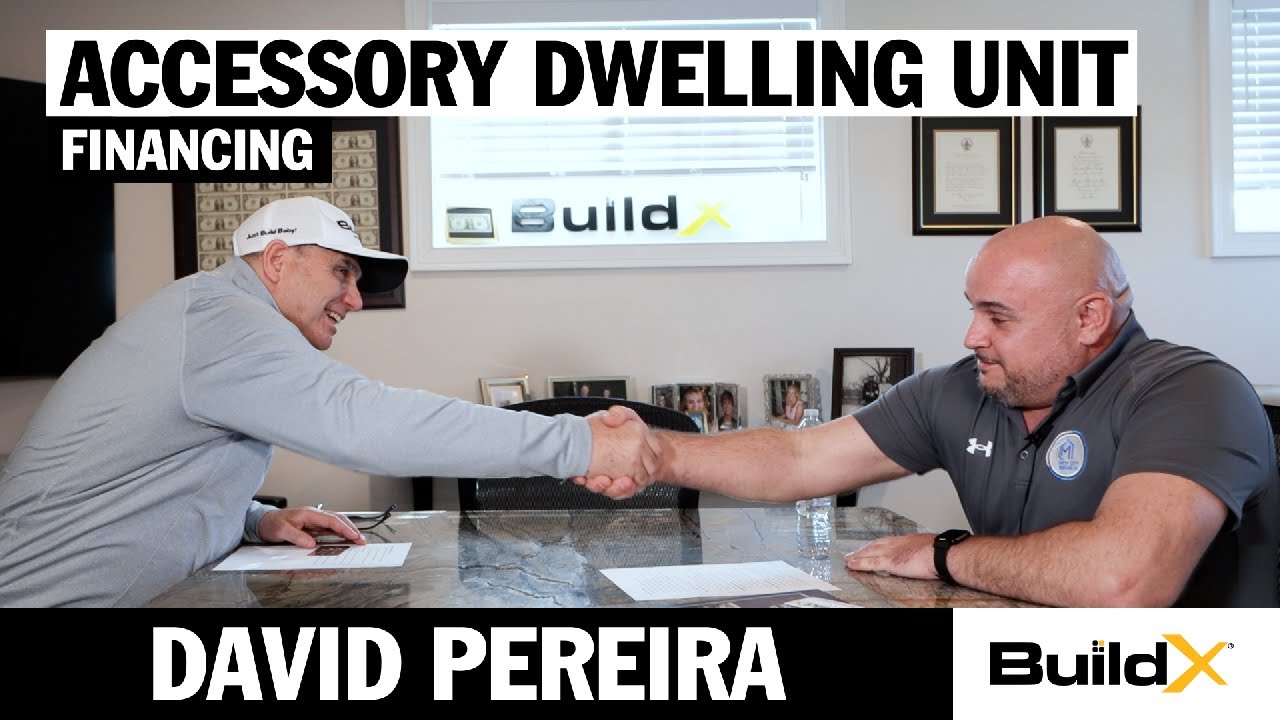
Watch: Mastering Mortgages | David Pereira's Inside Scoop on ADU Financing
If you're thinking about building an ADU for a parent, an adult child, or rental income, one of the first things everybody wants to know is how much it will cost. Most people have never financed a construction project before. The loan options and terminology are unfamiliar to them, and there's a lot of anxiety around picking the right type of loan and fear of overpaying on interest. We get it, and you're not the only one who gets overwhelmed with all the financing stuff.
My name is Buz Artiano, and I started BuildX. Since then we've built dozens of ADUs all over Massachusetts, but most of our builds have been around the South Shore and Plymouth County areas. Because we handle all the design, permitting, and construction ourselves, we work with our clients on the financing side on every project. We see how septic constraints, lot coverage limits, and permitting timelines affect the build and the type of loan you need. That experience helps us know which ways of financing work and which ones tend to create problems later.
In this article, we'll talk about the four main types of loans available for ADU construction in Massachusetts. They are home equity loans, home equity lines of credit (HELOCs), FHA 203K renovation loans, and Fannie Mae/Freddie Mac HomeStyle Renovation Loans. They all have different requirements, different costs, and different tradeoffs. By the end, you should know which one fits your financial situation so you can have an informed conversation with a lender and not have to guess.
Quick Answer: Massachusetts homeowners have four basic options for financing an ADU. A home equity loan or HELOC uses the equity you have to lend you money and leaves your first mortgage untouched. An FHA 203K renovation loan finances up to 110 percent of the value of the property after the ADU is built, but it only applies to attached ADUs and it replaces your existing mortgage. A Fannie Mae or Freddie Mac HomeStyle Renovation Loan works kind of like the 203K but you can use it for detached ADUs. The right product depends on how much equity you have, your credit score, whether you want to keep your existing mortgage rate, and whether your ADU is attached or detached.
In This Article
- What Are the Four Main Financing Products for ADU Construction?
- How Do I Know Which Financing Product Fits My Situation?
- What Does Each Loan Product Actually Cost to Set Up?
- Does It Matter Whether My ADU Is Attached or Detached?
- Should I Work with a Mortgage Broker or Go Directly to a Bank?
- Is Financing Always the Right Move for an ADU?
- Which Financing Path Makes Sense for Your Property?
What Are the Four Main Financing Products for ADU Construction?
There are four loan types of loans that Massachusetts homeowners use the most to finance ADU construction. They all work differently, and the right choice depends on how much equity you have, what your current mortgage rate looks like, and whether you're building an attached or detached ADU.
Home equity loan. A home equity loan is basically a 2nd mortgage on your property. You borrow a set amount at either a fixed or variable rate, and you make monthly payments on the full balance from day one. Your first mortgage stays exactly how it is. If your home is worth $700,000 and you owe $250,000, you have about $450,000 in equity, which is more than enough room to borrow $250,000 to $300,000 for an ADU project. The major advantage to this one is that your existing mortgage rate stays the same.
Home equity line of credit (HELOC). A HELOC is an open-ended second loan. During the draw period, which is usually 10 years, you only pay interest on the amount you've used, not the whole available amount. You can pull money, pay it down, and pull money again. HELOCs carry variable interest rates with caps for minimum and maximum. If your construction costs come in phases, a HELOC gives you flexibility to only pull the money when you need it rather than borrowing the full amount upfront.
FHA 203K renovation loan. This is a government-backed loan that lets you finance up to 110 percent of your property's after-repair value. It combines your existing mortgage and your construction costs into one loan. You have to have a credit score of at least 620, and you can have a debt-to-income ratio of up to 56 percent. Most banks only allow up to 50 percent for regular mortgages. The biggest thing with the FHA 203K loans is that you can only build an attached ADU. If you want a detached unit, you have to go with a different type of loan.
Fannie Mae/Freddie Mac HomeStyle Renovation Loan. The HomeStyle Renovation Loan is similar to the 203K. It also combines your existing mortgage and construction costs into one loan. The difference is that conventional renovation loans allow detached ADUs. Underwriting is pretty basic and conventional, which means you'll have to be closer to that 50% debt-to-income requirement, but there's no restriction on what type of ADU you can build.
How Do I Know Which Financing Product Fits My Situation?
The right financing depends on three things. How much equity you have, your current mortgage rate, and whether your ADU is attached or detached.
If you have a lot of equity and a low mortgage rate, a home equity loan or HELOC is usually the best way to go. A lot of people locked in rates between 2.5 and 3.5 percent during 2020 and 2021. Replacing that mortgage with a renovation loan at today's rates would increase those monthly payments by a lot. A second loan keeps the first mortgage untouched, and you only pay interest on the new money you borrow.
If you don't have enough equity for a second lien, a renovation loan (FHA 203K or HomeStyle) lets you finance the whole project based on what the property will be worth after the ADU is built. This can be a great option for homeowners who bought recently or who don't have a lot of equity, but they have good income.
If you want a detached ADU, the FHA 203K isn't an option. Your renovation loan option is the HomeStyle. If you have the equity, a home equity loan or HELOC works regardless of whether the unit is attached or detached.
We walk every BuildX client through all of this before even thinking about starting construction. The financing structure affects the timeline, the pay schedule, and in some cases, even the design. On projects where a family needs a detached unit, but only qualifies for an FHA product, that can change the entire plan. We always check into these things during the design phase so families are not surprised after they have already committed to a loan.
What Does Each Loan Product Actually Cost to Set Up?
Loan costs can be very different depending on the loan type, lender, and loan amount. Here's some basic ranges we usually see based on Massachusetts ADU projects.
Home equity loans and HELOCs carry the lowest closing costs because they're just a second loan, you're not refinancing the whole property, so the closing costs are usually a fraction of what a full mortgage would be.
FHA 203K loans have higher upfront costs. On a loan in the $700,000 range, closing costs are between $8,000 to $12,000, but they can be financed into the loan. You also have to pay a HUD consultant fee of $1,500 out of pocket and an appraisal fee of approximately $700 out of pocket. The HUD consultant reviews the plans and specs and reports back to the underwriter on the construction progress.
HomeStyle Renovation Loans have traditional closing cost structures, which are similar to a standard refinance. Specific costs depend on the lender and loan amount.
It's important to know that none of these loans have prepayment penalties. If interest rates drop after you close, you can refinance without paying extra for paying off the original loan early.
Does It Matter Whether My ADU Is Attached or Detached?
Yes. One of the biggest factors in choosing your financing is whether you want an attached or detached ADU.
The FHA 203K renovation loan is limited to attached ADUs because HUD classifies the loan as a renovation to the existing home. A detached structure doesn't qualify as an addition, it's a separate building. If you are planning a detached ADU, you cannot use the 203K.
The HomeStyle Renovation Loan allows both attached and detached ADUs. This makes it the only renovation loan option for homeowners who want a detached ADU.
Home equity loans and HELOCs have no restrictions based on the type of structure. They are just a loan against your equity, the bank doesn't care what you do with the money.
If you're still deciding whether to build an attached or detached ADU, knowing your financing options should be part of your decision. The type of loan you pick affects your interest rate, your monthly payment, and your total overall cost.
Should I Work with a Mortgage Broker or Go Directly to a Bank?
A mortgage broker shops multiple lenders for you. A direct lender or bank offers only its own loans. For ADU financing, using a broker is the best way to go because not every bank offers renovation loans, and when they do the terms vary a lot. A broker with relationships across 20 or more lending partners can find the right type of loan and rate that fits your situation specifically, you're not limited to what a single bank can offer you.
Brokers are paid based on the amount of the loan, not the type. There's no benefit to them to steer you toward a certain loan type. They make the same amount of money whether you take a home equity loan, a HELOC, or a renovation loan.
The national data says that people save money by working with a mortgage broker compared to going directly to a bank or credit union. That's because they shop rates from multiple lenders, not just a single bank.
Is Financing Always the Right Move for an ADU?
Not always. Some families have the cash to fund the project outright, and paying cash means no interest costs, closing costs, or dealing with complicated construction draw schedules. If you're in a position to pay without borrowing, that's a really worthwhile way to go.
Financing also depends on what you actually qualify for. If your credit score is below 620, you won't qualify for most renovation loans. If your debt-to-income ratio is high, adding a construction loan may not be possible, even if you've got plenty of equity. An upfront and honest conversation with a lender before you start designing will save months of planning time if the numbers just don't work.
We encourage every family to talk to a lender early, even before the first design meeting. Getting a clear picture of what you qualify for and what your monthly payment will look like prevents you from falling in love with a project that you can't afford to build.
Which Financing Path Makes Sense for Your Property?
The loan you choose affects your monthly payment, your existing mortgage, your total interest cost, and in some cases, whether you build attached or detached. Getting this decision right before construction starts is one of the most consequential steps in the entire ADU process.
We will walk through your equity position, connect you with lenders who specialize in ADU financing, and help you understand the real numbers before you commit.
See what your investment looks like in person or Request a Free Consultation
Call us: (781) 627-7000