
Where Do Your Parents Live While You Build Their In-Law Apartment?
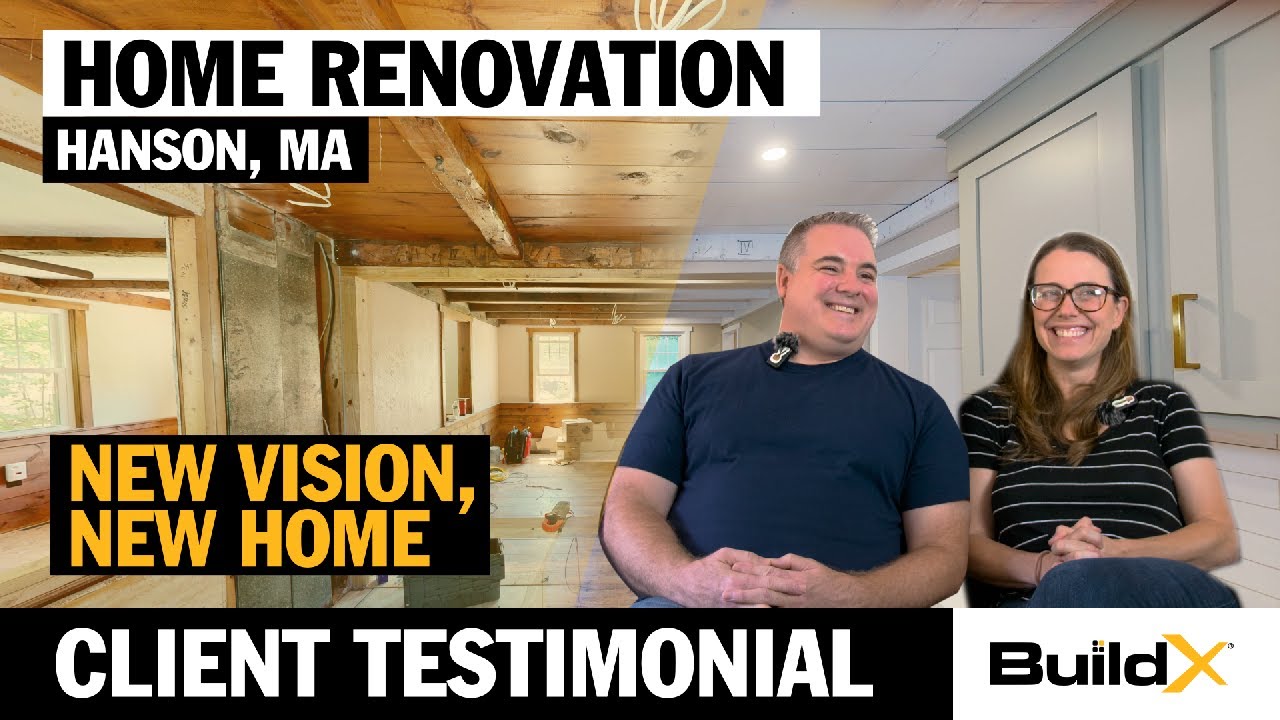
Watch: In-Law Apartment Plus Whole-Home Remodel | Client Testimonial
The question that stops most in-law apartments isn't about design or budget. It's about a person. Your parents have to stay somewhere while their apartment is being built, but the answers you've come up with so far means moving them out, into a rental or a temporary room, and then paying a second bill for housing in addition to the construction bill. For many families, that one unanswered question is why the project doesn't move from just a conversation to an actual plan.
My name is Buz Artiano, and I am the founder of BuildX. We've built dozens of ADU projects across Massachusetts, mostly around the South Shore and Plymouth County areas. We are the only team you need: we do the design, permitting, and construction. So we see every phase of a project from the first site visit up until you move in. We evaluate septic constraints, zoning issues, utility connections and the requirements for a permit from the city before a crew shows up. And that last matters more here than it looks, because when someone is living on the property while a new house is being built, that affects somebody's daily life.
Greg and Talia Mehra are BuildX clients. We built an attached in-law apartment addition for Greg's parents at their home in Hanson, then gutted and remodeled the main house afterward. Greg's parents never had to move off the property, not even for one night. They were able to live in the main house while we built the addition, and then they moved into the finished in-law apartment while we worked on the main house, right through the winter, over a six month period.
You'd expect us to share stories from families who had a good experience with us. We are sharing this one because the Mehras solved the problem that's brought up in almost every conversation we have with in-laws, and their experience with it is more useful to you than anything we could say about ourselves. Their build also has real limits and we will discuss those before the end.
Quick Answer: Your parents can stay on the property for the whole build if the in-law apartment is being built first and the main house work is second. The finished addition becomes their home before we do any work on the existing house. Greg and Talia Mehra's parents in Hanson lived in the main house while we built the in-law apartment, and then they were able to move into the finished apartment while gutted the main house. They didn't spend even one night off site, and we were building for six months straight right through the winter.never spent a night off site. This only works when the addition is done first and finished enough to live in before the main house work begins.
In This Article
- Where Did the Mehras' Parents Live During the Build?
- Why Does Build Order Decide Whether Your Parents Can Stay?
- What Is Daily Life Like With a Crew on Site for Six Months?
- How Do You Know Who Will Be at the House Each Day?
- The Parts of This Plan to Pressure-Test Before You Commit
- When Staying on Site Is the Wrong Call for Your Family
- What Should You Settle With Your Builder Before Phase One Starts?
- Ready to Map Out Where Your Parents Will Live During Your Build?
Where Did the Mehras' Parents Live During the Build?
There are three places a parent can be while you build them an in-law apartment. They can stay in the main house, or they live off the property in a rental, an extended stay, or a temporary room in a facility. Or they can move into the new apartment itself, which only works if the apartment is finished before the rest of the work begins. The first two options are the ones most families think of. The third one changes the cost of the project.
The Mehras used the first and the third ideas, in that order, but didn't use the second one. Greg said it plainly: "This project was unique in the fact that my parents lived here during the entire project." During the first phase as we worked on the attached in-law apartment addition, his parents stayed in the main house. Then when that addition was done, they moved into it. It wasn't until then that we gutted and remodeled the main house.
Greg talked about how it worked like this: "They lived in the main house while the in-law was built, and then they moved into the in-law when we switched over to renovating the main property." Talia described the same plan from the first step. "Step one was to get the addition, the in-law addition built, and then the second step would be the renovating, getting us moved in and comfortable over here."
The result is what's important. Greg's parents did not spend a single night off the property, and that period of time ran through a New England winter. In Greg's words, they "didn't move off-site during that, right through the winter."
Why Does Build Order Decide Whether Your Parents Can Stay?
Families think of the order of things as just a scheduling preference. But with a combined project like this one, it's a decision that decides if someone has to leave at all. Builders call the temporary place people live while their real home is unusable a swing space. On the Mehra project, the swing space was the in-law apartment itself.
If you build the addition first you have a finished, occupied residence on the property before the disruptive work begins. The addition is new construction on untouched ground, so the existing house will be completely livable the entire time it's being built. The kitchen works, the bathrooms work and the heat works. Then, the day the addition is finished you will have somewhere to put people, and the main house can be emptied and opened up and no one will be sleeping in a construction zone.
But if you reverse the order of that, it all collapses. But if you remodel the main house first then there's no second home finished yet. That means the family will have to leave the property because of the dust, noise, and utility interruption. The addition pays for its own swing space, but only if it's built first. That one decision about sequence will decide whether you write a second housing check for the length of the build.
We put the order this way whenever a family is adding an attached in-law apartment and remodeling their main house in the same project. The addition is the least disruptive part to live through and the best way to finish early, so we put it first every time the site and the design will let us.
What Is Daily Life Like With a Crew on Site for Six Months?
The order of things answers the housing question but it doesn't answer the living question. Six months is a long time to live in a house where a construction crew is working and when your parents are in their seventies or eighties, the daily experience matters as much as the schedule.
At the Mehras', the crew and the parents became part of each other's day. Greg said the crew "became part of the family for that six-month period," and talked about their routine: "They would have coffee together in the morning, they would talk at lunch." His summary of how his parents were treated was this: "They treated my parents like family," he said, and "as far as them being respectful, they went above and beyond to make sure that my parents were comfortable throughout the renovation process."
Talia talked about the other half of their daily life, the part that homeowners see from the doorway. "When I would pass by workers, and everything was always really clean, cleaned up, they would answer questions for me if I just had a few questions."
We were also on the property all the time. Greg said that "there was somebody at this property almost every week," and that even Sunday work kept the schedule intact. That presence is what keeps a two-phase build moving, and it's also what makes the conduct of the crew toward your parents into something specific instead of just something nice.
How Do You Know Who Will Be at the House Each Day?
When your parents live on the site, information isn't just a courtesy, it's a matter of safety and dignity. An 80-year-old shouldn't be surprised by a stranger with a nail gun walking past the bedroom window.
Two things helped with this on the Mehra project. The schedule was published, in Greg's words: "The schedule was laid out for us online, so we always knew what the plan was for the upcoming week." And the parents were told directly rather than through their son: "They were always letting my parents know who would be at the house each day."
Then there was also just one person to call. Kevin Healy managed the build as the Mehras' point man, and Greg described how it worked: "Kevin would delegate our concerns out, and the problem would be fixed," and "There was never a question where we stood in the project." When something came up, Greg said, "BuildX was always immediately responsive, and we would have solutions within a matter of days."
One person to talk to matters more on a project with people living there than on one that's not occupied. On an empty jobsite, a slow answer costs a day of schedule. On an occupied jobsite with your parents inside, a slow answer might cost them to lose a night of sleep.
The Parts of This Plan to Pressure-Test Before You Commit
We're not trying to push one family's outcome. The Mehras' build is a real result, and it also has gaps worth talking about before you expect the same thing at your house.
Greg confirmed that problems came up. He never specified what they were but just said some concerns "popped up from time to time," which tells you the six months were not without some friction but tells us nothing about what went wrong. Plan for something.
The six-month number and the winter timing was what Greg recollected on camera in 2024, not from a contract or a project log. Think of it as their family's experience and not a specific timeline for your project.
The Mehras' story also doesn't cover the hardest days. It doesn't talk about the dust and air quality when the main house was being gutted, or about the water and power shutoffs, and nothing about how the parents were able to get to a kitchen and a bathroom while the main house was open. These are good questions to ask any builder who says you and your family can stay on site.
When Staying on Site Is the Wrong Call for Your Family
We build attached in-law additions and we time them so families can stay in their home, so you'd expect us to say that staying on site is always the best plan. It isn't.
Three situations will change our answer. When a parent has a respiratory condition, an immune condition, or recent surgery, months of demolition dust and temperature changes in a partially open house can be a real health risk and not just an inconvenience. When the lot is small enough that the addition has to be directly against the rooms your parents occupy, the noise and coming and going of the crew falls directly on them. And when the project is a main-house remodel with no addition attached to it, there isn't any swing space to move into and the timing advantage goes away.
In these cases the honest answer is to move your parents out for the phase that is the most disruptive and add the cost of housing to the project budget from the first day rather than dealing with later on. Families who plan for the move handle it fine. Families who don't are the ones who scramble.
What Should You Settle With Your Builder Before Phase One Starts?
If you've decided to keep your parents on the property, this plan needs to be in writing before the contract is signed instead of being negotiated later. Here are the items to settle up front on an occupied build.
- Confirm the order of the phases in writing, with the addition finished and ready to be lived in before main-house demolition begins.
- Ask what has to be signed off before anyone moves into the new addition, and who's in charge of getting it done.
- Name one person as a point of contact, how an issue escalates from one person to another, and how fast you can expect an answer.
- Require a published weekly schedule plus daily notices to the residents about who's going to be on site.
- Provide a map of kitchen, bathroom, water, and heat access for every day of the disruptive phase, with the shutoff days included.
The Mehras had four of those five already figured out: the phase order, the single point man, the published weekly schedule, and the daily notice to the parents. The fifth one, the day-by-day utility and access map, is the one thing that families forget until the water is already off, so make sure to get it on paper.
Ready to Map Out Where Your Parents Will Live During Your Build?
The Mehras' parents stayed home because the builder was ordered to let them stay. That must be done before anything else is decided, not after. If you get the addition finished before the main house is taken apart then your parents have somewhere to be. But if you get the order wrong then you are renting.
We will walk your property, sequence the addition and the main-house work so the finished in-law apartment becomes the swing space, and tell you honestly whether your family can stay on site through construction.
Walk through a completed in-law apartment or Request a Free Consultation
Call us: (781) 627-7000