
How Do You Protect Your Disabled Child's ADU Investment After You're Gone?
Watch: 40% of Caregivers Pass First... Here's Why That Matters for Your Family
Every parent of a child with a disability is afraid of what happens to their child after they're gone. You've spent your whole child's life advocating for them, making sure they get the right care, managing their benefits, and making sure they have a stable place to live. The thought of all that unraveling after you're gone is real and it can definitely keep you up at night. So you start looking into whether an ADU could give your child safety, stability, and independence right there on your own property, but that opens up even more fears. Maybe you are worried that the ADU might cause issues with their benefits or that an inheritance could stop their social security money. And when you're gone, who will take care of the property, the finances, and the care plan? These are very serious questions so they need answers because they will decide if building an ADU is the right move or just an expensive mistake.
My name is Buz Artiano, and I am the founder of BuildX. We've built dozens of ADU projects across Massachusetts, mostly around the South Shore and Plymouth County areas. We are the only team you need, we handle design, permitting, and construction. So we see every phase of a project from the first site visit up until you move in. We deal with septic constraints, zoning issues, and the state's new ADU laws. This whole topic is personal for us. The reason BuildX exists at all is because of a family with a disabled son who needed a housing solution and they didn't want him in a group home. We've since worked with many families in similar situations, and we've seen firsthand how the right planning eliminates the risks and makes it a great experience overall.
We've learned a lot from these families, and from the elder law and estate planning attorneys we work with. So we know that protecting your disabled child's ADU is definitely possible. You just have to have the right type of a trust, with the right person overseeing it, and a plan that makes sure your child's government benefits stay intact while giving them a secure long-term place to live. This article walks through exactly how that works, what the risks look like if you don't plan correctly, and what steps you need to take before you break ground.
Quick Answer: If you want to protect your disabled child's ADU you need to put the property in a third party supplemental needs trust while you're still alive. This trust lets your child live in the ADU, benefit from the property, and keep all their government benefits, including SSI and MassHealth. The trust requires a named trustee, often a sibling, family member, or professional trustee, who manages the asset on your child's behalf. If you don't take these steps, an inherited ADU could disqualify your child from benefits and force them into a situation where they have to spend down the inheritance in order to keep receiving benefits. Work with an elder law attorney before construction begins.
In This Article
- What Is the Biggest Risk to Your Disabled Child's ADU if You Do Not Plan Ahead?
- How Does a Third-Party Supplemental Needs Trust Protect the ADU?
- Who Manages the Trust After You Are Gone?
- Can Your Child's ADU Generate Rental Income Without Affecting Their Benefits?
- Is an ADU the Right Choice for Every Family with a Disabled Child?
- What Should You Do Before You Start Building?
- Your Child's Future Does Not Have to Be Uncertain
What Is the Biggest Risk to Your Disabled Child's ADU if You Do Not Plan Ahead?
The biggest risk is you might not be able to get government benefits. If your disabled child gets SSI (Supplemental Security Income), they can't have assets or bank accounts that are worth more than $2,000 in their name. If you die and any of your assets like the ADU, a life insurance policy or an IRA goes directly to your child, right away it will put them over the $2,000 limit. Then two things happen. First, they could lose their SSI benefits and second, MassHealth (Massachusetts's Medicaid program) will make your child spend part of the inheritance before they can get benefits again.
We have seen this happen when the family didn't plan ahead. A parent passes away, and the child gets their house and some savings. Then all of a sudden their government benefits and medical coverage is gone until the inheritance is spent. That happens all the time in real life. Elder law attorneys know cases where families inherit $500,000 or more and then are told they have to spend all of the money before they can receive any benefits again. The ADU you built to protect your child becomes the very thing that derails the whole financial support system they have in place.
The SSI resource limit is set by the Social Security Administration. For current eligibility requirements, visit ssa.gov.
How Does a Third-Party Supplemental Needs Trust Protect the ADU?
The legal mechanism that solves this problem is called a third-party supplemental needs trust. This is a trust that you, as the parent, create while you're still alive. Your child is the beneficiary, and not the trustee. That difference is important, because your child doesn't control or own any of the assets that make up the trust, so none of it will count toward the $2,000 SSI limit.
The ADU, the house, investment accounts, and any other assets you want to leave for your child's benefit go into this trust. Your child can live in the ADU, use and enjoy the property, and benefit from the income it generates, all without losing government benefits. The government benefits continue to pay for your child's needs-based care, including SSI, MassHealth, and any other programs. The assets in the trust are considered a supplement to that care. They pay for the things government programs don't cover. Things like recreation, personal items, home modifications, transportation, and quality-of-life expenses that make a real difference.
Now keep in mind there's a serious difference between a third-party supplemental needs trust and a first-party special needs trust. With a third-party trust (the one parents create), whatever is left in the trust after your child passes can go to your other children or other family members. With a first-party trust (one funded with the disabled person's own assets), the government must be repaid for Medicaid expenditures before any remaining assets go back to the family. The third-party structure makes sure your family's wealth stays in the family while still protecting your child's benefits.
Who Manages the Trust After You Are Gone?
This is a big question and it has to be answered after the legal structure is in place. The trust needs a trustee, and choosing the right one is as important as creating the trust itself.
You have three options. First, you can name another family member, typically a sibling of the disabled child, as the trustee. This works really well when the sibling is willing, capable, and stable enough to take on the responsibility long-term. Second, you can name a professional trustee, which is a licensed fiduciary whose only job is managing trust assets. Using a professional trustee means the family doesn't have to take care of it, but that does come with ongoing fees. The third approach is what most families end up doing. They name both a family trustee and a professional trustee who work together. The family member can speak for all the child's needs and wants, and the professional provides the financial and legal expertise. If they don't agree on something, the professional trustee is the tie breaker.
We discuss this with every family that is building an ADU for a disabled child, and talk about it right up front. Who you choose as a trustee will affect how the ADU is designed, who's on the title, and the long term set up of the property. On a recent project in Plymouth, the family's estate plan said the older sibling would eventually move into the main house to help care for the disabled child who is staying in the ADU. That plan determined basically every design choice we made. For example, the ADU needed a second bedroom for a caregiver, wider doorways for accessibility, and a layout that allowed supervision, but also privacy. The trustee arrangement is kind of what drove the building plan, not the other way around. We've seen enough of these projects to know that the legal planning and the construction planning have to happen at the same time, or you end up going back and fixing both.
Can Your Child's ADU Generate Rental Income Without Affecting Their Benefits?
This is another question that we get a lot. If the disabled child moves into the main house with caregivers after the parents pass, the ADU could be a source of rental income that would help pay for the person's care. The answer is yes, but only if the income flows into the trust, not to the child directly.
When the ADU is held inside the third-party supplemental needs trust, any rental income it brings in goes straight to the trust. The trustee manages that income and uses it to pay for any extra needs the child has. Because the child never receives the income directly, it doesn't count as earnings or assets against their SSI or MassHealth eligibility. This is a very sustainable method. The government benefits cover basic care, and the trust-held ADU generates extra money to pay for everything else.
An elder law attorney should be the one to design all the legal documents for you to say how rental income is managed within the trust, including distributions, tax reporting, and government benefit compliance. Every family's situation is different, and the rules around income, support, and countable resources can get pretty complicated, which means just one article can't tell you what you need to know, you have to speak with an attorney.
Is an ADU the Right Choice for Every Family with a Disabled Child?
No. And we'll tell you that even though we build ADUs for a living. An ADU is the right solution when the family has the property to support it, the money to build it, and a long-term care plan for after the parents are gone. When all of those things are in place, an ADU can completely transform a family's situation. We've seen children go from group home waitlists to having their own space on their parents' property. Right away we see their confidence soar, they have their independence, and their quality of life is much better.
But an ADU is not enough, you have to do all the legal and financial planning that makes it work. If you build one without establishing a trust, without designating a trustee, and without working with an attorney, you can create a problem rather than a solution. The ADU itself is just a building. What makes it safe for your child long-term is the legal structure around it. If you're not ready to invest in that planning alongside the construction, then it's not the right time.
We also encourage families to talk to more than one builder and more than one attorney. This is a decision that affects your child's life forever. The right team matters, don't rush things.
What Should You Do Before You Start Building?
The families who have the best outcomes are the ones who start the legal and financial planning before they start the construction planning. Here is the sequence that works.
First, consult an elder law attorney who specializes in special needs planning. Not a general estate attorney or a real estate attorney. It has to be an elder law attorney who understands SSI, MassHealth, supplemental needs trusts, and property ownership. They'll design the trust structure, figure out the right trustee arrangement, and make sure the ADU doesn't disrupt your child's benefits.
Second, bring your builder into the conversation early. The trust structure, the care plan, and the design of the ADU all kind of go together. If the plan calls for a caregiver bedroom, or specific accessibility features, or a layout that supports supervision, those requirements need to be part of the design from day one. You don't want to have to go back and add them later.
Third, get your mortgage lender, your attorney, and your builder all together as a team. ADU projects for families with disabled children involve financing, legal structuring, benefit preservation, and construction, so you need the whole team to communicate with each other. We tell every client: you need a mortgage person, a really good attorney, and a builder, and all three need to work together.
Your Child's Future Does Not Have to Be Uncertain
To fear what might happen after you are gone is real and serious. But the resources to deal with it are available. A third-party supplemental needs trust with the right trustee, and an ADU that is planned around your child's needs now and in the future, so the solution will work even when you are gone. The planning is not simple, but it is doable when you work with professionals who understand both the legal issues and the construction realities. Your child deserves a plan that will work for decades and not just a building that looks good on paper.
We will walk through your property and talk about your family's situation, and the design rules that your trust and care plan have to have. That way you understand exactly what the project involves before you make a decision.
Tour a completed ADU built for a family like yours or Request a Free Consultation
Call us: (781) 627-7000
Disclaimer: Every effort has been made to accurately convey Buz Artiano's answers based on live interviews and podcast episodes as of their original recording dates. However, pricing, timelines, materials, regulations, and other details may change over time. Please call our offices at (781) 627-7000 or schedule a Project Clarity Call before making any final decisions based on the information in this article.
Meet the builder
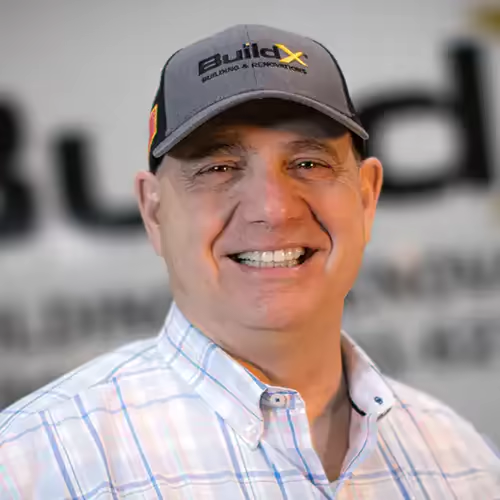
Buz Artiano
"My name is Buz Artiano, owner of BuildX. At BuildX we're more than a home builder. While building is what we do, the relationships that are created in the process are what drives our passion to transform your dream into a reality. That is why we strive to give a first-class experience to our clients by listening to their vision and then building their trust with a custom home design that matches their taste and lifestyle."
Get a Call Back
Enter your number and we'll call you in a few seconds.