
Can You Rent Your ADU on Airbnb in Massachusetts?
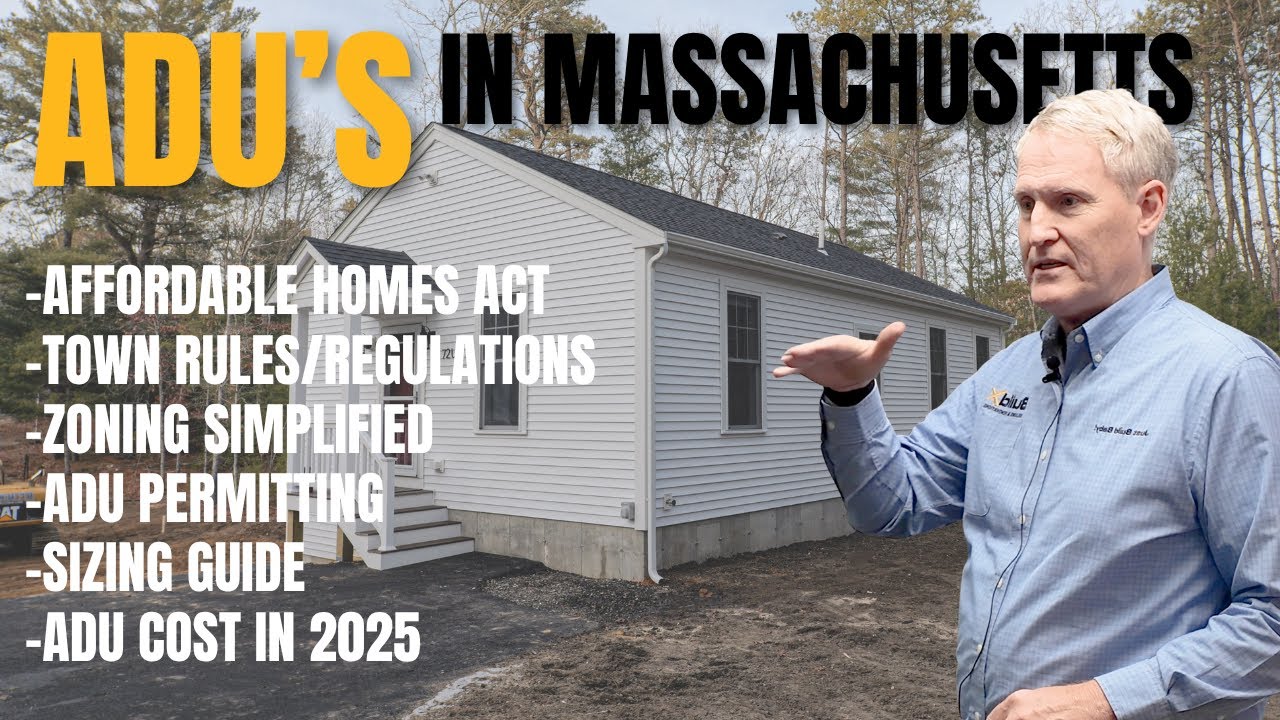
Watch: Massachusetts ADU Law Explained: The Affordable Homes Act (2025 Update)
Somewhere in the spreadsheet that made this ADU seem possible there's a line for nightly rental income. Two weeks booked in July and maybe a few weekends in the fall, enough to help pay the loan in the months when nobody in the family needs to use the space. We hear this idea all the time and we understand why. The nightly rates are easy to look up and the amount adds up to something the family can picture.
My name is Buz Artiano, founder of BuildX. We've built dozens of ADU projects across Massachusetts, mostly around the South Shore and Plymouth County areas. We are the only team you need: we do the design, permitting, and construction. So we see every phase of a project from the first site visit up until you move in. We evaluate septic constraints, zoning issues, utility connections and the requirements for a permit from the city. Massachusetts allows one accessory dwelling unit by right in single family zoning areas, although municipal building code, health code, and dimensional requirements still apply to every project. You can review the state requirements at mass.gov.
The honest answer to the Airbnb question is not the one most homeowners expect, and it's not the one they will give you either. Massachusetts didn't ban short-term rentals in ADUs but they did something else that will have more consequences for your budget. It gave the decision to your town. Understanding those two things is what will tell you whether the rental line in your spreadsheet is a plan or just a hope.
Quick Answer: Massachusetts doesn't ban short-term rentals in an ADU on the state level. The Affordable Homes Act protects your right to rent an ADU, then lets your city or town make the decision to restrict or prohibit short-term rental. State law defines a short-term rental as a stay of 31 consecutive calendar days or fewer. In our market on the South Shore and in Plymouth County, we haven't yet found a town that allows short-term ADU rentals. Until your own town says otherwise in writing, assume that nightly rental income isn't available and plan your finances around a longer tenancy or family occupancy.
In This Article
- Does the Massachusetts ADU Law Ban Airbnb Rentals?
- What Counts as a Short-Term Rental Under Massachusetts Law?
- Which Towns Allow Short-Term ADU Rentals Today?
- What Happens to Your Plan When Nightly Income Comes Out?
- How Do You Find Out What Your Own Town Allows?
- When Short-Term Rental Deserves a Second Look
- Settling the Airbnb Question Before You Sign a Construction Loan
Does the Massachusetts ADU Law Ban Airbnb Rentals?
No. The state zoning law, as it's amended by the Affordable Homes Act, protects both the use and the rental of a single accessory dwelling unit in a single-family zoning area. Your town can't require a special permit or other approval for that use or for renting it out. That protection is what the phrase by right means: if the project meets the criteria, the town has to allow it instead of voting on it.
Then the statute makes room for an exception and that is the answer to your question. The same paragraph that protects your right to rent also says that the unit is subject to restrictions and prohibitions on short-term rental if the city or town wants to impose them. The state protected renting but it didn't protect renting by the night.
That one addition to what the town or city can do is where the real answer is. It also explains why you'll see homeowners and builders online saying that the state of Massachusetts prohibits Airbnb in an accessory dwelling unit. That's a fair description of the result in most cities and towns right now. But it isn't a complete summary of the outcome in most of the communities and it's not an accurate description of the law. And the difference is important because a rule that your town controls, is also a rule your town can change.
Here's how the control over the rental issue is divided between the state and your town. The left column is what's settled everywhere in Massachusetts. The right column is what gets decided at your own town hall, which is why the answer is different depending on where your property is.
| Settled by state law | Decided by your city or town |
|---|---|
| One accessory dwelling unit is allowed in a single-family zoning district | Whether short-term rental of the unit is restricted or prohibited |
| Your right to rent the unit | Site plan review |
| No special permit required for the use or the rental | Dimensional setbacks and the bulk and height of structures |
| The definition of a short-term rental | Title V requirements where they apply |
You can review the current framework, including what municipalities are and are not permitted to control, at mass.gov.
What Counts as a Short-Term Rental Under Massachusetts Law?
The ADU statute doesn't have its own definition. It refers to Chapter 64G, the state law that has control over room occupancy. Under that chapter, the time limit that makes a stay a short-term rental is a period of not more than 31 consecutive calendar days.
So the limit is 31 days, not 30 and it applies to the length of one single stay. That's worth thinking about because that's not how most people think of the rule. A family that hosts a two-week guest in July and then a three-night guest on a fall weekend is running two short-term rentals by the state's definition even if the ADU is empty for ten months out of the year. How often isn't the test, and the total number of nights per year isn't the test either. It's the length of each individual stay that's the test.
A stay of 31 consecutive calendar days or fewer is the definition. Any tenant that stays longer than that doesn't fit the definition. Any plan for your ADU that involves long rental periods is very different than one that's built around a booking calendar. The statutory definition is at malegislature.gov.
Which Towns Allow Short-Term ADU Rentals Today?
In the communities where we build ADUs, we haven't found one.
We want to be careful about how far reaching that statement is. Massachusetts has hundreds of cities and towns, and we work in just a small part of them. We can't tell you what every municipality in the state has decided to do about the rentals of ADUs. We can tell you that with all the local ADU rules we have obtained a permit under, short-term rental of an accessory dwelling unit hasn't been on the table, and nobody we've talked to has told us otherwise.
That can change. The statute deliberately leaves the possibility open, and towns across the state are still writing and adding to local ADU rules. A town that wants to allow short-term ADU rentals has the authority to do that but a door that might be open in theory but is now closed in every community we've built ADUs in, isn't something to build your loan payment around.
What Happens to Your Plan When Nightly Income Comes Out?
In the plans homeowners bring to us, the rental line isn't a bonus, it's something that they are counting on. It's the reason that the monthly payment looked doable in the first place. When the town doesn't allow that option, the construction loan doesn't get any smaller and the payment doesn't change. The extra income is the only thing that disappears.
The intended use isn't just a question on the paperwork either. It will change what gets built. An ADU that's being built for nightly changes of occupancy and a unit that's built for a parent are not the same at all. Short-term use needs keyless entry, a separate laundry, bath and floor surfaces that can take harder use, and a layout that keeps the unit away from the main house are tops on the priority list, and accessibility moves down that list. A unit that's designed for a parent has the reverse order: a zero-step entry, solid blocking in the bathroom walls for grab bars nobody needs yet, wider door openings, and a line of sight to the main house instead of away from it. All these choices are decided at framing. They cost almost nothing to make on paper and a lot to change once the walls are closed. That's the reason your town's short-term rental answer should be dealt with in the design part of the process and not at closing.
The best way to deal with this is simple. Put zero on the short term rental line and then look to see what's left. If the project still works, you have a plan that you can now take to a lender. But if it only works with that rental income included, then the problem isn't financing. It's the scope of it, and scope is a far better problem to find sooner instead of later.
How Do You Find Out What Your Own Town Allows?
Here are four questions that you should ask your building or planning department before you commit to anything:
- Ask whether the town has adopted local ADU rules, and whether those rules talk about short-term rental.
- Ask whether the town has a general short-term rental bylaw or requirements for registration that would affect any of the homes on your property.
- Ask for the bylaw section number, or for the answer in writing, so that your plan has a document to back it up rather than just a phone call.
- Ask what a violation actually results in, because that consequence will affect you and not your builder.
Read the state laws before you call. When you go in knowing what your town is and isn't permitted to control can change the conversation. And it keeps you from accepting a rule that the town hasn't the authority to make you follow in the first place.
We'll be honest about how much help we can give here. The restrictions are different from town to town and it isn't something we deal with or keep track of. If that answer is going to disrupt your financing, get it from the town in writing instead of from us.
When Short-Term Rental Deserves a Second Look
You should know where we are on this. We build these units so obviously we are interested in building one for you. If we tell you the town won't allow a nightly rental and you can't afford to build the ADU, then that costs us the job. We're telling you anyway because we'd rather lose a project at the first, than give the family a finished ADU whose budget depended on rental income the town didn't agree to.
There's a possibility that the question may stay open rather than closed. If your town is actively rewriting its ADU bylaw, if you are in an area where the economy is seasonal, or if your timeline is long enough that the local rules could change before you finish, then keep asking. What we don't want you to do is finance based on an answer you don't have yet.
And there is a possibility that the honest answer might mean no project at all. If nightly income was the whole reason for building the ADU and your town has said no to short term rentals, then an ADU isn't the right use of the money. That's a possible outcome. We'd rather you figure that out now on paper, than later, after a foundation is in the ground.
Settling the Airbnb Question Before You Sign a Construction Loan
The state left this question up to your town, and in the communities where we build, no town has opened it yet. That means that the short-term rental line is the first thing to leave out of your ADU budget and the first question to ask your building department. Whatever's left after you take that line out is the project that you can actually finance.
Bring your town's written answer about short-term rental, and we'll show you what your project looks like with that income line at zero.
Walk through a finished ADU in person or Request a Free Consultation
Call us: (781) 627-7000