
How Much Does a Septic System Cost When Building an ADU?
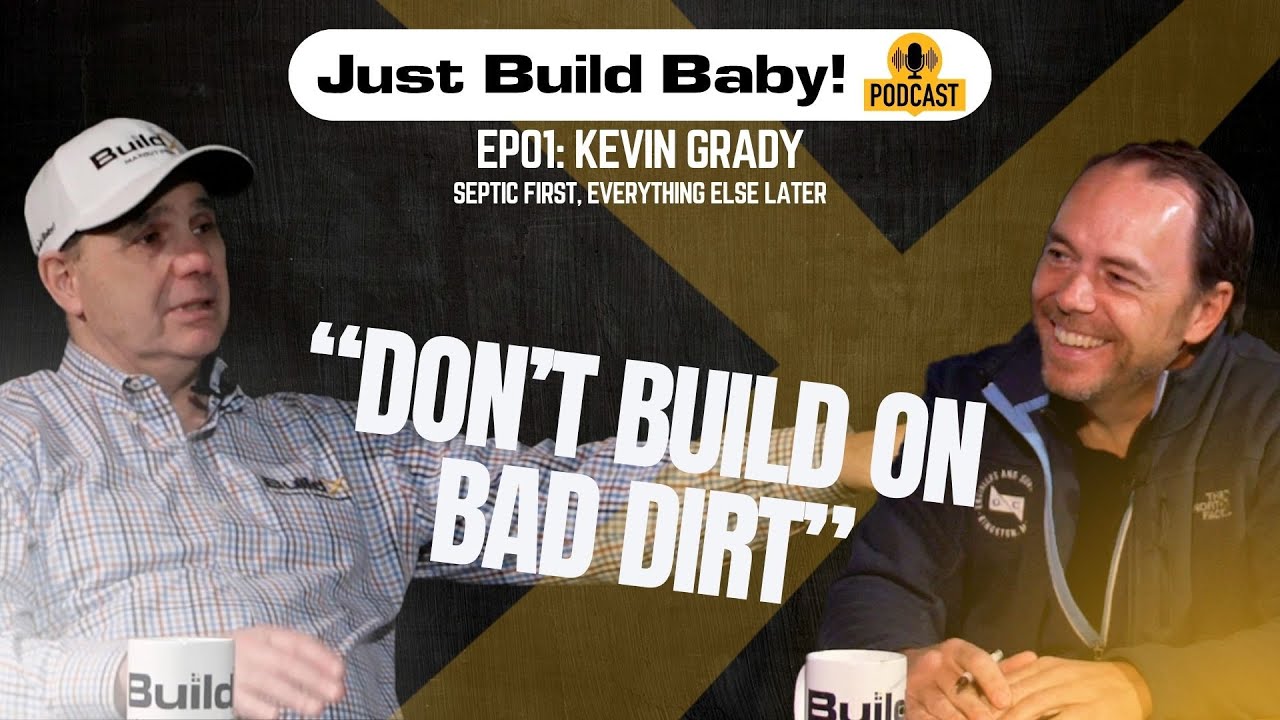
Watch: MA ADUs, Title V & Why Septic Might Be the Wildcard w/ Kevin Grady | BuildX Podcast #01
You're thinking about building an ADU on a property with a septic system, but wondering how much it's going to cost might be keeping you up at night. You've probably seen ADU prices quoted at $250,000 to $350,000 and assumed that covers everything. But the septic work can turn an affordable project into one that's just too much to fit comfortably in your budget, and most builders don't even talk about it until you're already committed.
My name is Buz Artiano, and I am the founder of BuildX. We've built dozens of ADU projects across Massachusetts, mostly the South Shore and Plymouth County. Every property on septic is its own puzzle, and we've learned to evaluate the possibility of septic before we ever quote a price. We handle design, permitting, and construction under one roof, and that includes dealing with the Title V regulations, Board of Health approvals, and the engineering work that will tell you what your septic system actually needs. We include all the septic work in our planning from day one because we've seen what happens when builders don't.
In this article we are going to walk you through what septic work actually costs when you are adding an ADU, from the best-case scenario where you're just adding a tank, to the worst-case scenario where you need a complete system replacement. We'll talk about what determines those costs, why it varies so much, and give you the info you need to make an educated decision on your financing plan before you commit to building.
Quick Answer: Septic costs for an ADU in Massachusetts can be as low as $10,000 to $12,000 in a best-case scenario as long as your system is compliant and all you need is an extra tank. Or they can go up to $50,000 or more if you have to replace the entire system, use alternative treatment technology, or do a ton of site work. The biggest variables are the condition of your current system, your lot size and the soil conditions, and whether your property is in a nitrogen-sensitive zone. It's not possible to quote an accurate ADU price without looking at your septic situation first.
In This Article
- What Does Septic Work Actually Cost for an ADU?
- What Drives Septic Costs Up or Down?
- Why Is Septic the Biggest Cost Variable in an ADU Project?
- What Does the Best-Case Septic Scenario Look Like?
- What Happens When Your Septic System Cannot Support an ADU?
- Is Septic a Dealbreaker for Every Property?
- Your Septic System Is the First Number You Need to Know
What Does Septic Work Actually Cost for an ADU?
The honest answer is that septic costs for an ADU really all depend on what's already in the ground on your property. Every property has a different existing septic system, different soil conditions, different lot size, and different Board of Health requirements. Because there are so many factors involved, the cost can have a very large range.
In the best-case scenario, your existing septic system was built after 1995 and is in full compliance with those Title V regulations, and also has enough capacity to support an additional bedroom or two. When all those things line up, the main septic cost is just adding a second tank. We've seen this be the case on some projects in Kingston, where an existing 1,500-gallon tank only needed a 1,000-gallon compartment added and the leaching field expanded. When that's all you need, the cost usually runs about $10,000 to $12,000.
In the mid-range scenario, your system is actually in compliance but it needs a pump chamber because the ADU will be at a slightly higher elevation than the main house. Pump chamber costs have gone up from $4,000 to $6,000 to $7,000 in just the last year or two, and it's an additional cost to the extra tank and bigger leaching field you'll need.
Here's your worst-case scenario: If you have a cesspool or an older system (pre-1995) which is non-conforming or has failed an inspection, then you're looking at a complete system replacement. That means a new tank, new leaching field, new engineering, survey work, perc testing, and maybe even an alternative treatment system or mounded system. If you are in this situation it can add $50,000 or more to your total ADU project cost.
What Drives Septic Costs Up or Down?
There are five main factors that are responsible for what the septic work will cost. You need to understand them before you start spending money or else you could end up planning a budget and then being blindsided by the septic costs. Let's go over the five things.
Your existing system's compliance status. A system installed after 2000 that received no variances at the time of installation is a great place to start because the Board of Health usually lets you just tie right into it. A system designed before the 1995 Title V changes is considered non-conforming by the Massachusetts Department of Environmental Protection. Other non-conforming systems would be cesspools, failed systems, and any system that never got upgrade approval. Non-conforming means you basically have to start over.
Your lot size and bedroom count. On properties with a well and septic, Massachusetts says that you have to have 10,000 square feet of land per bedroom. So if you have a 40,000-square-foot lot and a four-bedroom house, you can't add any more bedrooms to the property. Adding an ADU bedroom means you have to re-purpose one of the bedrooms in the main house to free up capacity for the septic, or you have to install a nitrogen-removal system. Either way, it's going to cost money.
Soil conditions and perc test results. The percolation test is what tells us how well your soil absorbs water, which is what determines the type and size of leaching field you'll need. If your soil percolates slowly, it's more likely that you'll need an alternative treatment system, which can get expensive. But you won't know how much until you spend money on the test itself.
Elevation and site access. If the ADU is built at a different elevation than the current system, you might have to add a pump chamber to push the effluent uphill. That adds $6,000 to $7,000 to the project. Kevin Grady, a civil engineer we work with in Kingston, has been designing septic systems since 1998 and he told us that even a single foot of elevation change can cause you to need a pump chamber.
Nitrogen-sensitive zone designation. Properties in nitrogen-sensitive areas are limited to 440 gallons of flow per day per acre. If your property is in one of these zones, you might have to get a more cutting edge treatment system like a Presby drip system. But that adds even more to the overall costs and it requires ongoing maintenance. Systems like that need quarterly inspections at first, and then annual inspections after that.
Why Is Septic the Biggest Cost Variable in an ADU Project?
Septic isn't just another line item on the price sheet. It's the number one cost variable for your whole project. We've said this over and over again. The septic system is the wild card of any ADU project. And there's no way to get a definitive answer on how much it will cost until you spend money on research, surveying, perc testing, and engineering.
The reason septic is the biggest part of the cost is because it involves multiple professionals, it requires approvals from multiple boards and departments, and there are several different underground conditions that have to be evaluated on site. Your builder needs to coordinate with a civil engineer, the local Board of Health, and potentially the Massachusetts DEP. Every one of these things adds time and money.
We evaluate septic before we quote an ADU price, because that one thing can determine whether a detached ADU is even in your budget and still makes financial sense. On a Plymouth County lot with a failed perc test, the septic system they need can add $40,000 to $60,000 to the total project. Most builders don't include septic in their estimates. We do, because we've seen families get surprised by a huge number that they didn't plan for, after they've already committed to a design and put down a deposit. Finding the most creative, budget-friendly way to make the septic work is the challenge of every project where the property is on septic. It requires an engineer who has a lot of experience and knows where and how to keep costs down as much as possible.
That's why the first step in our process is getting records from the Board of Health so we can go over any existing perc tests and have an engineer assess your lot before we talk about floor plans or deposits. Kevin Grady said that he can look at that preliminary work and have an idea of what you are dealing with in just a few minutes. But you have to spend the money and get that evaluation so you're not just guessing on what the septic solution is going to cost. This is the first step to getting a number you can actually count on and budget for.
What Does the Best-Case Septic Scenario Look Like?
The least expensive scenario for an ADU is when you have an existing system that's already oversized or compliant with Title V standards. In that case, you don't need a new system, just a small addition to the one you already have.
We'll explain how that works. On a Kingston project we just did, the homeowner had a 1,500-gallon tank installed within the last 20 years. The system was in compliance, and the lot had enough capacity to add bedrooms. The engineering solution was pretty easy. We would cut in a 1,000-gallon second-compartment tank, make the leaching field bigger, and then connect the ADU. The septic work for that project was $10,000 to $12,000, and the system was up and running without any variances, alternative treatment systems, or Board of Health meetings.
A 1,500-gallon tank is the minimum according to Title V, and a 1,000-gallon second compartment is a very common product that people use all the time. That means they are always available and the cost is pretty stable. The engineering, the tank, the excavation, and the connection work are all standard things that an experienced civil engineer can quote accurately before construction starts.
What Happens When Your Septic System Cannot Support an ADU?
When your current system is non-conforming or your lot can't support additional flow, that's when things start to get expensive. The project started as just a nice addition, and now it's turned into this involved infrastructure project.
Non-conforming systems, as defined by Title V, include cesspools, systems that have failed inspection, systems designed before 1995 that never got a variance or special approval, and any system with a design flow of more than 10,000 gallons a day. If your system falls into any of these categories, the DEP considers it non-conforming, and you are required to bring it into compliance as part of your ADU project.
That means you'll need a new tank, a new leaching field, new engineering and survey work, and maybe even an alternative treatment system if your soil conditions or lot size just can't support a regular system. Alternative treatment systems are things like nitrogen-removal systems or Presby drip systems and they are quite a bit more expensive than standard septics and require ongoing maintenance contracts and a lot of inspections. Mounded systems, where the leaching field is built above ground and uses retaining walls, adds even more to the cost and can sometimes cause issues with the zoning permit.
The total septic cost for a worst-case scenario can realistically be $50,000 or more, depending on just how complicated your site and the solution are. That number is real, and it's exactly why we insist on evaluating septic before quoting any ADU price. A builder who quotes you $250,000 for an ADU without knowing your septic situation is absolutely not giving you an accurate price.
Is Septic a Dealbreaker for Every Property?
No. We will say it bluntly and simply. Not every property on septic is a good candidate for an ADU, and not every septic situation is a worst-case scenario. Some properties are very simple and some are really complicated. And then a lot of them are somewhere in the middle where creative engineering can really help save money.
We're also direct about the fact that BuildX is not the right fit for every ADU build. If your property has severe septic constraints and you can't afford significant infrastructure costs, we'll make sure you have a realistic price range before you spend money on engineering. We'd rather give you an honest answer early than have you find out how much it will be after you've already committed.
If you're early in the process and you're not sure what the septic situation is on your property, talk to your Board of Health first. They can tell you what records exist for your system, whether any variances have been granted, and what their requirements are for ADU connections. You can also talk to multiple builders and engineers. The right people will come and evaluate your specific lot and give you real numbers, not some generic price that knows nothing about what's really under the ground on your property. The regulation details for ADU construction on septic properties in Massachusetts are available at mass.gov.
Your Septic System Is the First Number You Need to Know
Every ADU budget on a septic property needs to know what the system will need. Until you know that you can't get a reliable price or timeline, and no floor plan can be finalized. The families who get through this smoothly are the ones who make sure to do their due diligence before they invest in construction.
We will pull your Board of Health records, assess your existing system, and give you a clear picture of what septic work your ADU requires before you commit to a budget.
Tour a completed ADU on septic or Request a Free Consultation
Call us: (781) 627-7000