
What Happens If My Septic System Doesn't Meet Title V for an ADU in Massachusetts?
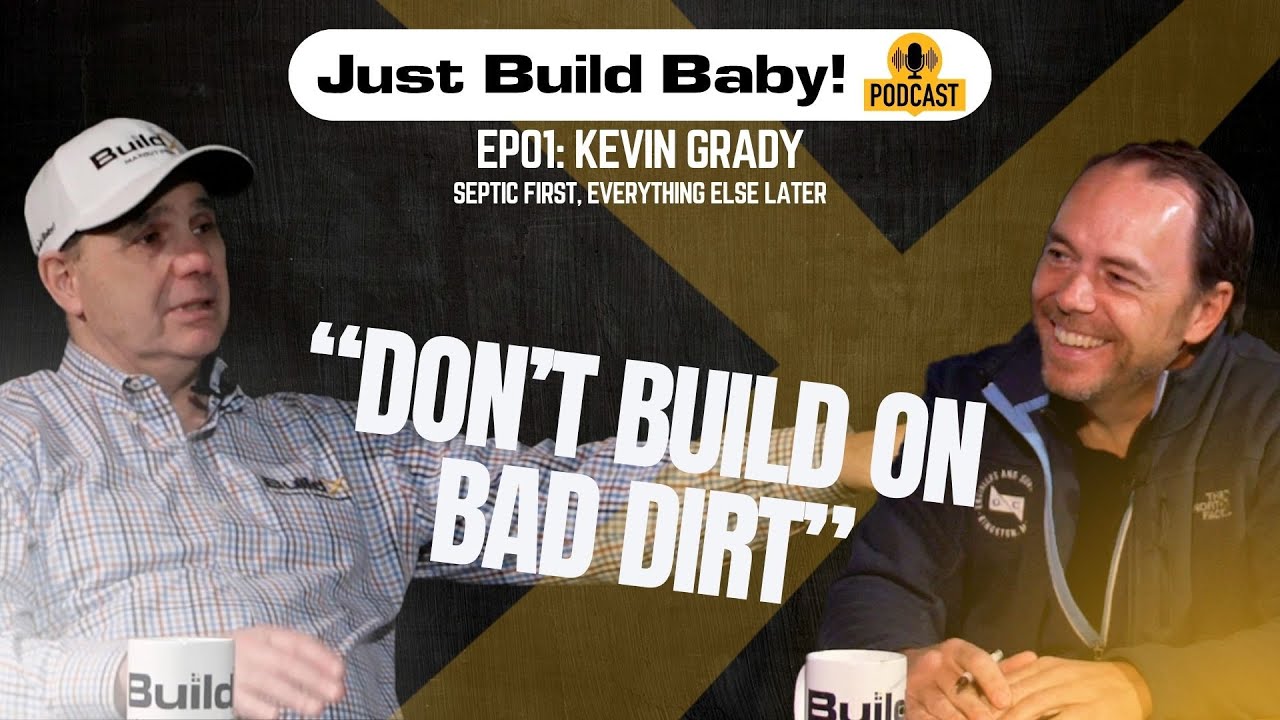
Watch: MA ADUs, Title V & Why Septic Might Be the Wildcard w/ Kevin Grady | BuildX Podcast #01
You had your septic system inspected a few years ago and it passed. Maybe you did that when you upgraded it or when you refinanced or sold the house, and everything passed and you had no issues. Now you want to build an ADU, and someone says that the system doesn't meet Title V standards for new construction. That's a completely different conversation than most people expect, and it changes the budget for the entire project.
My name is Buz Artiano, and I'm the founder of BuildX. We've built dozens of ADU projects across Massachusetts, mostly around the South Shore and Plymouth County. We evaluate every property for a septic solution before we quote any price, because we know how that one variable can be the reason that we move forward or the project comes to a complete stop. We handle design, permitting, and construction under one roof, and that includes coordinating with civil engineers, Board of Health offices, and the Department of Environmental Protection whenever septic work is involved.
In this article we'll talk about what Title V non-compliance actually means and what it has to do with your ADU plans. We'll explain what your options are when your system doesn't qualify, and how to figure out whether the septic cost will make the project too expensive to even move forward. Septic is the big scary wildcard of ADU construction, so it's important that we give you an honest answer about it now, rather than let you find out after you've already committed.
Quick Answer: If your septic system doesn't meet Title V standards for new construction, you'll probably have to upgrade or replace it completely before your ADU can be approved. A system that passed a Title V inspection for a sale is not necessarily compliant for adding an ADU, because the state treats an ADU as new construction with different requirements. Your options range from adding a second tank to replacing the whole system, depending on the age, design, and condition of your current system. The only way to know exactly how much it will cost you is to have the system professionally evaluated before committing to the project.
In This Article
- What Does It Mean When My Septic System Does Not Meet Title V for an ADU?
- How Do I Know If My Septic System Is Non-Conforming?
- What Are My Options If My System Does Not Qualify?
- Can I Get a Variance from the Board of Health?
- How Does Septic Compliance Affect the Total Cost of My ADU Project?
- Is an ADU Still Worth Pursuing If Septic Work Is Required?
- Know Your Septic Situation Before You Commit to Anything Else
What Does It Mean When My Septic System Does Not Meet Title V for an ADU?
Title V is the Massachusetts environmental code for septic system design, installation, and maintenance. When the state legalized ADUs in February 2025, the Department of Environmental Protection issued a statement on April 7, 2025, confirming that adding an ADU to a property is considered new construction, not an addition. That means there's a higher standard than just a basic inspection to sell the property.
That's the big difference that most people don't catch. A Title V inspection for selling your house is not the same as Title V compliance for new construction. When you sell a property, the system just needs to function and meet basic requirements. When you add an ADU, you are adding extra flow to the system, which means now you're under new construction standards. The existing system has to meet current Title V requirements for the total number of bedrooms (ADU and main house combined). A multi-compartment septic tank, or an extra tank is required.
To put it simply, if you have an older home with leaching pits or a system designed before 1995, the DEP will classify that system as non-conforming. Non-conforming systems include cesspools, privies, failed systems, and any system that hasn't received a variance or local upgrade approval. If your system is non-compliant, you're looking at a lot of expensive septic work before an ADU is possible.
How Do I Know If My Septic System Is Non-Conforming?
The DEP says that a non-conforming system is one that's not in full compliance with Title V standards and hasn't received a variance or local upgrade approval. Basically, if your system is non-compliant, you'll probably fall under one of these three categories.
Systems designed before 1995. Title V was rewritten in 1995. If your septic system was designed before then and it hasn't been upgraded to current standards, it's non-conforming, even if it's been functioning without any issues for decades. When the rules were rewritten in 1995, it no longer allowed deep systems like leaching pits and other designs that were too close to groundwater. The soil between the system and the groundwater are what treat the waste water before it gets into the water supply. When systems sit too deep, the waste water can leach into the water supply underground.
Systems with prior variances that don't transfer to new construction. This is the one that catches the most people off guard. When you sold or refinanced your home, your engineer may have applied for a local upgrade approval, which sometimes includes a reduction in the separation to groundwater by one foot. That's a fine solution for selling the property, but when you add an ADU, you're adding extra flow, and the variance that worked for a repair doesn't apply to new construction. Raised systems with groundwater separation variances are one of the most vulnerable to being non-compliant. A lot of the systems we see that were installed in the last 10 to 20 years fall into this category.
Systems that are undersized for the additional flow. Every bedroom generates an average of 110 gallons per day of flow according to Title V. A one-bedroom ADU adds 110 gallons per day to your system. If your current system was only designed for the number of bedrooms in the main house, it can't take on an extra bedroom for the ADU without upgrading the system.
What Are My Options If My System Does Not Qualify?
The way to deal with this depends on the conditions of your existing system, your lot, and your local Board of Health. There's no generic or standard solution, but there are ways to deal with it.
Best case: your system is Title V compliant and has capacity. If your system was built to current Title V standards and it was built to handle more than the number of bedrooms in the main house, then the upgrade is pretty easy. Usually we can just add an additional 1,000-gallon tank (Title V requires a multi-tank setup) and expand the leaching field. Some Massachusetts towns, like Kingston, have a history of installing oversized septic systems, which means some of them might already be compliant that way.
Middle case: your system functions but is non-conforming. If your system works but doesn't meet current Title V standards for new construction, there's a chance you can still get a variance from your local Board of Health. If you apply for an exception to the rules you must prove that to enforce the rules would clearly be unfair and that you would lose all benefits of the use of the property. It must also show that you'd get the same amount of protection for the environment without strictly following the rule. The DEP does give the Boards of Health the option to consider different approaches, including approved wastewater filters in a one-compartment tank instead of a two-compartment tank.
Worst case: your system must be fully replaced. If the system isn't functioning and it's non-conforming with no real way to get a variance, or it's too close to the water table for new construction standards, you're going to have to replace the whole system. That means new engineering, new perc testing, a new system design, and new installation. On smaller lots with difficult soil conditions or high water tables, the replacement cost can be a huge part of the overall ADU budget.
Can I Get a Variance from the Board of Health?
You can apply for one, but it's not a guarantee that they will approve it. The variance process is up to your local Board of Health, and their answer depends on the specifics of your property, your system, and whether or not your town is willing to use the options that the DEP rules allow.
The DEP states that the Board of Health gets to decide whether newer technologies, like an effluent filter, can provide the same amount of environmental protection as a two-compartment tank or two tanks in series. But it's important to remember that the DEP is not requiring towns to grant variances, they are simply leaving the decision up to them.
If your Board of Health denies the variance, there's really no way around it. We've been through this multiple times. We applied for a variance in a Massachusetts town and we got denied. Because of that, we know to tell every prospective ADU client to understand their septic situation before committing to any plans to build an ADU.
The easiest variances to get approved are the cases that involve functioning systems that are far enough from groundwater, but the homeowner still has to demonstrate that the current system poses no environmental risk. If your system is two leaching pits on top of a hill with groundwater 40 feet below, that's a lot different than a system that's only three feet above the water table.
How Does Septic Compliance Affect the Total Cost of My ADU Project?
Septic is the biggest cost variable in ADU construction. It's the biggest thing that nobody can quote from a desk or a piece of paper. We can estimate framing, roofing, electrical, plumbing, and finishes pretty accurately without a site visit, but septic requires physically investigating the property, and septic cost can be anywhere from $10,000 to $50,000+, which can be a huge chunk of any budget.
We evaluate all septic systems before we quote a price, because that one thing can determine whether a detached ADU even makes financial sense for the family. If a property has an existing compliant system with extra capacity, the septic work might only be adding a second tank compartment and extending the leaching field. But if you need a pump chamber, it can add $4,000 to $7,000 to the project depending on current material costs. On a lot where the system is non-conforming and the soils don't drain well, you may have to do a full replacement of the whole system, which can push the project too far over what the homeowner planned for. Most builders don't include septic in their estimates. We do, because we know what happens when a family gets a surprise number after they've already committed to the design and permitting process.
The only way to know what your septic situation will cost is to have a civil engineer evaluate the existing system, run a perc test if needed, and figure out whether the system can take on the flow of extra bedrooms for the ADU. Having that done does cost some money upfront, but it's the most important investment you can make before committing to the whole project. We deal with that whole process before we give you a quote, so the estimate you get from us is a number you can count on, no surprises.
Is an ADU Still Worth Pursuing If Septic Work Is Required?
The truth is, not always. If your lot requires a full septic replacement and that extra 40 or 50 grand puts you way over budget and at that price, it's no longer worth it, even with the extra comfort or family benefit. Unfortunately sometimes it just doesn't work, but we'd rather tell you that now than let you find out after we're already part way through the project.
Septic work is expensive, but housing is more expensive. A septic system replacement that costs $30,000 to $50,000 is definitely a major cost. But if your only other option is paying $5,000 to $8,000 per month for assisted living, or losing a family member's independence because there is nowhere for them to live nearby, that changes everything. The septic cost is still there, it just depends on whether it's worth it and whether you can make it work with your budget. The question goes from "can I afford the septic work" to "what am I getting in return for what I'm spending."
We tell everybody we speak with to get the septic evaluation done first. Talk to multiple builders and get a clear picture of the total cost before you try to make a decision. If the numbers don't work for your situation, then they just don't. But we want you to make the decision with all the information, not to commit and then discover the cost afterward.
Know Your Septic Situation Before You Commit to Anything Else
The septic system is the one thing that can change everything about your ADU project. A system that passed a Title V inspection for a property transfer may not qualify for new construction. A system that was upgraded with a local variance may not transfer that variance to an ADU addition. The only way to know where you stand is to evaluate the system against current Title V requirements for your specific lot and your specific project.
Massachusetts allows homeowners to build one ADU by right under the Affordable Homes Act. You can review the full requirements at mass.gov.
Start with the septic evaluation, everything else depends on that outcome.
We will evaluate your existing system, coordinate with a civil engineer, and give you a clear picture of what septic work your ADU requires before you commit to the project.
Tour a completed ADU with septic or Request a Free Consultation
Call us: (781) 627-7000