What Are the Two Biggest Reasons an ADU Project Falls Apart?
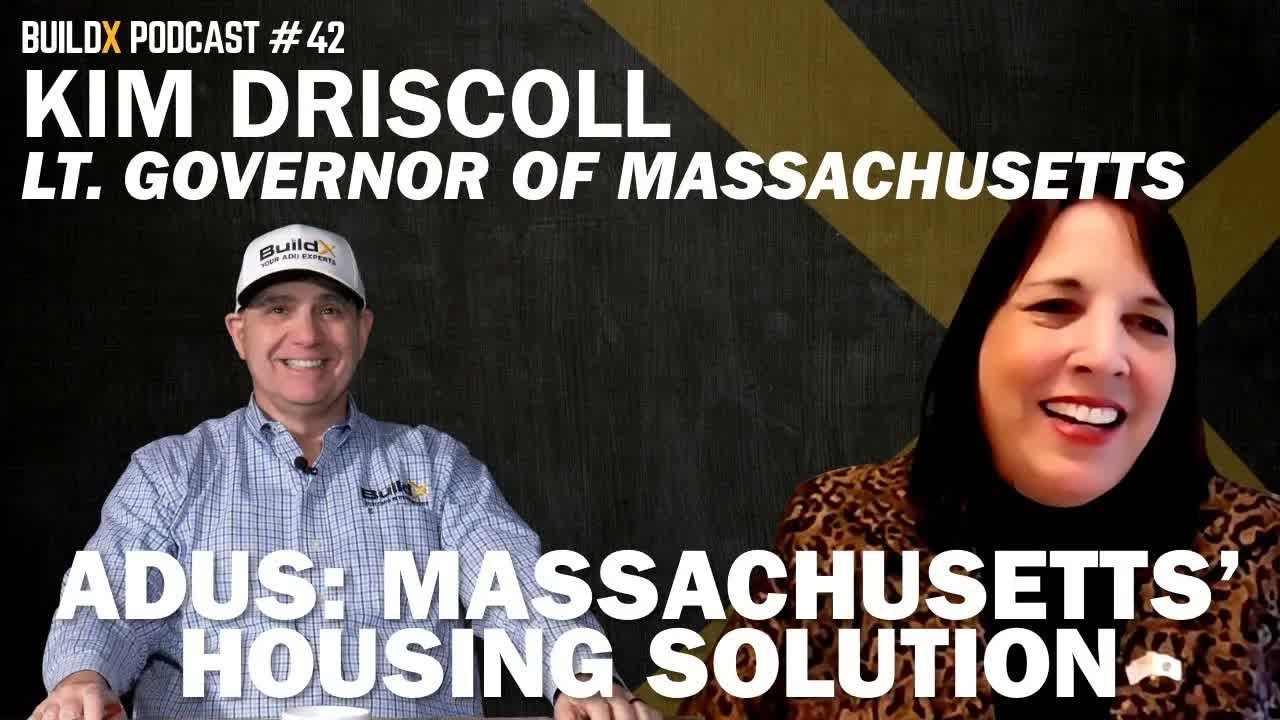
Watch: Lt. Governor Kim Driscoll: How ADUs Are Solving Massachusetts' Housing Crisis One Family at a Time
You've been researching ADUs for weeks. You have looked at floor plans, worked out some of the numbers, and now you're imagining how great this could be for your family. Then things start to slow down because maybe a sibling is worried about the inheritance, or a contractor tells you the septic situation is going to be complicated. All of a sudden the whole project feels too good to be true and it starts to fall apart. Unfortunately this happens every day, way more often than most people think.
My name is Buz Artiano, and I am the founder of BuildX. We've built dozens of ADU projects across Massachusetts, mostly around the South Shore and Plymouth County areas. We are the only team you need, we handle design, permitting, and construction. So we see every phase of a project from the first site visit up until you move in. We deal with septic constraints, zoning issues, and the state's new ADU laws. After doing about 260 consultations with families who are thinking about building ADUs, I can tell you exactly where and why projects tend to fall apart.
The two biggest killers have nothing to do with design or issues with the budget. The first one is a construction issue that most people don't think about until it is too late. The other has nothing to do with construction at all. The most important thing you can do to keep your project moving forward is to fully understand these two things before you spend a bunch of time and money.
Quick Answer: The two biggest reasons ADU projects fall apart are family dynamics and septic issues. Family issues could include disagreements over inheritance, property ownership, and caregiving responsibilities. We would say that family disagreements are responsible for about 30% of projects that never get past the first consultation. Septic is the other big one, especially on properties with wells and pre-1995 systems. Both of these two major issues can be identified and dealt with early, before you spend money on design or permitting.
In This Article
- Why Do So Many ADU Projects Never Get Built?
- How Do Family Dynamics Kill an ADU Project?
- What Can You Do About Family Dynamics Before They Derail Your Project?
- Why Is Septic the Biggest Construction Variable That Kills ADU Projects?
- How Do You Evaluate Septic Feasibility Before Investing in Your ADU?
- Can Every Property Support an ADU?
- What Should You Do Before Your ADU Project Gets Any Further?
Why Do So Many ADU Projects Never Get Built?
Most people assume that ADU projects fail because of budget issues, permitting delays, or problems with contractors. Those are definitely real issues, but they're not the main reasons projects die. The two biggest things that will stop an ADU build in its tracks are family dynamics and septic issues. Those two things together are responsible for the majority of projects that fall apart before they even start construction.
The reason these two things are so dangerous is that people don't usually deal with them until they have already spent a ton of time and money and they are emotional energy in the whole thing. When the topic of the inheritance comes up and starts being a problem, or the septic solution is complicated, the family starts to feel stuck and frustrated. It's important to understand all these two major risks before you hire a designer or start pulling permits. Otherwise your project may not move forward at all.
How Do Family Dynamics Kill an ADU Project?
About 70% of any ADU project is family dynamics, and only 30% is the actual construction. That really surprises most people, but it's absolutely true. The decision to build an ADU almost always involves multiple family members who all have their own financial interest in the project. And of course very personal questions about caregiving for the parents, inheritance, and who gets what need to be answered.
We'll give you an example of a very common scenario. A set of parents owns a home worth $1 million. One of their three adult children, we'll just call him Jimmy, lives close to them and is willing to be their main caregiver as they age. The family decides to build a $400,000 ADU in Jimmy's backyard, which is paid for using the equity the parents have in their home. The project seems to make perfect sense, but the other two siblings start doing the math in their heads. If $400,000 of the family's assets are used to build the ADU on Jimmy's property, what happens to their share of the inheritance? And does this mean that they are somehow being cut out or not getting their fair share?
If you don't deal with that issue upfront, it will stop an ADU project in its tracks. Roughly 30% of ADU deals never go past the first consultation because of family dynamics like this. The parents may be ready to build, and so is the child whose property it will be built on, but the siblings who aren't as closely involved might feel excluded, and they definitely have legitimate concerns. If we don't deal with those concerns at the very beginning, they can become much bigger issues later on that we won't be able to get past even with a great design and good financing plan.
The inheritance issue is the most common, but it's not the only family dynamic that stops these projects. There are a lot of other issues that can arise, like deciding who controls the property and pays the mortgage when the parents pass away. What about who pays all the maintenance costs, and who decides whether the ADU can be rented out? If you simply avoid these conversations and don't deal with them, it's almost guaranteed that the whole project will fail.
What Can You Do About Family Dynamics Before They Derail Your Project?
In our experience, the best way to deal with this is to plan a structured family meeting with an elder law attorney before you start making decisions about design or construction. It's not going to be a casual holiday get-together, it's a very formal session where all parties involved, including out-of-state siblings, sit at the same table and hear the plan directly from the parents.
An experienced elder law attorney will lay out the financial side of things for you. Things like what the property is worth, what the ADU will cost, how the caregiving will work, and how the estate plan makes sure that the children who don't get the house are being fairly represented as well. The goal is to make a plan that's fair to everyone, with written instructions that make everything very clear and detailed as to what happens after the parents pass away.
In a lot of families, the child who has the ADU on their property is also paying mortgage payments, property taxes, and covering all the caregiving costs and responsibilities. Maybe the other siblings got money from the parents for college, weddings, or small business startups. An attorney helps the family look at the whole picture together, there's much more to it than just the ADU. Maybe the person who is providing all the caregiving for the parents gets the house, and the other siblings get more of the IRAs, life insurance, or brokerage accounts. At the end of the day, everyone has to be satisfied with their share of everything.
The most important thing you have to do is get everyone to sign off on everything while the parents are still alive and well. When mom and dad can sit at the head of the table and explain everything in person, the plan is solid and enforceable. The problems have an ugly tendency to start after the parents pass away. And a lot of times it's because a spouse is whispering in a sibling's ear about what they are legally entitled to or what they should get.
We tell everyone we work with to talk all of this through with the family before we even start looking at designs and floorplans. We've seen plenty of projects where the design was perfect, and they had the financing in place, their lot was perfect, but not everyone was on the same page when it came to the estate plan. When that happens, the project can be on pause for months or never move forward at all. The ones who deal with all the family dynamics from the very beginning will have the most success. That's not official advice from a financial planner or anything, it's just what we've noticed after doing hundreds of these ADU consultations.
Why Is Septic the Biggest Construction Variable That Kills ADU Projects?
If you live in an area where you're on town sewer, septic won't be an issue. But across most of southeastern Massachusetts, the South Shore, Plymouth County, and Cape Cod, most homes are not on town sewer, most properties are on septic systems, and septic is the wildcard that decides whether an ADU is even possible on your property.
The reason is because an ADU adds bedrooms, and bedrooms add wastewater flow. The septic system you have now was designed for a very specific number of bedrooms. When you add an ADU, your Board of Health needs to confirm that the system can handle the flow of more bedrooms or not, or that the property can support an upgraded or new system. If it can't, then you are limited to only the possibility of an attached ADU.
The factors that decide whether it's doable are the age and condition of your current septic systems, the results of a soil percolation test, how far down to groundwater, the distance from your well, and if your town has restrictions on the nitrogen-sensitive zone areas. In nitrogen-sensitive areas, your lot could be limited to just one bedroom per 10,000 square feet of lot size. Even a lot that looks like it has plenty of room for an ADU may still not have enough space to support a septic system.
The money factor adds to the problem. A septic solution for an ADU can cost $40,000 or more when you figure in the tank, pump chamber, and alternative field. If the system you have now does not conform with the rules under Title V (Massachusetts septic code), you may have to replace the whole septic system for your property instead of being able to just add more capacity for the ADU. That is because the state looks at the lot as a single unit. So even if you have room for a second system, your current septic system has to be brought up so it complies with regulations first.
How Do You Evaluate Septic Feasibility Before Investing in Your ADU?
You need to talk about a septic system at the very beginning of the whole process, not after you have found a floor plan you really love. The first step is getting your Board of Health records to see what the system you now have was given a permit for. Was it for a three-bedroom or a four-bedroom house and when was it put in? Does it have any variances? If your system was put in after 2000 and has no variances, most Boards of Health will let you tie an ADU into the system you have now.
If the system is older or the records are not complete, the next step is to hire a licensed site evaluator to test the soil and do a percolation test. That process will tell you what your soil conditions are, where the water table sits, and how large a septic system you can actually put on your lot. The results directly decide whether a one-bedroom or two-bedroom ADU is possible, and what the septic work will cost.
Soil conditions vary a lot even within the same town. From Kingston south, you will probably find sandy soil with fast percolation rates, and that means smaller, cheaper systems will work. In areas that have heavy clay soil or soil with fine grains, water moves slowly through it and the septic systems have to be larger, and so they will cost more. A site evaluator who has worked in the area of your property will know what to expect even before a test hole is dug.
We evaluate septic before we give you a cost estimate because that one variable can be the deciding factor as to whether a detached ADU is feasible money-wise on your property. Most builders do not include septic in their first estimate. But we do, because we have seen families get surprised by that number after they have already decided on a design.
Can Every Property Support an ADU?
No, and it is important to say that very clearly. Not every lot in Massachusetts can support a detached ADU, and not every family situation is the right fit for building one either. If your septic capacity is not enough and the cost of making it bigger exceeds what you will gain from the project, a detached ADU may not make sense money-wise. If your family has unresolved disagreements about inheritance, caregiving responsibilities, or who owns the property, building an ADU before taking care of those things will cause more problems than it solves.
We would rather tell you that at the beginning than have you find out after you have put money into design, engineering, and permits. That is why we start every project with an evaluation that includes both the physical limitations of your property and a discussion about how the ADU fits into your family's overall plan. When each side of the equation works, the project will move forward with conviction and when they do not, we will tell you.
What Should You Do Before Your ADU Project Gets Any Further?
The families who build successfully are those who talk about the two biggest risks early on. If you have family members who should be part of that talk, have the meeting before you start drawing plans. If you are on a septic system now, make sure you get the evaluation done before you decide on a design. Those two steps don't cost very much compared to the time and money you will save by avoiding a project that was never going to work.
We will evaluate your lot, pull your septic records, and walk through the family planning questions to decide whether your project is possible before you spend money on design.
Tour a completed ADU and see the process firsthand or Request a Free Consultation
Call us: (781) 627-7000