
Can I Get a Variance to Keep My Existing Septic System When I Build an ADU?
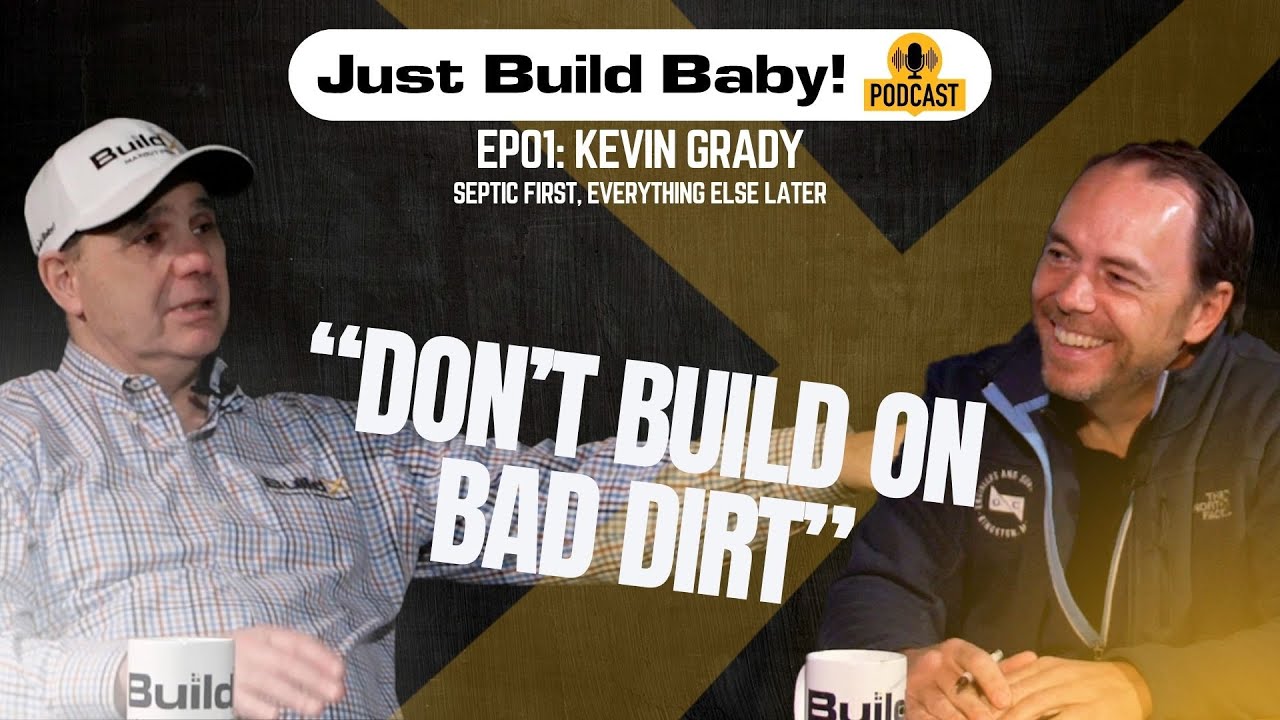
Watch: MA ADUs, Title V & Why Septic Might Be the Wildcard w/ Kevin Grady | BuildX Podcast #01
Your septic system works and it passed its last inspection. It's up high on a hill, the water table is forty feet below it, and you've never had any issues. Then you ask about building an ADU and someone tells you the whole septic system will have to be torn out and redone. Because the laws have changed, not because something failed. That's where a lot of Massachusetts families start thinking about giving up on the whole ADU project altogether.
My name is Buz Artiano, founder of BuildX. We've built dozens of ADUs all over Massachusetts, but most of our jobs have been on the South Shore and in Plymouth County. We do everything from design and permitting, all the way through the end of construction. Septic is the thing we evaluate first, before anything is set in stone, because Title 5 compliance, lot coverage limits, and permitting are what decide what you are allowed to build on your property. Title 5 is the part of the State Environmental Code that governs septic systems in Massachusetts, written at 310 CMR 15.000.
There is only one way to get approval on all these things and move forward, and that is through your board of health. Our opinion, after lengthy discussions with our engineers, is that the board of health has the final say, there's nobody to go to that is above their heads, so you need to know in the very beginning if they are going to deny you, so you don't end up wasting significant money on something you aren't allowed to build.
Quick Answer: Yes. You can petition your local board of health for a variance, which is an exception from Title 5, and ask to keep the septic system you have. The regulations at 310 CMR 15.410(1) do allow the town to give exceptions to any of the Title 5 requirements, and MassDEP points boards to that authority. A board will consider an exception if you can prove that enforcement of the rule would be unjust and that you can get the same amount of environmental protection without adhering to that specific rule. The decision is entirely up to them, and our engineers treat a denial as final. Budget for a full septic upgrade, and if you are granted a variance, that's just money back in your pocket.
In This Article
- Can I Get a Variance to Keep My Existing Septic System?
- What Do I Have to Prove to Win a Variance?
- What About the Effluent Tee Filter the Guidance Mentions?
- Your Board of Health Is the Only Room That Matters
- If the Board Says No, What Is My Recourse?
- How Should I Budget for a Project That Hinges on a Variance?
- When Filing for a Variance Is the Wrong Move
- Ready to Find Out Whether Your System Has a Case?
Can I Get a Variance to Keep My Existing Septic System?
Yes, you can always ask for one. Title 5 has a loophole. Your town's board of health can make exceptions to any of Title 5 rules, and the MassDEP ADU guidance says that directly. That includes the authority to grant exceptions to the two-compartment septic tank rule. The full guidance is posted at mass.gov.
Applying is easier than most people think. Kevin Grady, the civil engineer at Grady Consulting in Kingston whose firm handles septic engineering on our projects, says that you just apply for a variance by writing a letter to the board explaining to them why they should grant it. That letter is the whole process. There is no standard argument that wins and no forms to fill out.
What you are asking for is specific. In the most common scenario, the existing system is not failing. It works, but it still has to be rebuilt because the ADU is considered new construction under Title 5 and has its own set of rules. Grady's own house is the easiest example we can give you. He has two leaching pits, the older style of a buried tank that receives effluent and lets it seep into the soil, permitted in 1999 or 2000. It's up high on a hill and nowhere near groundwater, feeding a 1,500-gallon tank. Full compliance for an ADU means adding a 1,000-gallon tank, getting rid of both pits, and installing a leaching field. As he put it about his own property: "The cost of ripping out that septic system that's functioning and protecting the environment might kill the project."
What Do I Have to Prove to Win a Variance?
Getting a septic variance to build an ADU is more complicated than just asking the Board of Health to make an exception for you. The Board must make two specific findings before it can give you an exception, and the first condition is difficult to meet when the project is considered "new construction" under Title 5. An ADU is considered new construction when it increases the amount of wastewater the property's septic system is designed to handle. Under Title 5, that amount of flow is considered to be 110 gallons a day for each bedroom. So, if the ADU adds one or more bedrooms, the project has stricter requirements that it has to meet.
Here is what your engineer has to put in front of the board, and what each finding asks you to demonstrate.
| What the board has to find | What you have to establish |
|---|---|
| Enforcement would be manifestly unjust | Applying the rule to your property produces an outcome the rule was not written to produce |
| For new construction, loss of beneficial use | Enforcement would deprive you of substantially all beneficial use of the property |
| Equal environmental protection is achievable | Your alternative protects groundwater as well as the required system would |
The middle row is where most petitions die. Substantially all beneficial use is a property test, not a project test. You already have a house on the lot, a driveway, a yard, and a deed. A board can look at all of that and decide that you still have beneficial use of your property without an ADU on it. Grady's point about cost being the reason a project doesn't happen is true, but a cost that kills a project is not the same thing as proving that you will have lost beneficial use of your land.
The third thing is the one an engineer can actually build for you. Equal environmental protection is a question of physical evidence. How far it is to groundwater under your system, the soil and setback data in the property's file, and the inspection history showing the system has been working great. That stuff is worth paying for. The first two findings for an exception are legal. The third is something you can prove with real data about your property.
What About the Effluent Tee Filter the Guidance Mentions?
MassDEP named one specific type of exception, and it's been used a lot among Massachusetts builders. Boards of health can consider whether an effluent tee filter installed in a one-compartment tank provides the same level of protection as a two-compartment tank. An effluent tee filter is a screened cartridge that goes in the tank's outlet and catches solids before they get to the leaching field, which is basically the same job as the second compartment does.
Read that sentence twice, because two things in it tend to get glossed over. The first is "can consider". The guidance says a board can weigh the argument. It doesn't say they have to accept it. The second is the part where it says for scenarios other than new construction. If your ADU adds bedrooms and increases the flow, you are in new construction territory, and the substitution does not apply.
We still put the filter argument in front of a board whenever we can, because reconfiguring an existing house so the number of bedrooms stays the same when the ADU is added is basically the scenario they describe. What we don't do is design around it. A filter is just a part. A second tank is an excavation, a tank delivery, a revised system design, and another permit. Those two processes have different schedules and very different costs. If you plan for the cheap outcome and then you are surprised when you need the expensive option you are looking at starting over with the financing. The guidance offers the filter as an example of something the board gets to decide on. It does not report to us who has accepted these, so we can't point you in the right direction for that.
Your Board of Health Is the Only Room That Matters
This is where a state question turns into a local one. Grady said that variance requests go board by board, town by town. The decision is up to the board of health and the health agent, and it comes down to how each town interprets things.
Three properties with the same soil data and the same working system can get three different answers, because it's up to the town and whoever is on the board at the time. Your answer depends on:
- How your board weighs a functioning system against a written standard
- Whether your health agent will look over the engineering file before the hearing
- How much weight the board gives an equal-protection argument it's not familiar with
So you want to make sure you know which board you are standing in front of before you spend money on engineering. That starts with the property's board of health file, which is public and shows what has already been approved on your lot and on the lots around it.
If the Board Says No, What Is My Recourse?
This is the answer nobody wants, but if no is the answer, you need to know before a construction contract is signed. We asked Grady the question directly on the podcast. If you ask for a variance and the board says no, what is your recourse? His answer was six words: "I don't think you have one."
The law is consistent with that. MassDEP wrote the standard into guidance and pointed boards to authority they already had. The Title 5 regulations are at mass.gov. They tell a board what it has to find before granting a variance. It doesn't tell a board that it has to make any exceptions or grant any variances. Nothing in the document says you can appeal, a review, or a second opinion on a local denial. The board has the final say.
To see if there are any other routes you can take would be a question for a Massachusetts land use attorney, definitely not a builder. What we can tell you is how we plan around it. We treat a denial as the end of that conversation and we simply find a way to work the budget around it. A family that has to have the variance has given the local board the right to veto their whole project.
How Should I Budget for a Project That Hinges on a Variance?
You plan for the highest number, assume you won't get a variance. If you are granted a variance, think of it as a refund. If the board grants it, that money can then be put towards a deck, or better finishes, or in the backup fund where it does more good anyway. If the board denies it, the project keeps moving, because you planned for that to begin with.
We do these petitions the same way every time, and the order matters more than the wording of the letter. Site survey and records first, so the engineer knows what he's defending. Then the design for a new approved system, because a board wants to know what you're trying to avoid before it will consider anything. The petition comes after that. Families sometimes want to do that in the wrong order sometimes. File the letter first to save the design fee. But that doesn't hold up in the board room. A board cannot judge your proposal against a system if nobody has drawn it so they can see. A second trip to the same board costs more than the drawing did.
A failed petition costs you engineering hours, a filing fee, and your place on the hearing calendar. Fees and hearing schedules are set locally, so your board of health is the one that sets the rate. Ask for the fee schedule and the next three hearing dates at the same time, and you can price it out before you commit to it.
When Filing for a Variance Is the Wrong Move
We build ADUs, so you should expect us to tell you to try for anything that saves you money on the project, and sometimes we will, but here are some places where we don't.
If the engineer reads the file and tells you that your argument isn't good enough, believe the engineer over the builder. We are biased, we want the project to happen. An engineer who signs a weak petition is spending your money and putting his own name in front of a board he has to appear before again on a regular basis. So their opinion should be trusted.
A variance is the wrong tool outright for some families:
- If your timeline is set around a parent's move-in date, an added extra time for a hearing would end up costing you more than just adding the second tank
- If the upgrade was already worked into the budget and you're flexible, the petition adds delay and risk to money you were already going to spend
- If the existing system has already failed its inspection, you will likely be required to upgrade
Here's the truth if you don't hire us. Design-build is not the only way to go. If you already have a civil engineer and some kind of history or relationship with your board of health, talk to them first and have the answer at the ready for your builder. We would rather look at a file early and tell you that your property has some challenges than sell you a plan that could be shut down by a board of health hearing.
Ready to Find Out Whether Your System Has a Case?
The decision in front of you is smaller than it feels. You are not choosing between keeping your septic system and replacing it. You are choosing whether to spend extra time and money asking a local board for an exception you can't appeal if they say no, when you've already budgeted for the septic solution. Families who set it up that way get to ask the question without betting the build on the answer.
We'll pull your board of health file, walk the site with our engineer, and tell you whether a Title 5 variance argument is worth filing on your property before you spend a dollar designing around it.
Tour a completed ADU in person or Request a Free Consultation
Call us: (781) 627-7000