
Do You Need a Zoning Board Hearing to Build an ADU in Massachusetts?
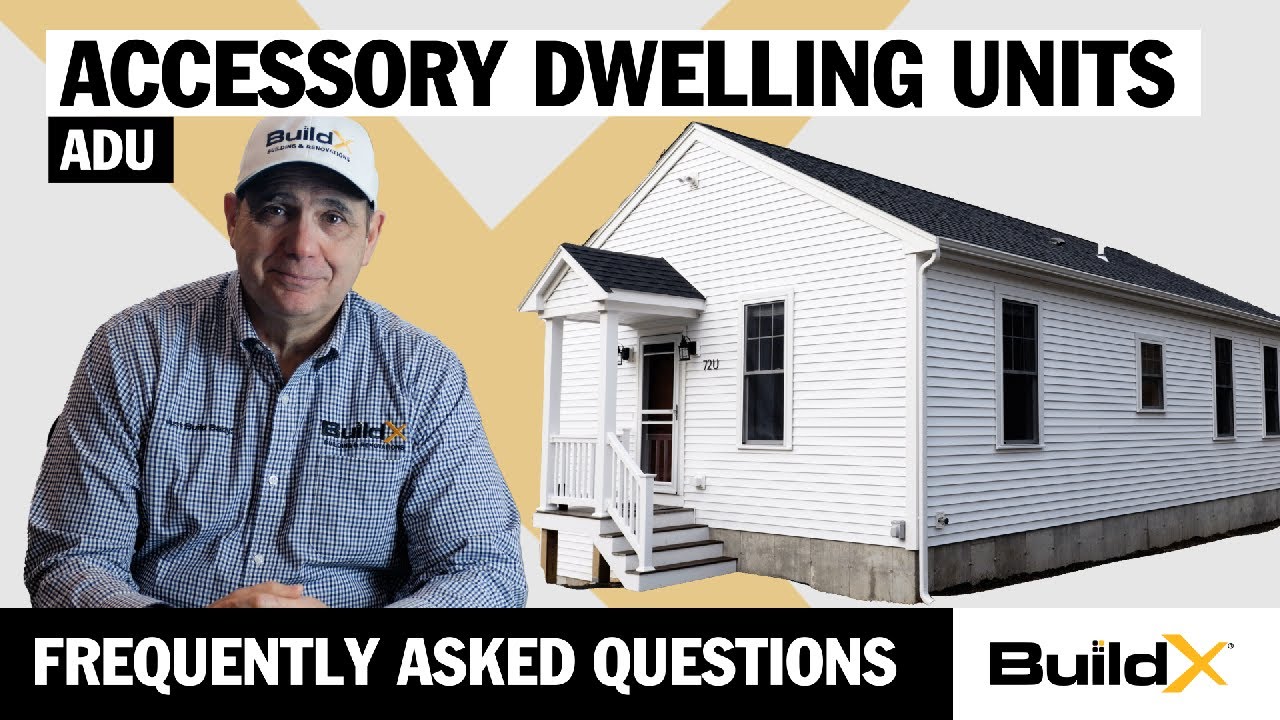
Watch: Everything You Need to Know About ADUs in 2026 | FAQ
If you've been researching ADUs in Massachusetts, you've probably heard a lot of conflicting information about what it takes to get approved to build one. Some people think they need to go before the Zoning Board of Appeals, or deal with a public hearing where neighbors can object to their project. The thought of having to deal with all of this has stopped too many families from moving forward. People don't want to stand in front of a town board and defend their right to build on their own property. It makes a lot of people second-guess the entire plan.
My name is Buz Artiano, and I started BuildX. Since then we've built dozens of ADUs all over Massachusetts, but most of our builds have been around the South Shore and Plymouth County areas. We handle all the design, permitting, and construction ourselves, and we deal with local zoning boards all the time. The permitting in Massachusetts has changed, and most people don't realize how easy the process is now.
The short answer is that most of the time you don't need a Zoning Board hearing to build an ADU in Massachusetts. The law changed. This article will walk you through what that change means for you, when a ZBA hearing might still be required, and what you need to know about setbacks, square footage, and by-right permitting so you can move forward without any confusion.
Quick Answer: No. Under the Affordable Homes Act, ADUs in Massachusetts are now permitted as of right. That means your town cannot require a Zoning Board of Appeals hearing as long as your project stays within the setback requirements and the square footage limits (the smaller of 900 square feet or 50 percent of your main home). If your project meets those two conditions, you have the legal right to build without a public hearing or ZBA approval.
In This Article
- Do I Need ZBA Approval to Build an ADU?
- What Does "By-Right" Actually Mean for ADU Permitting?
- What Happens If I Cannot Meet My Town's Setback Requirements?
- How Did the Affordable Homes Act Change ADU Permitting in Massachusetts?
- Are Towns Cooperating with the New ADU Rules?
- Is By-Right Permitting the Right Path for Every Property?
- Your Property, Your Right, Your Next Step
Do I Need ZBA Approval to Build an ADU?
No, you do not. Ever since the Affordable Homes Act passed, ADUs in Massachusetts are classified as a by-right use. That means the state has removed the ability for towns to require Zoning Board of Appeals approval for ADU projects that comply with setback and square footage regulations. You can review the full requirements at mass.gov.
We put it simply: as long as we can meet the setback requirements and stay within the square footage limits, we have the right to build the ADU. There's no longer a need for a public hearing or comment period. Neighbors can't veto the project. The town has to allow it.
This is a bigger deal than people realize. Before this law, a lot of Massachusetts towns required homeowners to go before the zoning board for permission to build any accessory dwelling unit at all. That means they had to go through public hearings, notify neighbors, and in many cases, wait for months and still aren't guaranteed approval. You no longer have to do any of that for projects that meet the basic requirements.
What Does "By-Right" Actually Mean for ADU Permitting?
By-right means the state has set minimum regulations that every town has to follow. They can't add extra requirements, special conditions, or extra review on top of what the state law already permits. If you meet the criteria, the building department has to give you the permit. Nobody has to vote, there's no need for approval from a board, and no discretion involved.
The by-right criteria for an ADU in Massachusetts include several conditions. The property must be a single-family, owner-occupied lot. The ADU can't be bigger than 900 square feet or 50 percent of the existing home size. The ADU has to be within the zoning setbacks already established for your town (front, side, and rear yard distances). The project must comply with Title V septic requirements if the property is on septic. The ADU must have its own entrance, and if the property is more than half a mile from public transportation, one additional parking space is required.
When all of those conditions are met, it's very simple to get the permit. You submit plans, the building department reviews for code compliance, and the permit is issued. No public hearing, no having to tell the neighbors, and no ZBA approval.
What Happens If I Cannot Meet My Town's Setback Requirements?
This is a case where you might have to deal with the ZBA. If your proposed ADU can't meet the required setbacks for your town, you may need to apply for a variance. A variance is a formal request to the Zoning Board of Appeals to let you build even if you're not in compliance with the dimensional requirements. That process does involve a public hearing.
Setback requirements are all specific to your town. Some towns require 10 feet from the side property line, but others require 15 or 20 feet. Rear setbacks, front setbacks, and lot coverage limits are all different. Before we quote any ADU project at BuildX, we pull the zoning dimensions for the specific lot and confirm whether the ADU can even be put within the required setbacks. If it can, we are able to move forward right away. If it can't, we talk about the variance path and how long it's going to take.
The setback question is one of the first things we evaluate on every project. We use design software during the first Zoom consultation to look at the proposed ADU location on the lot and check the setbacks in real time. On most suburban lots in Plymouth County and the South Shore, we can stay within the setbacks on a detached ADU. Smaller lots, especially in older neighborhoods with less frontage road, are the ones where we sometimes need to apply for a variance or adjust the ADU location. We do all this before any money changes hands, because finding out about a setback problem after you've committed to a project is an unpleasant and very expensive surprise.
How Did the Affordable Homes Act Change ADU Permitting in Massachusetts?
Before the Affordable Homes Act, ADU permitting in Massachusetts was random at best. Each town had its own specific rules about ADUs. Some of them allowed in-law apartments by special permit, while some just banned them completely. Most of them required ZBA approval with a public hearing, which allowed neighbors to object to the project and gave zoning boards the power to deny projects for their own reasons.
The Affordable Homes Act changed all of that by allowing ADUs by-right statewide. The state set the minimum requirements, and every town has to follow it no matter what. Towns are still allowed to set dimensional requirements like setbacks, height limits, and lot coverage limits, but they can't require a special permit or ZBA hearing for an ADU project that is within the state's minimum requirements.
A lot of people think that this law made it easier to build on lots that were previously unbuildable. That's not how it works. If a lot was unable to support construction before the Affordable Homes Act because of setbacks, septic limitations, or lot size, those same issues are still there. The law removed the Zoning Board barrier, but it can't do anything about physical construction barriers.
Are Towns Cooperating with the New ADU Rules?
For the most part, yes. In the towns where BuildX has submitted ADU permits, the building departments have been very cooperative. Some have been a little slow, which is understandable because the law is very new and a lot of towns are still adjusting to it. Every town is different, there are less and less unknowns as more ADUs move through the system.
Patience is important during this process though. A by-right permit doesn't mean it will be approved quickly. The building department still has to review plans for code compliance, verify setback distances, confirm septic or sewer capacity, and make sure the design meets construction standards. But it does mean that the review is purely administrative, it's not up to the town's discretion. They are just checking boxes, not casting votes.
Is By-Right Permitting the Right Path for Every Property?
Not every property qualifies for an ADU by-right. If your lot has tight setbacks, a septic system with a variance, or dimensional limits that prevent the ADU from fitting within zoning requirements, you still might have to apply for a variance through the ZBA. That process adds time, cost, and it's never guaranteed that you will be approved.
We tell everyone about this upfront at BuildX. If we evaluate a property and figure out that the ADU can't sit within the setback requirements without a special variance, we tell the homeowner before they spend any money on architectural plans or engineering. Some people decide that the variance process is worth trying for. Other people decide to look into attached ADU options instead. The right answer depends on your lot, your timeline, and how much patience you have for a longer permitting process.
Your Property, Your Right, Your Next Step
For most Massachusetts homeowners, a Zoning Board hearing is unnecessary to build an ADU. The Affordable Homes Act made ADUs allowed by-right, and as long as your project meets the setback and square footage requirements, the permit process is purely administrative. The fear of a public hearing should not be the thing that stops you.
We will evaluate your lot dimensions, check your setback compliance, and confirm whether your ADU qualifies for the streamlined by-right permitting path before you spend a dollar on plans.
Tour a completed Massachusetts ADU or Request a Free Consultation
Call us: (781) 627-7000