
How Do You Finance a Massachusetts ADU Without Wrecking Your Credit or Your Rate?
You locked in a 2% or 3% mortgage rate five years ago. Now you want to build an ADU on your property, and the first question that stops every homeowner cold is: do I have to give up that rate to make this happen? The second question is worse. You pull your credit expecting a clean bill of health, and something you never knew about tanks your score right when you need it most.
As a Massachusetts ADU builder, we coordinate financing conversations on every project we take. The mortgage strategy is never separate from the build strategy. As CEO of BuildX, my job is coordinating structural engineering, permitting, financing, and long-term resale value into one coherent ADU plan. Financing is never just about the interest rate. It is about how the entire ADU performs as a 30-year asset for your family.
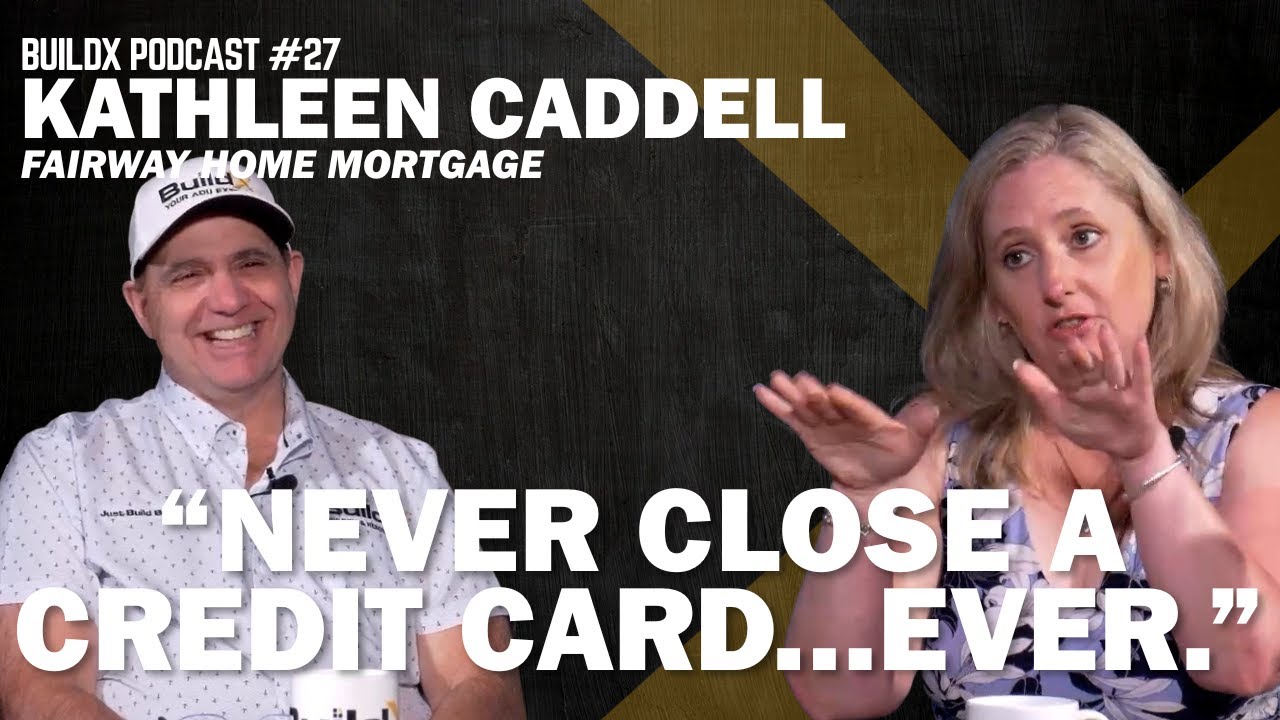
To pressure-test the financing options and get the technical details right, we brought in Kathleen Caddell, a senior mortgage consultant at Fairway Home Mortgage with over 21 years in the financial industry. Kathleen specializes in credit strategy, renovation loans, and HECM products (home equity conversion mortgages), and she has assembled financing for ADU projects in Massachusetts using tools that most homeowners have never heard of.
Quick Answer: You have four distinct ways to finance a Massachusetts ADU without touching your current low-rate mortgage: a closed-end second mortgage (30-year fixed), a HELOC, a renovation loan that lends up to 97% of the future appraised value, or a HECM for homeowners 62 and older. Your credit score directly controls which option you qualify for and what rate tier you land in. Every 20 points changes your interest rate. Start with a mortgage consultant 30 to 60 days before you begin looking at projects, not after you find one.
In This Article
- How Do You Finance an ADU Without Losing Your Low Mortgage Rate?
- What Is a Renovation Loan and How Does It Work for ADU Construction?
- How Does Your Credit Score Affect Your ADU Financing Options?
- Can a HECM (Reverse Mortgage) Pay for Your ADU if You Are 62 or Older?
- What Credit Mistakes Will Kill Your ADU Loan Before You Even Apply?
- Can You Condo-ize a House and ADU in Massachusetts?
- Key Takeaways From the Episode
- FAQ From the Podcast Discussion
- About Kathleen Caddell
- Ready to Lock Down Your ADU Financing Strategy?
How Do You Finance an ADU Without Losing Your Low Mortgage Rate?
The number one financing concern we hear from ADU prospects is the rate. Homeowners who locked in at 2% or 3% five years ago do not want to refinance into a 7% market just to fund a backyard build. The good news: you do not have to. There are four distinct paths to ADU financing that keep your existing first mortgage completely intact.
Kathleen Caddell confirms the options break down into a cash-out refinance (only if you choose to touch the first mortgage), a closed-end second mortgage (a 30-year fixed that sits behind your current loan), a home equity line of credit (HELOC), and a renovation loan that lends against the future appraised value. The right choice depends on how quickly you need the money, how long you plan to keep the mortgage, and whether the ADU is going on your existing property or a new purchase.
From a builder's perspective, the financing decision has to happen before the architectural plans are finalized. We have seen ADU projects stall for months because the homeowner picked a financing path that did not align with the construction draw schedule. When we coordinate the mortgage consultant and the build team from day one, the project moves on a single timeline instead of two competing ones.
Suitability matters more than rate shopping: Kathleen frames every financing conversation around suitability. Are you doing a rental? A primary residence ADU? A purchase with construction? Each scenario changes which product fits. She also designs around payment comfort, not maximum borrowing power, so homeowners do not end up "house rich and cash poor" after the build.
What Is a Renovation Loan and How Does It Work for ADU Construction?
The renovation loan is the financing tool that catches most ADU prospects off guard because it works the opposite of what they expect. Instead of lending against what your property is worth today, the appraiser values the property as if the ADU construction is already 100% complete. You can then borrow up to 97% of that future appraised value. That is a massive unlock for families buying a property specifically to add an ADU.
Kathleen walks through a real scenario: a daughter buys a property for $600,000, the ADU construction contract is $400,000, and the total comes to $1 million. The appraiser evaluates the finished product, and the family can finance up to 97% of that number. In Plymouth County, the conforming loan limit sits at $860,000, with a high-value loan limit category in the $900s that accounts for Massachusetts being one of the three most expensive states in the country for housing.
We see this play out regularly across our ADU projects. About 25% of our potential customers are young adults, married or single, who want to buy a property and cannot afford to on their own. They are building an ADU on a parent's property or buying a property together with a parent and adding the ADU at purchase. The renovation loan makes that math work in ways that a traditional mortgage never could.
How Does Your Credit Score Affect Your ADU Financing Options?
Your credit score is not a single number. It is three numbers from three different bureaus (Equifax, TransUnion, and Experian), and lenders throw out the high and the low and use the middle score. For married couples, the lender uses the lower of the two middle scores. That means you could check one bureau, see an 800, and still qualify at a much lower number because you have up to a 100-point fluctuation between your highest and middle scores.
Kathleen breaks the scoring down into hard numbers. Every 20 points lands you in a different interest-rate tier. A score of 680 to 699 carries a higher rate than 700 to 719, which carries a higher rate than 720 to 739. Once you hit 760, the rate improvement levels off. Two factors dominate your score: 30% comes from credit utilization (keep balances below 30% of your limit) and 35% comes from credit history length (which is why closing old cards is devastating).
The critical takeaway for ADU buyers is timing. Kathleen recommends contacting a mortgage consultant 30 to 60 days before you start looking at properties or projects. In that window, she can identify credit issues, transfer balances between cards to equalize utilization ratios, and get bureau updates completed. A credit refresh takes about 10 days after proof of changes. Scrambling for a pre-approval on a Saturday night 911 call means you are locked into whatever rate tier your current score delivers.
"You don't know what you don't know. You might be perfect, but you don't know that when you went to that orthodontist for your child, they never billed you properly. You have a collection that you didn't even know about."
Kathleen Caddell, Fairway Home Mortgage
Can a HECM (Reverse Mortgage) Pay for Your ADU if You Are 62 or Older?
For homeowners 62 and older, the HECM (home equity conversion mortgage) is the most misunderstood and underused ADU financing tool on the market. The old stigma of reverse mortgages stealing your home from your kids is based on a product that changed drastically in 2015. The modern HECM requires only two criteria: you must be 62 years of age or older, and you must have equity in your home. No income requirements. No credit score requirements. Payments are optional.
Kathleen explains that access scales with age. In your early 60s, you can tap roughly 40% of your equity. In your 80s, that number climbs to 60% to 70%. You have three withdrawal options: a lump sum, a tenure payment (a monthly annuity), or a line of credit. The line of credit is the game-changer because it grows at the interest rate plus half a point. At current rates around 7%, a $400,000 line of credit would grow to well over $1.5 million in 10 years, and you can pull from it within five days of a request.
Kathleen addresses the two biggest misconceptions head-on. First: you absolutely still own the property. The HECM is a lien, like any other bank lien. Second: you are not screwing your kids out of an inheritance. Set up properly, the HECM can leave more money to children because it allows investment assets to keep growing while the homeowner draws from home equity instead. The US government guarantees the line of credit can never be turned off, unlike the HELOCs that got pulled in 2007. The cost is a one-time 2% fee on the appraised value paid to the government. On a million-dollar home, that is $20,000 for a guaranteed, never-revocable line of credit with no required payments for life.
ADU-specific HECM scenario: A daughter's property supports an ADU. The parents take out a HECM on their home, build the ADU, then sell the parents' original property and use the proceeds to pay down the HECM balance. The parents move into the ADU with no mortgage payment on either property. We see variations of this scenario on a quarter of our ADU consultations that involve aging parents.
What Credit Mistakes Will Kill Your ADU Loan Before You Even Apply?
The three fastest ways to wreck your ADU financing happen in the 60 days before you apply, and homeowners commit them with the best intentions. Do not close credit cards. Do not open new credit. Do not let your utilization spike above 30%. These are not theoretical risks. They are the mistakes Kathleen encounters weekly in her first-time homebuyer classes and her pre-approval consultations.
Kathleen shares a pattern she sees constantly: someone walks into her class and says they paid off all their debt and closed every card. She tells them that is fantastic on the payoff, but closing the cards destroyed two things at once. First, 35% of your score comes from credit history length, and you just erased years of it. Second, you reduced your total available credit, which wrecks your utilization ratio even if your balances are zero. The fix is to call every card company and try to reestablish the accounts.
The other killer is applying for multiple types of credit simultaneously. If you are applying for a mortgage and an auto loan and a student loan and a credit card at the same time, the bureaus are not human beings. They are binary code that reads that pattern as someone desperately searching for money from every available source, and your score drops drastically. During the mortgage process, Kathleen's rule is simple: make your payments, do not open anything new, and put the card in the freezer until closing.
Can You Condo-ize a House and ADU in Massachusetts?
Once the ADU is built, the next question families ask is whether they can split the property into two separate condominiums so the ADU and the primary home can have independent ownership and independent financing. Under current Massachusetts law, we do not see anything in the state ADU statute or local town bylaws that prevents this. The governor's ADU law allows units up to 900 square feet or 50% of the gross floor area of the primary home, and at least five towns now allow exceeding the 900-square-foot threshold, including Norwell, which permits up to 1,300 square feet with a planning board special permit.
Kathleen confirms the financing mechanics. You cannot condo-ize while an existing mortgage sits on the property without lender permission. The process requires a purchase-and-sale agreement between the two new unit owners, payoff of the original mortgage from the sale proceeds, and then each owner finances their unit independently. In a falling-rate environment, this can actually lower the monthly payment compared to the original single mortgage.
From a builder's standpoint, we design ADUs with condo-ization in mind from the start. Separate utilities, separate entrances, and compliant fire separation are all elements that serve both the ADU build code and a future condo conversion. Planning for this at the design phase costs almost nothing. Retrofitting for it later costs thousands.
Key Takeaways From the Episode
- Keep your low rate: A closed-end second mortgage, HELOC, or renovation loan can finance your ADU without touching your existing 2% to 3% first mortgage.
- Renovation loans lend on future value: The appraiser values your property as if the ADU is 100% complete, and you can borrow up to 97% of that future number.
- Every 20 credit points changes your rate: Scores of 680, 700, 720, 740, and 760 each land in a different interest-rate tier. A 15-point gain from credit optimization can save thousands over the life of the loan.
- Start with a lender 30 to 60 days early: Credit fixes take 10 days for bureau updates, and strategic positioning takes 30 to 60 days. Do not start with a Saturday-night 911 call.
- Never close credit cards before applying: Closing cards destroys both your credit history (35% of your score) and your utilization ratio (30% of your score) at the same time.
- HECM is a wealth tool, not a desperation move: Homeowners 62 and older can access 40% to 70% of their equity with no required payments, no income requirements, and a line of credit that grows at the interest rate plus 0.5%.
- The government guarantees HECM lines of credit: Unlike HELOCs that got pulled in 2007, the HECM line of credit cannot be turned off. The cost is a one-time 2% fee on the appraised value.
- Design for condo-ization from day one: Separate utilities, entrances, and fire separation at the design phase cost almost nothing and preserve the option to split ownership later.
FAQ From the Podcast Discussion
How do I check my credit score before applying for an ADU loan?
Go to annualcreditreport.com, the only free source for all three bureau reports. Kathleen recommends pulling one bureau at a time throughout the year: Experian in January, Equifax in May, TransUnion in September. Not all creditors report to all three bureaus, so checking only one can give you an incomplete picture.
What is debt-to-income ratio and why does it matter for my ADU financing?
Debt-to-income ratio (DTI) compares your gross monthly income against your minimum monthly obligations. It is the single most important qualification metric for a mortgage. When your credit card balance spikes, it does not just drop your score. It raises your minimum payment, which raises your DTI and reduces how much you can borrow.
Can I get an ADU renovation loan if I am buying a new property?
Yes. The renovation loan works at both purchase and refinance. At purchase, you submit the construction bid and the purchase-and-sale agreement. The appraiser values the property as if all work is 100% complete, and you can finance up to 97% of that future value, subject to county loan limits.
What are the county loan limits for ADU financing in Massachusetts?
Plymouth County's conforming loan limit is $860,000, with a high-value loan limit category in the $900s. Massachusetts qualifies for elevated limits because it is one of the three most expensive states for housing. Limits vary by county, so check with your lender for your specific area.
How long does it take to fix my credit score before applying for an ADU mortgage?
After making changes like paying down balances or transferring between cards to equalize utilization, the credit bureaus take about 10 days to update. Kathleen can then run a credit refresh. The full optimization process takes 30 to 60 days when you factor in identifying issues, making corrections, and confirming updated scores.
Does applying for new credit really drop my score 15 points?
Yes. Every new credit application triggers a hard inquiry that drops your score by 15 points, and it takes six months to recover those points. If you apply for a mortgage, auto loan, student loan, and credit card at the same time, the bureaus read that as desperate borrowing behavior and the total drop is far worse than 15 points.
Do I still own my home if I take out a HECM?
Yes. The HECM is a lien on the property, identical in legal structure to any other bank mortgage. You retain full ownership. You continue to pay real estate taxes and homeowner's insurance. You cannot vacate the property for more than 12 months and a day. At death, heirs have options: pay the lien, refinance at 95%, or sell the property.
Can a HECM be used to buy out a spouse during divorce?
Yes. Kathleen is a certified divorce lending professional and confirms the HECM can be used to buy out a spouse's share of the home. This is particularly relevant for "silver divorces" among seniors, where one spouse needs to remain in the home and the other needs their equity in cash.
What happens to the HECM line of credit if housing values drop?
The line of credit is guaranteed by the US government and cannot be turned off regardless of what happens to property values. This is the fundamental difference from a traditional HELOC. In 2007, banks pulled HELOC lines across the country. The HECM line of credit is insured against that scenario. That guarantee is what the 2% upfront fee pays for.
Should I pay off all my debt before applying for an ADU loan?
Pay down balances, but do not close the accounts. Paying off and closing every card is one of the most common mistakes Kathleen encounters. The better strategy is to pay balances down to zero or near-zero, keep every card open to preserve your credit history and available credit ratio, and focus on paying off the card with the highest minimum monthly payment first, because that is what impacts your debt-to-income ratio.
"This product changed drastically in 2015. I feel the obligation to tell every 62-year-old about this because it has changed so drastically. Even multi-millionaires are being encouraged to take this out by their financial planners."
Kathleen Caddell, Fairway Home Mortgage
About Kathleen Caddell
Ready to Lock Down Your ADU Financing Strategy?
Your credit score, your current mortgage rate, and your financing path are three pieces of a single puzzle. Get them aligned before you break ground, not after.
Schedule a site consultation with BuildX to walk through your lot, discuss your goals, and determine the best route to take with your project.
Request a Free Consultation or call (781) 627-7000
See our work in person: buildx.com/adu-home-tour