
How Should You Insulate Your Massachusetts ADU for Long-Term Performance?
Insulation is one of those ADU decisions that feels invisible until it goes wrong. You pick the wrong system, cut corners on the install, or trust a contractor who learned spray foam from a YouTube video, and three years later you're smelling mold you can't find, paying energy bills that don't match the promises, or worse. We've seen a house that had to be torn down because of a botched insulation job. The stakes are real.
As a Massachusetts ADU builder, we coordinate insulation planning with our energy modeling, structural engineering, and foundation design before a single footer gets poured. As CEO of BuildX, my job is making sure the crawl space system, vapor barrier strategy, air sealing approach, and insulation spec all work together as one coherent envelope. Insulation is never just about stuffing material into a wall cavity. It's about how the entire ADU performs as an asset for the next 30 years.
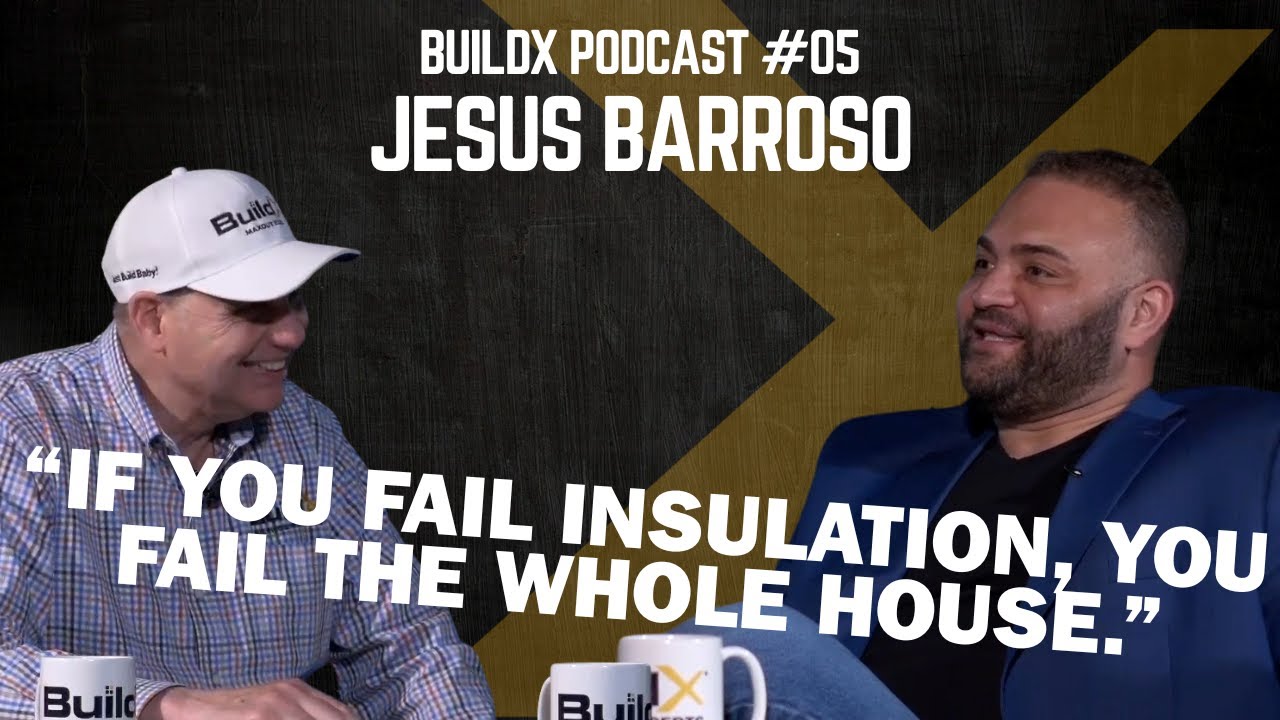
To pressure-test the technical details, we brought in Jesus Barroso, CEO of Advanced Green Insulation and one of the most respected insulation contractors in New England. Jesus started with $8,000 and one truck in 2012, and now runs a company with over 220 employees. He insulated the first net-zero house built in Massachusetts, and his team handles every BuildX ADU insulation package. What follows is the real breakdown of what goes into your walls, your crawl space, and your bottom line.
Quick Answer: For a high-performance Massachusetts ADU, the hybrid insulation system is the strongest approach: 2 inches of closed-cell spray foam (which acts as your vapor barrier) topped with open-cell foam to fill the cavity flush to the studs. This system cuts costs by up to 75% compared to full closed-cell, passes blower-door testing for net-zero certification, and eliminates the moisture, mold, and thermal-bridging failures that plague fiberglass-only installs. Your crawl space gets fully encapsulated with closed-cell foam down the walls and across the floor, blocking radon, rodents, and moisture in one system.
In This Article
- Should You Use Spray Foam or Fiberglass in Your ADU?
- What Insulation System Gets Your ADU to Net Zero?
- How Should Your ADU Crawl Space Be Insulated?
- Is Spray Foam Safe for a Small ADU Where You Live Full-Time?
- What Happens When Spray Foam Gets Installed Wrong?
- Key Takeaways From the Episode
- FAQ From the Podcast Discussion
- About Jesus Barroso
- Ready to Lock In Your ADU Insulation Spec?
Should You Use Spray Foam or Fiberglass in Your ADU?
Both spray foam and fiberglass can work in an ADU wall, but they perform very differently where it counts: air sealing, moisture control, and long-term durability. Spray foam creates a continuous air barrier that eliminates thermal bridging (heat transfer through studs, nails, and framing gaps). Fiberglass batts, installed correctly, hit the R-value numbers on paper but do nothing to stop air movement through the wall assembly.
Jesus Barroso confirms he is "not against bat insulation" when done right, but warns that fiberglass in rim joists and crawl spaces is a "horrible choice" that leads to condensation, mold, and structural damage. He also points out a market shift most homeowners don't know about: only three manufacturers produce fiberglass batts (Johns Manville, Owens Corning, and Knauf), driving fiberglass prices up every year. Meanwhile, spray foam has become more competitive as new companies enter the market. The price gap between the two has narrowed considerably.
From a builder's perspective, the insulation choice is never just about the wall cavity. We've seen firsthand what happens when the wrong system meets the wrong vapor barrier strategy. Not all insulation companies are created equal, not all details are created equal, and not all products are created equal. We need to find the sweet spot where we're building the best possible envelope while still delivering value for the investment.
The vapor barrier trap: Standard polyethylene sheeting (poly) costs about $25 per roll. A proper vapor barrier membrane costs about $150 per roll. That's six times the money, but the membrane breathes while blocking moisture. Cheap poly on the wrong side of the wall assembly creates a moisture trap that can destroy a house from the inside out. Two inches of closed-cell spray foam at proper thickness eliminates the need for a separate vapor barrier entirely.
What Insulation System Gets Your ADU to Net Zero?
Net zero means your ADU generates as much energy as it consumes over the course of a year. It's achievable with the right combination of insulation, air sealing, an ERV (energy recovery ventilator), and solar panels. But insulation is the foundation of the entire equation. If the building envelope leaks air, no amount of solar production will compensate.
Jesus Barroso describes the optimal system for a net-zero ADU: 2 inches of closed-cell spray foam topped with open-cell foam to fill the rest of the cavity. The closed cell acts as the vapor barrier. The open cell fills flush to the studs, which is critical for passing blower-door testing. Jesus notes this hybrid approach can cut insulation costs by 75% compared to filling the entire cavity with closed cell. For net-zero builds specifically, he recommends filling the full cavity rather than using a flash-and-bat system, because any air gap between insulation and drywall creates a channel for air transfer that defeats the purpose.
We coordinate insulation planning with our HERS rater (home energy rating system) before construction begins. The HERS report specifies exact R-values for walls, roof, and foundation. Jesus insulated the first net-zero house built in Massachusetts and has completed multiple off-grid homes since. His point is one we emphasize on every project: net zero is not only about insulation. The framing, zip tape, window sealing, and ERV all have to work together. The building has to be built for it from the ground up.
"You can cut the cost 75% compared to 100% closed cell. But for net zero, I recommend you fill the cavity. That pocket between the insulation and the drywall is going to cause problems with air transfer."
Jesus Barroso, Advanced Green Insulation
How Should Your ADU Crawl Space Be Insulated?
The Massachusetts ADU law counts basement square footage toward your total, which means most towns won't allow a full basement under an ADU. That forces builders to choose between a slab and a crawl space. We are not slab proponents for this climate. Living on cold concrete in a Massachusetts winter is miserable, and a slab buries all your plumbing and utilities with no access. A properly insulated crawl space gives you a conditioned space underneath the ADU with full access to mechanicals.
Jesus Barroso's team encapsulates BuildX crawl spaces with closed-cell spray foam that goes down the face of the foundation wall, across the dirt floor, and up to the rim joist. This creates a fully sealed, conditioned crawl space. The closed cell acts simultaneously as the insulation, the vapor barrier, and a barrier against rodents and pests. Jesus confirms that closed-cell foam on a crawl space foundation has "eliminated the radon almost 100 percent" in their projects.
We've been in crawl spaces built by other contractors that were full of mold, full of rodents, and full of problems. The encapsulation approach prevents all of that. On our builds, we also install a passive radon pipe during construction that runs up through the roof. Painted black and extended about four feet above the roofline, the chimney effect from sun exposure pulls radon gas out almost as effectively as a powered blower motor. That pipe costs about $300, and it's cheap insurance for the life of the structure.
Is Spray Foam Safe for a Small ADU Where You Live Full-Time?
ADU residents tend to spend more time inside their unit than a typical homeowner does in a full-sized house. The demographics skew toward aging parents, people working from home, and retirees. Indoor air quality is not an abstract concern. It's a daily-exposure reality. The safety profile of spray foam depends entirely on which type is used, how it's installed, and how long it takes to fully cure.
Jesus Barroso breaks it down clearly: open-cell spray foam uses water as its blowing agent. Off-gassing happens only during application and clears within 24 hours. Closed-cell spray foam uses a petroleum-based blowing agent and takes up to six months to complete its full curing process. If closed-cell foam is sprayed with cold material or off-ratio chemicals, it can crack, pull away from the wall, and create an ongoing odor problem that won't resolve on its own.
This is why the hybrid system works so well for ADUs. The closed cell goes on first at just 2 inches of thickness, then open cell fills the rest. The closed cell cures behind the open cell and drywall, and the open cell itself is water-based with no long-term off-gassing. For clients with chemical sensitivities or autoimmune conditions, Jesus recommends skipping spray foam entirely and using TimberHP wood-fiber insulation, a product made from treated wood fibers that earns a 3-point credit on the HERS rating. That kind of honesty is exactly why we work with his team.
What Happens When Spray Foam Gets Installed Wrong?
Spray foam is not a DIY product. It's not a product any contractor can pick up overnight. When it's installed wrong, the failure is invisible behind drywall, and by the time you discover the problem, the fix is catastrophic. Once drywall goes up, you have to trust that the installer did the job right. There is no way to inspect it after the fact.
Jesus Barroso explains that if closed-cell foam is pumped with cold material or with chemicals that are off-ratio, the foam will look fine initially but can crack and pull away from the wall three to six months later. His team stores all materials in climate-controlled warehouses above 65°F and uses trucks built specifically for New England's climate zone with heated storage. He warns that many new spray foam operators have "never been in a spray foam truck" and "never know how to calibrate a machine." They learned from Google and took a couple of classes.
We saw this play out in the worst way possible. A customer came in with a mold problem in a house that was only two to three years old. A friend came over and noticed the entire house smelled like mold. They cut a test hole in the pantry wall and found it was black with mold. They cut into another room. Same thing. Upstairs. Same thing. That house had to be torn down entirely. Five years of lawsuits followed. The root cause was a double vapor barrier with fiberglass that trapped moisture inside the wall assembly and rotted the house from within.
The real cost of a cheap bid: A quality insulation install from an experienced contractor with $5 million in umbrella insurance, heated material storage, and proper machine calibration costs more upfront. The bid gap between an Advanced Green crew and an inexperienced competitor is real. But the alternative is a house that has to be ripped apart or torn down because the foam was sprayed cold, off-ratio, or without understanding the vapor barrier assembly. That "savings" becomes the most expensive decision of the entire project.
Key Takeaways From the Episode
- The hybrid system is the best value for ADU insulation: Two inches of closed-cell spray foam plus open-cell fill gives you a vapor barrier, air seal, and full-cavity insulation at up to 75% less cost than 100% closed cell.
- Fiberglass is losing ground on price: With only three manufacturers controlling the fiberglass market and spray foam competition growing, the cost gap between the two has narrowed to the point where spray foam's performance advantages cost very little extra.
- Crawl spaces beat slabs in Massachusetts ADUs: A slab buries your utilities and puts you on cold concrete. An encapsulated crawl space gives you insulation, vapor barrier, radon protection, rodent resistance, and mechanical access in one system.
- Closed-cell foam blocks radon at nearly 100%: For ADUs built in areas with granite geology like Rockland, MA, closed-cell encapsulation on the crawl space foundation is the most effective radon barrier available.
- A $300 radon pipe is cheap insurance: Installing a passive radon pipe during construction, painted black and extended four feet above the roofline, creates a chimney effect nearly as strong as a powered blower motor.
- Open-cell foam off-gasses in 24 hours; closed cell takes up to 6 months: The hybrid system minimizes chemical exposure because only 2 inches of closed cell is used, with water-based open cell filling the rest.
- You cannot inspect spray foam after drywall: If the installer pumped cold material or sprayed off-ratio, the foam can crack and separate months later behind a wall you'll never open. Contractor quality is the single most important insulation decision.
- A bad insulation job can destroy a house in two to three years: A double vapor barrier with fiberglass led to black mold throughout an entire home, resulting in a full teardown and five years of lawsuits.
FAQ From the Podcast Discussion
Do I need spray foam in every part of my ADU?
Not necessarily. The critical areas for spray foam are the rim joists, crawl space, and anywhere air sealing and vapor barrier performance matter most. Walls can use the hybrid system (closed cell plus open cell), and clients with chemical sensitivities can use TimberHP wood-fiber batts for walls and ceilings while still meeting HERS requirements.
Can fiberglass insulation cause mold in my ADU?
Fiberglass itself doesn't cause mold, but fiberglass combined with the wrong vapor barrier assembly creates conditions for moisture to get trapped inside wall cavities. If exposed nails from exterior sheathing aren't covered by closed-cell foam, those nails become thermal bridges that condensate and drip moisture directly into the fiberglass. Over time, that becomes a mold problem that's invisible behind drywall.
How much does ADU insulation cost compared to fiberglass?
The price gap between spray foam and fiberglass has narrowed considerably. Fiberglass prices climb every year due to limited manufacturers (only three control the market), while spray foam prices have dropped with increased competition. The hybrid system (2 inches closed cell plus open cell) costs about 75% less than filling the entire cavity with closed cell, making it competitive with high-quality fiberglass installs once you factor in the vapor barrier membrane cost ($150 per roll versus $25 for basic poly).
What is the HERS rating, and how does insulation affect it?
HERS stands for Home Energy Rating System. Your HERS rater models your ADU plans and produces a report specifying the exact R-values needed for walls, roof, and foundation to meet Massachusetts energy code. Your insulation contractor needs to know how to read this report and deliver the correct product for each zone. Switching from spray foam to TimberHP bats can earn a 3-point HERS credit due to the material's sustainability rating.
Is radon a real concern for an ADU in Massachusetts?
Yes. Radon is a byproduct of decaying stone and rock underground. Areas with granite geology, like Rockland, MA, carry higher radon risk. Sandy areas like Cape Cod have lower risk but not zero. Closed-cell spray foam in the crawl space blocks radon at nearly 100%. A passive radon pipe installed during construction (about $300) provides additional protection without any ongoing energy cost.
What is TimberHP insulation, and should I consider it for my ADU?
TimberHP is a wood-fiber insulation product available as batts (for walls and basement ceilings) and blown-in fill (for attics). It's the evolution of cellulose insulation turned into a batt form. TimberHP is the recommended alternative for ADU occupants with chemical sensitivities, autoimmune conditions, or concerns about spray foam off-gassing. It also earns a 3-point HERS credit. The key installation detail: electricians need to run wires up and down studs rather than across them to avoid cutting the batts, which reduces air leaks.
How do I know if my spray foam was installed correctly?
Before drywall, look for uniform coverage with no gaps, no exposed nails through the foam layer, and a clean job site. After drywall, you're relying entirely on the installer's quality and experience. Key indicators of a quality contractor: climate-controlled material storage (always above 65°F), trucks built for cold-climate spray foam application, proper machine calibration, and years of verifiable experience. Ask about their insurance coverage as well.
Can I build a net-zero ADU in Massachusetts?
Yes. The combination of hybrid spray foam insulation (full-cavity fill for net-zero specs), proper air sealing on all framing connections, an ERV for controlled ventilation, and a rooftop solar array can achieve net-zero energy performance. The insulation system is the foundation, but net zero requires every component working together. The building has to be framed, taped, sealed, and insulated as one coordinated system from the start.
Why does BuildX use crawl spaces instead of slabs?
Massachusetts ADU law counts basement square footage toward the total, which eliminates full basements for most projects. That leaves slab or crawl space. A slab puts occupants on cold concrete in a New England climate, buries all plumbing and utilities with no access, and provides no opportunity for insulation or radon mitigation underneath the living space. A properly encapsulated crawl space delivers insulation, vapor barrier, radon protection, rodent resistance, and full access to mechanicals in one system.
How do I protect my ADU from termites when using spray foam in the crawl space?
Termites can tunnel behind foam insulation on foundation walls, creating damage you can't see. The solution is a custom-bent copper termite shield installed on top of the foundation wall, extending inside and outside at a 15-degree angle. The spray foam stops below the copper line. Termites sense the copper and turn around. If they tried to go around the shield, their tunnels would be visible above the foam line. The 3-pound closed-cell foam used on foundations is also nearly twice as hard as standard spray foam, making it extremely difficult for termites to penetrate.
"Everybody can buy a truck and start doing spray foam tomorrow. Spray foam is a very delicate product. You can ruin your house doing spray foam."
Jesus Barroso, Advanced Green Insulation
About Jesus Barroso
Ready to Lock In Your ADU Insulation Spec?
The insulation system in your ADU determines your energy costs, your indoor air quality, and whether your crawl space becomes a conditioned asset or a mold-ridden liability. Get it right during design, not after drywall.
Schedule a site consultation with BuildX to walk through your lot, discuss your goals, and determine the best route to take with your project.
Request a Free Consultation or call (781) 627-7000
See our work in person: buildx.com/adu-home-tour