
What Insurance Coverage Gaps Could Destroy Your Massachusetts ADU Investment?
A pipe bursts in the wall behind your kitchen. Water pours through the subfloor and into the basement. You call your insurance company expecting help, and the adjuster they send writes up a check for $2,500 because that is the coverage limit on your policy for backup of sewer and drain. The actual damage is five times that number. Now multiply that risk across a property with both a primary home and an ADU, and the exposure gets real.
As a Massachusetts ADU builder, we see this gap every week. Homeowners pour $200,000 to $400,000 into an addition or accessory dwelling unit, and nobody tells them to open their insurance declarations page first. As CEO of BuildX, my job is coordinating structural engineering, code compliance, financing, and long-term resale value into one coherent ADU plan. Insurance is never just about premiums. It is about whether your entire ADU investment survives a single bad event.
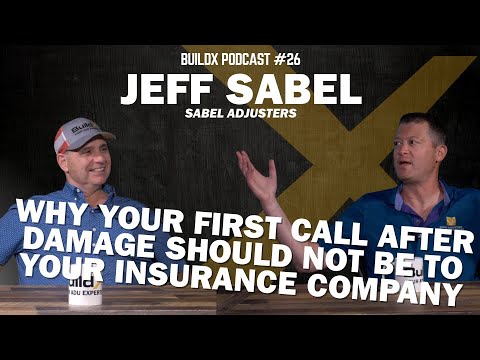
To pressure-test the insurance blind spots we see on our projects, we brought in Jeff Sabel, President and CEO of Sabel Adjusters and a third-generation public adjuster (a licensed professional who represents homeowners, not the insurance company, during claims) with 25 years of experience negotiating residential and commercial property claims across Massachusetts. Jeff has managed claims through fires, floods, frozen pipes, and everything in between, and he confirmed what we already suspected: most homeowners are dangerously underinsured, and they do not find out until the worst day of their lives.
Quick Answer: Your homeowner's insurance likely has coverage gaps that could cost you tens of thousands of dollars during an ADU project or after one. The three biggest gaps are inadequate code coverage (law and ordinance coverage), low limits on water damage and sewer backup, and policies from out-of-state carriers that deny and delay claims. Before breaking ground on any ADU or addition, review your policy with a local agent, confirm your code coverage limits, and understand that a $25,000 code coverage cap can leave you exposed on a claim where code upgrades alone exceed that number.
In This Article
- What Is Code Coverage and Why Does It Matter Before You Build an ADU?
- How Does Building an ADU Affect Your Homeowner's Insurance?
- Can You Use an Insurance Settlement to Add a Second Story or Upgrade Your Home?
- Do You Need a Public Adjuster If Your Home or ADU Gets Damaged?
- Key Takeaways From the Episode
- FAQ From the Podcast Discussion
- About Jeff Sabel
- Ready to Protect Your ADU Investment Before You Build?
What Is Code Coverage and Why Does It Matter Before You Build an ADU?
Code coverage, also called law and ordinance coverage, is the portion of your homeowner's insurance that pays for mandatory building-code upgrades when you repair or rebuild after a covered loss. Building codes in Massachusetts change every two years now, covering energy, plumbing, electrical, and insulation requirements. On any claim where a permit gets pulled, the building inspector will require current-code compliance, and that cost sits on top of the repair estimate. If your code coverage limit is too low, you pay the difference out of pocket.
Jeff Sabel confirms that code is one of the Achilles heels for insurance companies because the numbers that come at them can be very large. He breaks it down to the outlet level: if a damaged outlet needs replacement and current code requires a GFI (ground fault circuit interrupter) outlet, the insurance company owes the cost of the original outlet under the standard claim, and the cost difference to upgrade to GFI goes to the code coverage bucket. That math adds up fast across an entire kitchen, bathroom, or floor of a house. One homeowner on Cape Cod had only $25,000 in code coverage, and as Jeff and we both agreed, that homeowner was in serious trouble.
From a builder's perspective, this is the conversation we have before a shovel hits dirt. Any ADU or addition project that triggers a permit opens the door to code-upgrade requirements on the existing structure, not just the new build. We have seen homeowners blindsided by electrical panel upgrades, insulation requirements, and egress changes that their insurance would have covered if the policy limits were adequate.
Documentation is everything: Jeff recommends that contractors working on insurance-related repairs get code requirements in writing from the building inspector early. An email confirming "per our conversation, you advise I need to do X, Y, and Z" creates the paper trail the insurance company needs to approve code coverage reimbursement. Without that documentation, the carrier will fight the charge.
How Does Building an ADU Affect Your Homeowner's Insurance?
Adding an ADU or major addition changes your property's risk profile, and your insurance carrier will eventually notice. Across our ADU builds in Massachusetts, we tell every client the same thing: call your insurance agent before you call your architect. A sizable claim during or after construction can trigger a policy cancellation at your next renewal date. The carrier still has to pay the existing claim, but from the cancellation date forward, you are uninsured unless you find a new policy.
Jeff Sabel confirms this happens all the time. Homeowners call him panicked, saying they just got canceled mid-claim and asking if they will ever get paid. The answer is yes, the original claim survives, but the homeowner now needs a builder's risk policy (a temporary policy that covers a property under construction) to stay protected, and that costs additional money. Jeff adds that the carrier will not reimburse you for the builder's risk premium, even though the cancellation forced you into it.
"I always tell people the bigger you see them advertised on TV, stay away. They may be cheaper, but cheaper isn't always the best."
Jeff Sabel, Sabel Adjusters
This is exactly why we push every ADU client toward a local insurance agent who understands Massachusetts-specific coverage. A local agent with a local carrier has relationships and can make a direct call when something goes sideways. An out-of-state carrier accessed through a 1-800 number does not give you that advocacy. Jeff points out that some cheap policies have water damage limits as low as $2,500 for backup of sewer and drain. On a property with an ADU, one frozen pipe can blow through that limit before the restoration crew even arrives.
Can You Use an Insurance Settlement to Add a Second Story or Upgrade Your Home?
Yes. If your home sustains covered damage and the interior is gutted, you can use the insurance settlement as a foundation and add your own money to upgrade, reconfigure, or expand the property. This includes moving walls, adding a bathroom, upgrading the HVAC, or even putting a second story on a ranch, as long as you communicate the plan to the adjuster upfront and stay within the agreed period of restoration (the timeframe the insurance company has approved for your temporary living expenses).
Jeff Sabel confirms that as long as you stay within the footprint, moving walls around during a rebuild is not an issue. He adds that homeowners can absolutely take the settlement check, supplement it with their own funds or a HELOC (home equity line of credit), and build the home they always wanted. Jeff recently coached a client who asked if it was too soon to start picking out cabinets after a kitchen water loss. His advice: start your selections immediately so that when the claim settles, you are ready to build without delay.
The critical caveat is the period of restoration. If you add a second story and it extends the construction timeline beyond what the carrier agreed to, you cannot ask the insurance company to pay additional living expenses for the extra time your self-funded upgrades require. Jeff is clear on this: the insurance company owes for the original scope, not the upgrade scope. We advise clients to get the period of restoration locked in writing before committing to any expansion plans so there are no surprises on living-expense coverage.
Do You Need a Public Adjuster If Your Home or ADU Gets Damaged?
A public adjuster is a state-licensed professional hired by the homeowner to document, prepare, and negotiate an insurance claim on the homeowner's behalf. They are not affiliated with the insurance company. They work for you, get paid a percentage of the final settlement, and collect nothing until you approve the result. For any claim over a few thousand dollars, especially on a property where you have invested in an ADU, having a professional advocate changes the outcome.
Jeff Sabel walks through the math on a recent case: the insurance company offered $18,000 on a claim he settled for $98,000, a more-than-five-times difference. In another case involving an out-of-state carrier and a waterfront home with a destroyed kitchen, the carrier's initial estimate was in the single-digit thousands on a claim worth six figures. They did not even include the saturated cabinets that disintegrated when removed from the wall. Jeff adds that on a large claim in the couple-hundred-thousand-dollar range, the process takes 90 to 120 days from engagement to check in hand.
Jeff is also honest about when you do not need a public adjuster. Small claims where a competent contractor is already working directly with the insurance company do not require his involvement. He does not want to take money out of your pocket when the situation does not justify it. But on a property with an ADU, where the dwelling value, contents, and code exposure are all higher than a standard single-family home, the stakes justify professional representation.
How to vet a public adjuster: Jeff recommends researching online reviews, asking for referrals from past clients, and confirming the size and complexity of claims they have handled. Your property is your biggest investment. Jeff compares it to choosing a heart doctor: you would not go with the cheapest option when your life depends on it.
Key Takeaways From the Episode
- Review your insurance before you build: Open your declarations page and confirm your code coverage limits, water damage limits, and backup of sewer/drain limits before starting any ADU or addition project.
- Code coverage gaps are expensive: Building codes change every two years in Massachusetts. A $25,000 code coverage cap can leave you tens of thousands short on a claim that triggers electrical, plumbing, or insulation upgrades.
- Use a local insurance agent: Out-of-state carriers and 1-800-number policies consistently deliver lower limits, more denials, and slower payouts. A local agent with local carrier relationships advocates for you when it matters.
- Public adjusters level the playing field: On claims over a few thousand dollars, a public adjuster documents, negotiates, and settles on your behalf. One case went from an $18,000 offer to a $98,000 settlement.
- You can upgrade during a rebuild: Insurance settlements can be combined with personal funds or a HELOC to reconfigure, expand, or improve your home, but you must communicate the plan to the adjuster and respect the agreed period of restoration.
- Cancellation does not kill your claim: If your carrier cancels your policy mid-claim, the existing claim survives. You will need a builder's risk policy to stay covered going forward.
- Document code requirements early: Get building inspector requirements in writing via email before the insurance company's adjuster weighs in. The paper trail drives reimbursement.
- The insurance industry is getting harder: Inexperienced adjusters, out-of-state third-party administrators, and deny-delay-lowball tactics are now standard. Professional representation is more valuable than ever.
FAQ From the Podcast Discussion
What is replacement cost value versus actual cash value on my homeowner's policy?
Replacement cost value (RCV) pays what it costs to repair or replace the damaged property at today's prices. Actual cash value (ACV) deducts depreciation from that number. On a $100,000 replacement-cost claim with $20,000 in depreciation, you receive $80,000 upfront as the ACV. To collect the remaining $20,000, you must show receipts proving you spent at least the $80,000 on repairs and then document costs dollar-for-dollar up to the full replacement amount.
How does a public adjuster get paid?
Public adjusters are paid a percentage of the total settlement they collect on your behalf. They do not get paid until the very end, after you approve the result and are satisfied with the outcome. There is no upfront cost to the homeowner.
How long does a large insurance claim take to settle?
Jeff Sabel estimates that a large claim in the couple-hundred-thousand-dollar range takes 90 to 120 days from the time his team starts work until the homeowner has a check in hand. Claims involving coverage disputes, examinations under oath, or out-of-state carriers can take longer.
What happens if my insurance company cancels my policy during a claim?
The existing claim survives the cancellation. Your carrier still owes you for the covered loss. However, from the cancellation date forward, you have no active coverage. You will need to secure a builder's risk policy or find a new homeowner's policy, and the carrier will not reimburse you for that cost. Jeff confirms he gets this call regularly and the answer is always the same: you will get paid on the original claim.
What is the Massachusetts Fair Plan and is it a good option?
The Massachusetts Fair Plan is the state's insurer of last resort for homeowners who cannot find coverage in the standard market. Jeff says the Fair Plan now has great coverage, a marked improvement from years ago when its policies were shallow and limited. If you get canceled by a standard carrier, the Fair Plan is a viable fallback.
Should I file a claim through my own policy or the other party's insurance?
This is the difference between a first-party claim (filing through your own policy) and a third-party claim (filing through the responsible party's policy). The right choice depends on coverage limits, deductibles, and the specific circumstances. Jeff notes that the decision can hinge on a single word or phrase in the policy language, which is why professional guidance matters on anything beyond a straightforward claim.
What is an insurance holdback and how do I get the remaining money?
After the initial ACV payment, the insurance company holds back the depreciation amount until you prove you have incurred costs up to that threshold. Using round numbers: on a $100,000 claim with $20,000 in depreciation, you receive $80,000 first. You then submit receipts showing you spent the $80,000, and for every dollar you spend above that amount, the carrier releases holdback funds dollar-for-dollar up to the full $100,000.
Do I need builder's risk insurance when building an ADU?
Builder's risk insurance covers a property under active construction. Jeff mentions it in the context of homeowners who get canceled mid-claim and need coverage during restoration. For ADU construction specifically, the source material does not provide detailed guidance on when it is required, what it costs, or how it interacts with your existing homeowner's policy. This is a conversation to have with your local insurance agent before breaking ground.
Why are out-of-state insurance carriers a problem for Massachusetts homeowners?
Out-of-state carriers, especially those based in Florida, route claims through third-party administrators who then assign independent adjusters. That creates two layers of separation between your claim and anyone with authority to approve it. Jeff describes an independent adjuster who admitted to handling 50 claims per week from one carrier, seeing 10 per day, and having no memory of what he wrote on any of them. Local carriers with local agents provide direct access to decision-makers.
How do I know if my insurance claim is being handled fairly?
The current industry trend, according to both Jeff and our experience, is deny, deny, deny, slow down, slow pay, and low pay. If your carrier questions coverage on a straightforward claim, sends inexperienced adjusters who do not understand construction, or makes initial offers that are a fraction of the actual damage, those are red flags. Jeff had a case where a carrier denied coverage, forced the homeowner through multiple examinations under oath, and then reversed the denial five months later after a lawyer wrote a single letter. Professional representation from the start prevents that cycle.
"Your property is your biggest investment. For most people. Just like our hearts, our biggest investment. If you have a heart problem, are you going to the cheapest heart doctor?"
Jeff Sabel, Sabel Adjusters
About Jeff Sabel
Ready to Protect Your ADU Investment Before You Build?
Your insurance policy is the foundation under your foundation. Review it before you build, and bring in the right professionals when something goes wrong.
Schedule a site consultation with BuildX to walk through your lot, discuss your goals, and determine the best route to take with your project.
Request a Free Consultation or call (781) 627-7000
See our work in person: buildx.com/adu-home-tour