
Can Your Septic System Handle a Massachusetts ADU?
You found the perfect spot for your ADU. The zoning checks out. The architect drew up plans you love. Then someone mentions the septic system, and the whole project grinds to a halt. We hear this story constantly from homeowners across the South Shore who assumed zoning was the hard part. It is not. The ground under your feet decides whether your ADU gets built.
As a Massachusetts ADU builder, we have walked hundreds of properties where the septic system turned out to be the real gatekeeper. As CEO of BuildX, my job is coordinating civil engineering, permitting, structural design, and septic feasibility into one coherent ADU plan. Septic is never just a plumbing question. It is about whether your entire ADU investment is viable before you spend a dollar on design.
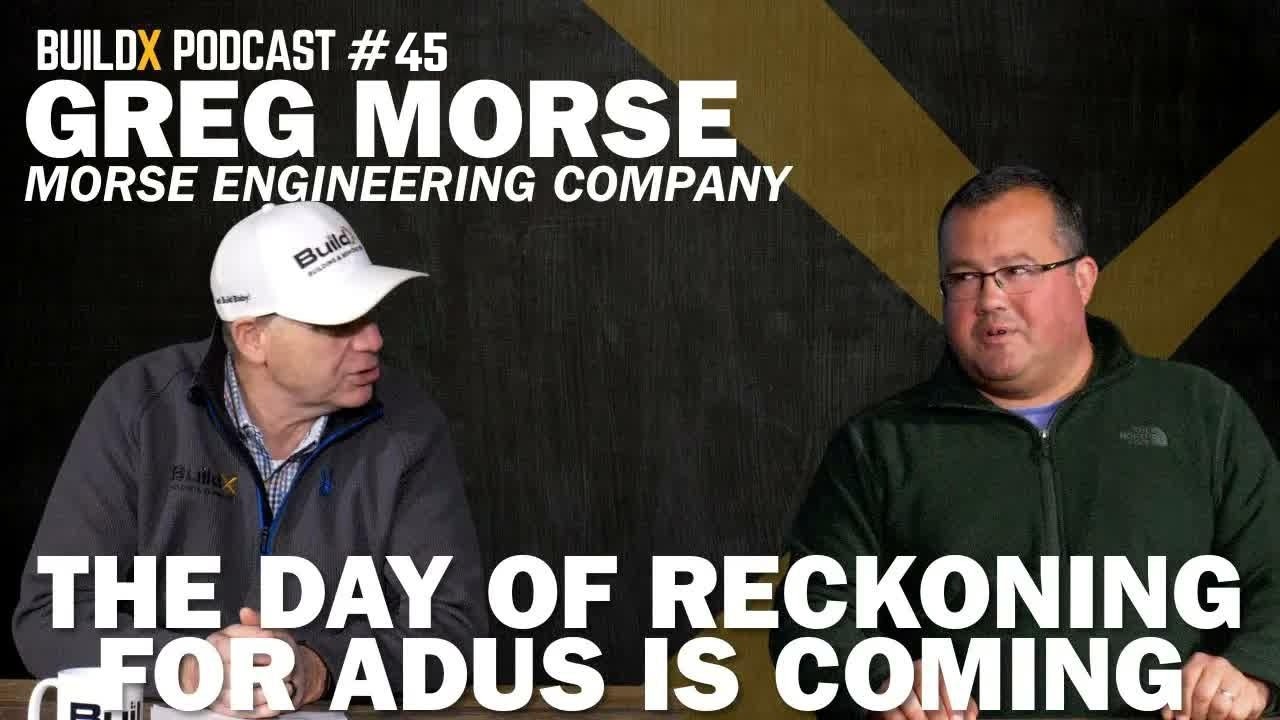
To pressure-test the technical details, we brought in Greg Morse, P.E., president of Morse Engineering Company. Greg has spent 25 years designing septic systems, surveying land, and permitting residential projects across the South Shore. His firm handles 125 to 150 septic projects a year, and right now they are pushing six ADU projects through permitting in Scituate, Marshfield, Hanover, and Norwell alone.
Quick Answer: Your septic system's ability to support an ADU depends on three factors: bedroom count capacity, system age, and whether variances were granted during installation. Systems installed after 1995 with no variances and extra capacity can often be tied into. Pre-1995 systems cannot. Variance systems are a dead end without a full replacement. Budget up to $40,000 for septic work if a new system is required. Zoning is the easy part. Septic is the wild card.
In This Article
- Can Your Existing Septic Support an ADU?
- How Much Does ADU Septic Work Cost in Massachusetts?
- Does a Septic Variance Kill Your ADU Plans?
- Can You Transfer a Bedroom to Avoid a Septic Upgrade?
- What If Your Property Is in a Nitrogen-Sensitive Zone?
- Are Wetland Setbacks About to Change for ADUs?
- Key Takeaways From the Episode
- FAQ From the Podcast Discussion
- About Greg Morse
- Ready to Find Out If Your Lot Can Support an ADU?
Can Your Existing Septic Support an ADU?
The first question on every ADU project is not where the building goes. It is whether the ground and the existing septic system can handle the extra load. Bedroom count is what drives the entire septic design. Adding a one-bedroom or two-bedroom ADU means your septic system needs capacity for those additional bedrooms, and that capacity was locked in when the original system was permitted.
Greg Morse confirms that the bedroom count conversation happens right at the start of due diligence. His team pulls Board of Health records, reviews the current septic design, and checks what the system was permitted for. "The biggest thing that I get is the bedroom count," Greg explains. "That's really what's going to drive the whole design." In an ideal scenario, the existing house has a system that was over-designed to accommodate additional bedrooms.
Towns like Hanover used to require 1,000-square-foot minimum leaching fields, which means many three-bedroom and four-bedroom systems in that area already have capacity for four or five bedrooms. Greg confirms there is a lot of existing capacity in Hanover specifically. We see similar over-built systems across the South Shore, and identifying that excess capacity early is the single fastest way to de-risk an ADU project.
The 1995 cutoff matters: Systems installed after 1995 under current Title V regulations (the state septic code) with no variances can be tied into for ADU use. Pre-1995 systems cannot. If records show a post-2000 system with clean documentation, Greg's team can evaluate feasibility quickly. Older or undocumented systems require more homework before anyone can give you an answer.
How Much Does ADU Septic Work Cost in Massachusetts?
When the existing system cannot accommodate extra bedrooms, the cost conversation gets real fast. You can spend $40,000 on a septic system for an ADU. That number catches homeowners off guard, but it reflects the reality of what a nitrogen-removal system, pump chamber, and alternative leaching field cost when layered together.
Greg Morse walks through the components. For a detached ADU, you are almost always adding a second tank, typically a 1,500-gallon tank. If nitrogen removal is required, you are adding a Nitro system (a miniature wastewater treatment plant that replaces the conventional septic tank). Nine out of ten times, the effluent is pumped rather than gravity-fed. So the chain becomes: Nitro system, then pump chamber, then leaching field. Each component adds cost, and the pump size and chamber volume vary based on the field type.
Even for attached ADUs, the tank situation is more complicated than most homeowners expect. By the letter of the law, once you enter ADU territory, you need at least a multi-compartment tank or two separate tanks. Greg confirms this applies even when the ADU is physically attached to the house. We always tell homeowners to budget for septic as a line item from day one, not as an afterthought once the design is done.
Does a Septic Variance Kill Your ADU Plans?
This is the hidden deal-killer that blindsides homeowners. If your existing septic system was installed with a variance, meaning the Board of Health granted an exception to standard requirements like groundwater separation, that variance blocks you from adding bedrooms for an ADU. The system is considered non-compliant for expansion, and the state has directed engineers to treat the entire lot as a single facility.
Greg Morse confirms the state's position: if you have a variance system and want to add an ADU, you cannot simply build a second septic system on the lot and leave the existing one alone. "Even if I have room for another septic, I still have to fix this one because it's a facility, the entire lot, and I can't have this one out of compliance," Buz explains. Greg agrees: "That's how the state has directed us to look at it." The old leaching field comes out, the system comes up another foot or more, and you are replacing the entire system.
From a builder's perspective, this turns a budget-friendly ADU project into a full-scale septic replacement plus new construction. We have seen homeowners discover this months into planning. That is why we coordinate with engineers like Greg before the design phase, not after. Checking for variances costs nothing compared to the surprise of a $40,000-plus septic overhaul you did not plan for.
"Unfortunately, there's tons of mounted systems out there. If people are going to want an ADU and they got a variance to be within XYZ of the groundwater, now they're done."
Greg Morse, Morse Engineering Company
Can You Transfer a Bedroom to Avoid a Septic Upgrade?
Here is a strategy that can save tens of thousands of dollars, and most homeowners have never heard of it. If your existing house is a four-bedroom home with a post-1995 septic system that passes inspection, you can transfer a bedroom from the house to the ADU. The house goes from four bedrooms to three on paper, the ADU gets credited for one bedroom, and the total septic load stays the same.
Greg Morse confirms his firm has done this successfully. The requirements are specific: the system must be post-1995, it must pass a Title V inspection, and the Board of Health will require a deed restriction documenting that the main house is now a three-bedroom instead of a four-bedroom. If the ADU is attached, this bedroom transfer can make the project functionally identical to a standard addition, which means you may not need a separate tank at all.
This is exactly the kind of creative engineering solution that separates a well-coordinated ADU project from one that stalls on cost. We have used this approach on multiple projects where the septic budget would have otherwise killed the deal. The key is engaging with the Board of Health and the engineer early enough to confirm the transfer is viable in your specific town.
Town-by-town variation applies here too: Greg notes the bedroom-transfer approach "depends on the Board of Health." Some towns are more receptive than others. Strictly by the letter of the law, entering ADU territory still requires at least a multi-compartment tank or two tanks for detached units. But for attached ADUs with a transferred bedroom, the path is much more budget-friendly.
What If Your Property Is in a Nitrogen-Sensitive Zone?
Properties near town wells or in Zone 2 areas (zones of contribution to public water supply wells) face an additional constraint. Nitrogen-sensitive zones limit you to one bedroom per 10,000 square feet of lot size. If your lot is 20,000 square feet, you get two bedrooms total across the house and ADU. That math can shut down an ADU project before it starts.
Greg Morse confirms the one-bedroom-per-10,000-square-foot rule applies identically whether the property is serviced by a private well or sits within a Zone 2 for a town well. But he also shares a detail that most homeowners and even some builders do not know: if you place the septic system outside the Zone 2 boundary, you do not have to comply with the Zone 2 requirements, even if part of the lot is inside Zone 2. On a property that straddles the boundary, this can be the difference between a feasible project and a dead end.
When nitrogen removal is required, a Nitro system handles the treatment. Greg describes it as a miniature wastewater treatment plant packaged into a single tank that drops nitrogen levels to essentially zero. It requires an annual inspection, but actual maintenance is minimal. Every couple of years, you replace an aerator motor or a filter. We see these systems becoming standard across the South Shore, and understanding them is part of building an ADU that performs long-term.
Are Wetland Setbacks About to Change for ADUs?
Wetland buffer zones are blocking ADU construction on a massive number of South Shore lots. The state's official setback from a bordering vegetated wetland (BVW) is zero feet. But individual towns have stacked their own requirements on top: Scituate requires 50 feet, Marshfield requires 75, Carver requires 65, and Kingston requires 50. There is no scientific standard behind these numbers. They vary from town to town, and they choke ADU-eligible lots.
Greg Morse agrees that a 50% reduction in setbacks would open up a tremendous number of sites. The inconsistency is real: in Kingston, no part of the septic system, not even the tank, can be within 100 feet of the buffer zone. The state only requires the leaching field to be 50 feet from a wetland. Greg confirms there is no science behind Kingston's closed-plumbing restriction at 100 feet. The historical progression went from zero, to 10, to 15, to 25, to 50 feet over the decades, all at the town level.
We have been vocal about this constraint on record and on television. From 14 years serving on the Kingston Conservation Commission, the pattern is clear: these buffers were created with good intentions but have become barriers to housing that the state will eventually override. We predict a blanket ruling within 18 months that cuts all ADU wetland setbacks to 25 feet, which would mirror the trajectory we saw with the MBTA Communities Act and by-right ADU legislation.
"The distance from the BVW to the no-touch zone is a made-up number. There's no science behind it."
Buz Artiano, BuildX Podcast
Key Takeaways From the Episode
- Septic, not zoning, is the real ADU gatekeeper: Zoning is straightforward to evaluate. Whether your septic can handle extra bedrooms is the wild card that determines feasibility.
- Bedroom count drives everything: Your existing septic capacity is measured in bedrooms, not square footage. Adding an ADU means adding bedrooms, and the system must have capacity or be upgraded.
- The 1995 cutoff is a hard line: Systems installed under current Title V regulations (post-1995) with no variances can be tied into. Pre-1995 systems cannot.
- Budget up to $40,000 for septic work: A nitrogen-removal system, pump chamber, and alternative leaching field can add up fast. Plan for this before you finalize your ADU budget.
- Variance systems are a dead end: If your existing septic received a variance for groundwater separation or other standards, you cannot add bedrooms without replacing the entire system.
- The bedroom-transfer strategy can save you thousands: Transferring a bedroom from your house to the ADU keeps the septic load the same and may eliminate the need for a new system entirely.
- Nitrogen-sensitive zones limit density: Zone 2 areas restrict you to one bedroom per 10,000 square feet of lot size, but placing the septic outside the Zone 2 boundary can bypass that limit.
- Wetland setbacks are likely to shrink: Town-imposed wetland buffers have no scientific standard and are expected to face state-level reform that would cut setbacks by 50% for ADU projects.
FAQ From the Podcast Discussion
Do I need a separate septic tank for a detached ADU?
In most cases, yes. Greg Morse confirms that for a detached ADU, you are almost always adding a second tank, typically a 1,500-gallon tank. Even for attached ADUs, the letter of the law requires at least a multi-compartment tank once you enter ADU territory. The specifics depend on your town's Board of Health interpretation.
What is a Nitro septic system?
A Nitro system is a miniature wastewater treatment plant packaged into a single tank that replaces the conventional septic tank. It reduces nitrogen levels in wastewater to essentially zero. The unit is about the same size as a regular tank, requires an annual inspection, and has minimal ongoing maintenance beyond replacing an aerator motor or filter every couple of years.
How do I know if my property is in a nitrogen-sensitive area?
Properties near town wells or within a Zone 2 (the zone of contribution to a public water supply well) are subject to nitrogen-sensitivity restrictions. Your civil engineer can check this using MassGIS mapping tools during the preliminary review, before any paid engineering work begins.
What is a PERC test (percolation test) and why does my ADU project need one?
A PERC test measures how fast water drains through the soil on your property. The results determine what type of septic system and leaching field your lot can support. Greg's team digs multiple test pits because soil can vary dramatically across short distances. The perc rate also determines groundwater separation requirements: sandy soil (under two minutes per inch) requires five-foot separation, while slower-draining soil (three to 60 minutes per inch) allows four-foot separation.
What type of leaching field is best for an ADU?
It depends on your site conditions. Greg Morse's go-to on a good site is a traditional crushed-stone field with perforated pipe, gravity-fed. For sites with a high water table, he recommends a Presby, Viroseptic, or Geomat system. The Geomat is a very low-profile system (about six inches thick) that prevents the need for a three-foot mound. LC6 systems are considered bulletproof but require a deep water table.
Why is ADU permitting so different from town to town?
Greg confirms that ADU permitting is "vastly different" across South Shore towns. Scituate can take months, Hanover about a week, and Marshfield falls somewhere in between. Many towns that previously required special permits for ADUs are reluctant to give up that control. The Attorney General's office is actively forcing towns to comply with by-right ADU law, and the state's ADU coordinator is collecting data on resistant municipalities.
Can I reuse an existing property survey for my ADU project?
Greg confirms that existing surveys can often be reused, which saves time and money. His team will go out and supplement the survey to verify that site conditions have not changed, such as a new shed or driveway. It is not a fresh start, but it reduces the scope of work compared to surveying from scratch.
Does my excavation contractor need special training to install a Nitro system?
Yes, but it is not exclusive to specific contractors. The Nitro manufacturer sends a representative to train your contractor on-site the first time a unit is installed. After that initial training, your excavation contractor can install subsequent systems. Separate inspection companies have formed around the annual servicing these systems require.
What does a civil engineer actually do on an ADU project?
Greg outlines three phases: first, an instrument survey of the property to establish property lines, topography, and zoning setbacks. Second, a proposed site plan, which is an iterative process where the engineer places the ADU footprint and works through adjustments for driveways, utilities, and septic placement. Third, permitting through the town, including presenting the project at public hearings. During construction, the engineer stakes foundation corners and provides inspections when unexpected underground conditions arise.
How many ADU septic projects is Morse Engineering handling right now?
Greg's firm is currently pushing six ADU projects through the permitting phase across Scituate, Marshfield, Hanover, and Norwell. The firm handles 125 to 150 septic projects per year total, with roughly 70% being repairs, upgrades, or bedroom additions.
"Zoning's pretty easy to figure out. It's the septic's the wild card."
Greg Morse, Morse Engineering Company
About Greg Morse
Ready to Find Out If Your Lot Can Support an ADU?
The septic question is the one that determines whether your ADU project moves forward or stops cold. Get the answer before you invest in design, architecture, or permitting.
Schedule a site consultation with BuildX to walk through your lot, discuss your goals, and determine the best route to take with your project.
Request a Free Consultation or call (781) 627-7000
See our work in person: buildx.com/adu-home-tour