Is Your Homeowner's Insurance Enough to Protect Your ADU Investment?
You're about to invest $200,000 to $400,000 in an ADU. You've run the numbers on construction costs, financing, and rental income. But have you opened your homeowner's insurance declarations page lately? Because if your existing home is underinsured and something goes wrong, the ADU project you've been planning could become the least of your problems.
As a Massachusetts ADU builder, we've walked through over 1,000 fire scenes and worked alongside adjusters, engineers, and insurance carriers on claims that range from minor water damage to total structural loss. As CEO of BuildX, my job is coordinating structural engineering, energy code compliance, financing, and long-term resale value into one coherent ADU plan. Insurance is never just about the monthly premium. It's about whether your entire property, including the ADU you're building, survives a catastrophic event as a financial asset.
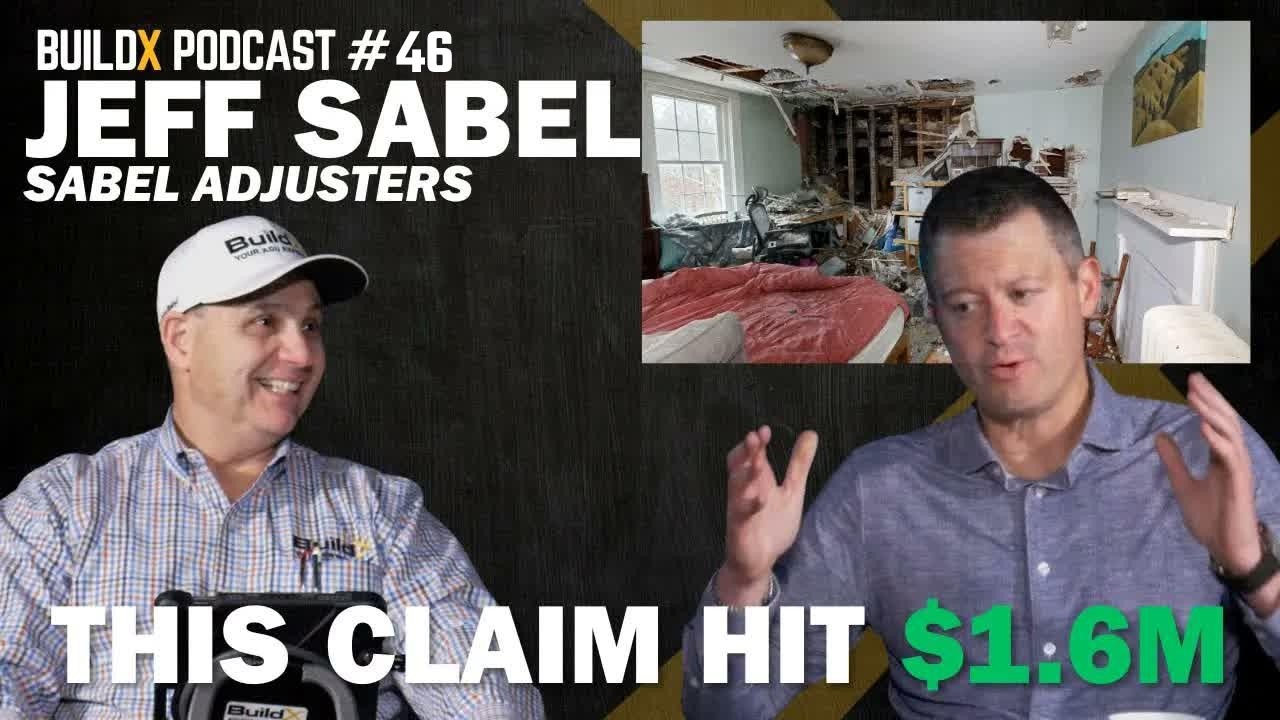
To pressure-test the real numbers behind insurance coverage gaps, we brought in Jeff Sabel, President and CEO of Sabel Adjusters. Jeff is a third-generation public adjuster with more than 25 years handling complex residential and commercial property claims. Together, we broke down a real Massachusetts case study where a $690,000 policy nearly collapsed under a $1.6 million rebuild.
Quick Answer: Most Massachusetts homeowners are dangerously underinsured. A real case study showed a $690K dwelling policy on a home that required $1.6 million to rebuild. The standard 10% code coverage ($70K) fell short of the actual $360K code bill by five times. Without rare policy endorsements, these homeowners would have been forced to sell. Before building an ADU, open your declarations page, insure at $350 per square foot minimum, bump code coverage to at least 25%, and use a local agent who understands endorsements.
In This Article
- Is Your Homeowner's Insurance Actually Enough to Rebuild?
- What Is Code Coverage and Why Does It Wreck ADU Budgets?
- How Long Does a Major Insurance Claim Take to Settle?
- What Should You Check on Your Declarations Page Before Building an ADU?
- Why Does a Local Insurance Agent Matter More Than a Big-Box Policy?
- Key Takeaways From the Episode
- FAQ From the Podcast Discussion
- About Jeff Sabel
- Open Your Declarations Page Before You Break Ground
Is Your Homeowner's Insurance Actually Enough to Rebuild?
For most Massachusetts homeowners, the answer is no. Standard policies are calculated using outdated square-footage formulas that have zero relationship to what a full rebuild actually costs today. When you're about to add an ADU to a property, the existing dwelling coverage becomes even more critical, because a total loss doesn't just wipe out the main house. It stops the entire investment plan.
Jeff Sabel confirms this with hard numbers from a real case. The homeowners carried $690,000 in dwelling coverage on an 1890s-era home. After a bedroom fire caused pressurization that blew out an exterior wall, the actual building cost to rebuild landed at $1.3 million, not including code upgrades. Jeff put it bluntly: without rare endorsements buried in their policy, "they would have been done. They would probably have to take the insurance money, sell the house, and go buy another house because they could have never afforded to rebuild."
From a builder's perspective, this is the risk nobody in the ADU space talks about. We've seen homeowners pour everything into an addition or ADU project while sitting on a policy that would leave them homeless if the main structure went down. Across our ADU builds, we've started asking every client to review their dwelling coverage before we break ground, because a $200K ADU on a $690K policy is a house of cards.
"If they had had a standard policy that they bought off the internet, they would have been done."
Jeff Sabel, Sabel Adjusters
What Is Code Coverage and Why Does It Wreck ADU Budgets?
Code coverage (formally called law and ordinance coverage) pays the difference between what your home was originally built with and what today's building codes require. On an 1890s home with knob-and-tube wiring, single-pane wooden windows, and no insulation, that gap is enormous. Standard policies default to 10% of dwelling coverage for code. On a $690K policy, that's $70,000. The actual code bill on this case study was $360,000, five times the original allotment.
Jeff Sabel explains that code coverage applies to every upgrade the building inspector requires: GFI outlets (ground-fault circuit interrupter outlets that prevent electrical shock) replacing standard outlets, wider exterior framing for insulation, updated septic systems under Title V, and full electrical service upgrades. The homeowners in this case also faced an energy code deadline that would have required three 400-amp electrical services and added another $150,000 in costs had the permits been filed a few months later.
This is why we coordinate insurance review with every ADU project timeline. If your existing home burned during construction and your code coverage sits at the default 10%, the rebuild cost alone could consume every dollar you planned to invest in your ADU. We tell every client the same thing: get code coverage to at least 25% of Coverage A, and if your home was built before 1960, push for 50% or higher.
How Long Does a Major Insurance Claim Take to Settle?
Large insurance claims do not settle in weeks. They settle in months, and the rebuild takes even longer. The case study in this episode followed a documented timeline: fire in January 2024, demolition permit in September 2024, final settlement in November/December 2024, and move-in on October 15, 2025. That's approximately 21 months from fire to front door.
Jeff Sabel walked through why the timeline stretches that far. The insurance company's first building estimate came in at $646,000. The final negotiated settlement reached $1.3 million on the building alone, plus $360,000 in code. Jeff noted: "It took us almost a year to get to the final number. An insurance company isn't going to write an estimate for six and then agree to 1.6 overnight." During that time, the homeowners moved twice, and their living expenses exceeded $200,000.
For anyone planning an ADU, this timeline matters because it reveals what happens when the existing home is compromised. If a fire or major loss event hits during ADU construction, or if you're building on a lot with an older home, you need enough living expense coverage (Additional Living Expense, or ALE) to survive 12 to 24 months of displacement. The standard 20% of Coverage A gave this family $140,000 in living expenses. They burned through $200,000. Without the endorsements that doubled their coverage, they would have been paying out of pocket for months.
Timeline reality for major claims: Expect 12 to 24 months from loss event to move-in on any claim exceeding $500,000. Budget your living expense coverage accordingly, because the standard 20% of Coverage A is not enough for extended rebuilds. This family needed every dollar of their doubled ALE coverage to stay afloat.
What Should You Check on Your Declarations Page Before Building an ADU?
Your declarations page (the summary page of your homeowner's insurance policy) is the single most important document to review before starting any construction project. It lists every coverage category, every endorsement, and every limit. The experts in this episode laid out a specific checklist that every ADU homeowner should run through with their agent before breaking ground.
Jeff Sabel's first instruction: "Open your declarations page, look at your policy and make sure you have enough coverage. Make sure you have replacement costs." The checklist breaks down to four categories. Coverage A (dwelling): insure at $350 per square foot minimum, $450 for homes with upgraded finishes. Code coverage: 25% of Coverage A at minimum, not the standard 10%. Contents (Coverage C): check for the replacement cost endorsement (endorsement 0490), and confirm contents coverage sits at 70% of Coverage A. Living expenses (Coverage D): 20% of Coverage A, though this case study proved even that can fall short.
We've built this insurance review into our pre-construction process at BuildX. Before we pour a foundation or frame a wall, we want to know that the homeowner's existing structure is properly protected. Two endorsement checkboxes, 0502 (guaranteed replacement cost) and 100% code coverage, saved this family from financial ruin. Those endorsements added $100 to $200 per year to the premium.
Why Does a Local Insurance Agent Matter More Than a Big-Box Policy?
The difference between a local insurance agent and a big-box carrier is not the premium. It's the endorsements. The homeowners in this case study had a local agent who understood their 1890s home, the regional rebuild costs, and the specific endorsements that would protect them. That agent checked two boxes on the policy, 0502 and 100% code coverage, that a call-center rep at a national carrier would never have flagged.
Jeff Sabel drew the contrast clearly: "A good local agent. Someone who actually understands what the policy is and understands your location." He also warned about big-box limitations: "Some of them have water damage exclusions or water damage limits up to $10,000. So if a pipe burst on the top floor, you only have $10,000." The premium savings of $100 per month on a stripped-down policy evaporates the moment you file a claim that exceeds its limits.
From a builder's standpoint, we recommend every ADU client sit down with a local agent, not a 1-800 number, before starting their project. The ADU itself needs to be added to the policy as additional structure coverage. The main dwelling limits need to reflect actual rebuild costs. And the endorsements that turn a standard policy into real protection need to be in place before the first shovel hits dirt.
"Don't be lulled into GEICO and Allstate, State Farm and all this cut-rate stuff. You need to have an agent that's looking out for you."
Jeff Sabel, Sabel Adjusters
Key Takeaways From the Episode
- Insure at $350 per square foot minimum: If your home has upgraded finishes, push to $450 per square foot. The case study home was insured at $690,000 and needed $1.3M in building costs alone.
- Code coverage at 25% minimum, not 10%: The standard 10% code allotment ($70K on this policy) fell five times short of the actual $360K code bill. Homes built before 1960 face the steepest code gaps.
- Check for endorsement 0502 (guaranteed replacement cost): This rare endorsement doubled every coverage category on the policy. Two checkboxes on a form, $100 to $200 per year in premium, saved the homeowners from losing their home entirely.
- Living expenses exceed what you expect: Budget for 12 to 24 months of displacement on any claim over $500K. This family spent more than $200,000 in living expenses and moved twice during the rebuild.
- Major claims take a year to settle: The insurance company's first estimate was $646K. The final settlement reached $1.6M. That negotiation took nearly 12 months with professional representation.
- A local agent is worth the extra $100-$200 per year: Big-box policies from national carriers strip out the endorsements and limits that matter most during a catastrophic loss. The agent's two endorsement checkboxes were the difference between rebuilding and selling.
- Review your declarations page before starting an ADU project: Your existing home's coverage directly impacts your ability to protect a $200K-$400K ADU investment. If the main structure is underinsured, the entire property is at risk.
- Professional representation recovers hundreds of thousands: Without the right team, this family would have left an estimated $500,000 to $600,000 on the table and been forced to sell the property.
FAQ From the Podcast Discussion
What is a public adjuster and when do I need one?
A public adjuster is a licensed professional who represents the homeowner, not the insurance company, during a property damage claim. On this case study, the insurance company's first building estimate was $646K. With professional representation, the final settlement reached $1.3M on the building alone. Jeff Sabel notes that homeowners handling claims themselves could leave $500,000 to $600,000 on the table on a large loss.
What is endorsement 0502 on a homeowner's insurance policy?
Endorsement 0502 is a guaranteed replacement cost endorsement that increases every coverage category (dwelling, contents, code, and living expenses) proportionally. If the agreed rebuild cost exceeds your dwelling limit, the policy scales up rather than capping out. Jeff Sabel described it as "rarely seen, if not ever seen before" and called it the single factor that changed the outcome of this case.
How much should I insure my Massachusetts home for per square foot?
At minimum, $350 per square foot. For homes with upgraded finishes, custom kitchens, or high-end materials, budget $450 per square foot. This benchmark reflects actual 2024-2025 rebuild costs in Massachusetts, not the outdated formulas that many carriers still use.
What happens to my contents coverage in a major fire?
Standard contents coverage (Coverage C) is calculated as a percentage of your dwelling coverage. On this case, the homeowners had $345,000 in contents coverage for a fully furnished two-family home with a loaded basement. The actual contents loss exceeded that amount. Jeff Sabel recommends confirming your policy includes endorsement 0490, which provides replacement cost (not depreciated value) on contents.
Can fire pressure actually blow out a wall?
Yes. In this case study, heat from a bedroom fire created pressurization inside the structure that physically pushed an exterior wall outward by four inches at one point and about an inch at another location. Neither the builder nor the adjuster had seen this type of damage before. It required a structural engineer to confirm the full extent, which ultimately led to a complete tear-down and rebuild.
What does a Title V septic inspection have to do with my insurance claim?
If your home is destroyed and the rebuild triggers a full permit cycle, the Board of Health requires a Title V septic inspection (the Massachusetts standard for septic system certification). Jeff Sabel pointed out that if your septic fails during this inspection, "you're looking at an alternative system that could be $50,000 to $75,000." That cost falls under code coverage, which is why the 10% default is dangerously low.
How do energy code changes affect my rebuild costs?
Massachusetts energy codes have become increasingly aggressive. On this project, an approaching energy code deadline would have required three 400-amp electrical services and added at least $150,000 in additional costs. The team filed permits before the deadline to avoid this expense. For any rebuild or major renovation, the current energy code at the time of permitting dictates requirements.
Do I need to hire my own engineer after a fire?
For any claim involving structural damage, yes. The insurance company will bring their own building consultant. In this case, the carrier's consultant wrote an initial estimate of $646K. The homeowner's team, including an independent structural engineer, documented damage that brought the building claim to $1.3M. Without independent engineering, the structural extent of the wall blowout would not have been fully captured.
How do I avoid hiring a bad public adjuster?
Jeff Sabel and Buz both warned that not all public adjusters are created equal. Some will take the first offer from the insurance company, collect their fee, and walk away. Before signing with anyone, get references, call past clients, check online reviews, and watch for any pressure to sign immediately. Jeff recommends taking at least a few hours before committing, even though the emotional aftermath of a loss pushes people to sign with the first person who shows up.
What if my insurance company says my claim is worth less than the actual damage?
The insurance company's number is a starting point, not a final answer. On this case, the carrier's initial estimate was $646K. Through documentation, engineering reports, and negotiation, the final building settlement reached $1.3M, more than double the first offer. Jeff Sabel's advice: "Just because the insurance company says it's so, doesn't mean it's so." Professional representation and thorough documentation are what close the gap.
"You still have to get it. It's there for you, but it doesn't just come to you. You have to earn it."
Jeff Sabel, Sabel Adjusters
About Jeff Sabel
Open Your Declarations Page Before You Break Ground
Your ADU investment is only as safe as the policy protecting the property it sits on. Pull your declarations page, run it against the checklist above, and call your local agent before the first permit is filed.
Schedule a site consultation with BuildX to walk through your lot, discuss your goals, and determine the best route to take with your project.
Request a Free Consultation or call (781) 627-7000
See our work in person: buildx.com/adu-home-tour