Can You Power Your Massachusetts ADU with Solar?
You are already spending six figures on an ADU. The last thing you need is a surprise electric bill eating into the rental income or retirement savings that justified the project in the first place. And the solar industry is not making the decision any easier, with zero-down lease pitches, battery hype, and over 100 companies going bankrupt nationally last year alone.
As a Massachusetts ADU builder, we already future-proof every unit we build. Current building code requires us to run conduit from the crawl space to the attic for solar readiness and cable for a future EV charger. The infrastructure is going in whether you install panels now or later. As CEO of BuildX, my job is coordinating structural engineering, energy code compliance, financing, and long-term resale value into one coherent ADU plan. Solar is never just about panels on a roof. It is about how the entire ADU performs as a financial asset for the next 25 years.
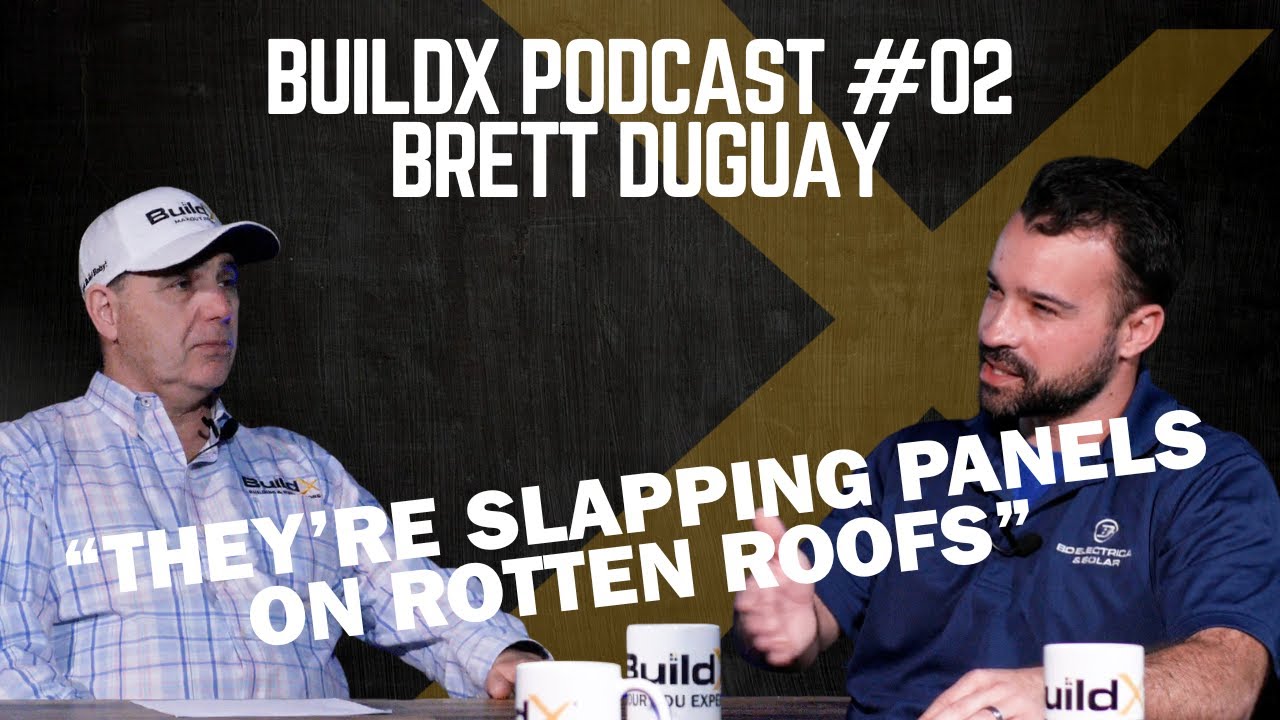
To pressure-test the technical details, we brought in Brett Duguay, owner-operator of BD Electrical and Solar. Brett has been in the electrical trade for 12 years and running solar installations across southeastern Massachusetts since 2015. His production-first approach and refusal to oversell batteries is exactly why we work with his team on our ADU projects.
Quick Answer: Yes, a properly oriented 900-square-foot ADU in Massachusetts can reach net zero with rooftop solar. An all-electric unit pulling about 120 amps can be offset by panels on a south-facing roof slope, sized over 12 months using net metering credits. Fire setback codes require two three-foot pathways, which limits panel count, so roof orientation and design-stage planning are critical. Batteries are optional and best used strategically, not as whole-house backup. Own the system outright or finance through a local bank. Never lease.
In This Article
- Can a 900-Square-Foot ADU Roof Generate Enough Solar?
- Do You Need a Battery for Your ADU Solar System?
- Should You Own or Lease Solar Panels on Your ADU?
- How Do You Avoid Bad Solar Installers in Massachusetts?
- How Do You Choose the Right Solar Partner for Your ADU?
- Key Takeaways From the Episode
- FAQ From the Podcast Discussion
- About Brett Duguay
- Ready to Design Your ADU for Solar from Day One?
Can a 900-Square-Foot ADU Roof Generate Enough Solar?
A properly oriented ADU roof can offset 100% of the electric load over 12 months. An all-electric unit running a heat pump, electric stove, electric dryer, and all standard appliances pulls about 120 amps at peak. With a south-facing roof slope on a typical 900-square-foot structure with a 40-foot ridgeline, there is enough surface area to make the math work.
Brett confirms the feasibility and adds a critical design constraint: fire setback codes require two three-foot pathways for firefighter access, which limits how many panels fit on the roof. On a small ADU roof, this means the array will not be perfectly centered, and homeowners who want symmetry need to weigh aesthetics against panel count. Brett also stresses that the ridge should run east to west, putting the primary slope due south for maximum production.
This is why we coordinate solar orientation with the structural engineer before the foundation pour. If we know solar is part of the plan, we can orient the roof, position plumbing vents out of the panel zone, and maximize every square foot of south-facing surface. Retrofitting that decision after framing costs real production capacity.
Mixed-fuel option now available: Massachusetts recently changed the energy code to exempt ADUs from the current HERS rating requirement. With a 52 HERS rating under mixed fuel, you can run a gas stove and gas dryer while still using a heat pump for heating and cooling. This reduces the solar system size needed to reach net zero, giving more flexibility on tighter roof areas.
Do You Need a Battery for Your ADU Solar System?
Batteries are not required for a net-zero ADU, and they are not the whole-house backup solution that most salespeople pitch. Net metering (the process of banking surplus energy credits with the utility) handles the seasonal production gap between summer overproduction and winter shortfalls. For most ADU owners, the smarter play is investing in the solar array itself and letting net metering do the heavy lifting.
Brett is blunt about what batteries cannot do: they will not run your AC, your jacuzzi, or all your appliances at once. Historically, only 5 to 10 percent of his installations included batteries because the economics did not justify them for most homeowners. That is changing, but not because batteries got better as backup power. New utility interconnection laws now use batteries as a curtailment strategy (storing excess solar production when the grid cannot accept more, then dispatching it later) to get systems approved that would otherwise be denied.
For ADU owners who want outage protection, the realistic strategy is a battery-plus-generator hybrid. The battery handles lights, outlets, and fans. The generator handles high-draw loads like AC. Brett's team also points to Mass Save's 0% interest loan for batteries and the Connected Solutions program, where the utility pays you when they dispatch your battery during peak demand hours. From a builder's perspective, the good news for space-constrained ADUs is that both Tesla and Enphase now make batteries rated for outdoor installation, so you do not sacrifice any interior square footage.
"I'm going to tell you, you can't run your jacuzzi on these batteries. And I think this is what kind of stands me apart from the competition, because they're going to go in there and try to sell you the most batteries that they can."
Brett Duguay, BD Electrical and Solar
Should You Own or Lease Solar Panels on Your ADU?
Own them. Every time. A zero-down solar lease means you are agreeing to purchase electricity from those panels for 25 to 30 years while the solar company keeps all the tax credits, incentives, and write-offs. When you finance through a local bank and own the system outright, you collect every incentive and increase the property value at the same time.
Brett has watched home sales fall apart because the buyer refused to assume a solar lease. When you lease, you bring the solar company to the closing table and ask the buyer to take on a contract they did not choose. Brett proactively asks customers about their five-to-ten-year plans before they sign anything, because a homeowner selling halfway through a 25-to-30-year lease is stuck transferring a liability, not an asset. When you own the system, the transfer is paperwork with zero cost.
We see this play out on our own ADU projects. If you are financing the ADU construction, you can bundle the solar system into that loan and own it from day one. Two Massachusetts banks, Cape Cod 5 and UMass 5, offer solar-specific loans at 100% financing. There is no reason to lease when ownership is this accessible.
The resale math is clear: Owned solar panels increase your home's market value by lowering the buyer's projected energy costs. Leased panels create a liability that buyers do not want to inherit. If the goal of your ADU is long-term property value, ownership is the only option that aligns with that strategy.
How Do You Avoid Bad Solar Installers in Massachusetts?
The solar industry has earned its bad reputation. Over 100 solar companies went bankrupt nationally last year, leaving customers with legacy systems nobody knows how to service. The pattern is the same every time: high-pressure door-to-door sales, a design that prioritizes panel count over production, and in-house financing with disclaimers buried in the fine print.
Brett calls it "panels over production." Bad installers look at a roof and ask how many panels they can fit without analyzing shading, roof age, or structural capacity. If shading is not accounted for in the preliminary design, production projections come in too high, the financial predictions never materialize, and six months later the homeowner is calling with a system that underperforms by 30 to 50 percent. Shoddy wire management under the array leads to ground faults when shingles wear through the insulation. Systems installed by fly-by-night companies are failing in under 10 years.
A GBH News report covered a Carver, MA, resident who was sold a grossly oversized system by a national company. She now pays for power from the utility on low-production months and pays the solar company for the excess power her oversized system generates. She is paying twice. From a builder's perspective, we have seen conduits running down the front of houses and installation work so poor it compromises the roof warranty. Not all solar is created equal, and the ADU investment is too large to hand to a company that will not exist in five years.
How Do You Choose the Right Solar Partner for Your ADU?
A qualified solar installer starts with production, not sales. The first step is qualifying the property: roof orientation, shading analysis using an irradiance map, roof age verification, and a 3D drone scan of the structure. A thorough design process takes two to four hours of consultation across multiple conversations, not a 20-minute pitch in your doorway.
Brett describes the right process: a phone interview about your goals (heat pumps, EV plans, future family changes), followed by an on-site survey that includes a drone scan, attic inspection, and structural engineering review. His team sends the data to a structural engineer for a certification letter confirming the roof can support the panels. Only after that does a proposal get generated showing system cost, component specs, financial payback, and a cumulative cash-flow analysis. If the property is not a good candidate, Brett tells the customer directly rather than forcing a sale.
We require this level of rigor on every ADU project. The installer's relationship with local building departments matters because every Massachusetts town interprets the fire code, the electrical code, and the interconnection rules differently. An installer who has built a reputation with the local inspectors gets through the permit process faster and with fewer surprises. That is not a nice-to-have on a construction timeline. It is a scheduling requirement.
Key Takeaways From the Episode
- Design for solar before pouring the foundation: Orient the ADU roof with the ridge running east to west and the primary slope facing due south. Repositioning after framing costs real production capacity.
- Fire setback codes limit panel count: Two three-foot pathways are required for firefighter access on the roof, directly reducing how many panels fit on a small ADU structure.
- Net metering handles seasonal gaps: The system is sized to offset 100% of the electric load over 12 months. Summer overproduction credits bank with the utility and offset winter shortfalls.
- Batteries are strategic tools, not whole-house backup: Only 5 to 10 percent of installs historically included batteries. Use them for curtailment, Connected Solutions income, or paired with a generator for outage protection.
- Never lease solar panels: Leased systems create a 25-to-30-year liability that kills home sales. Two Massachusetts banks offer 100% financing for ownership, and you can bundle solar into your ADU construction loan.
- Over 100 solar companies went bankrupt last year: Fly-by-night installers prioritize panel count over production, skip shading analysis, and leave customers with failing systems in under 10 years.
- Interconnection is a hidden step with real costs: A $4,500 supplemental review fee plus a potential $10,000 to $20,000 transformer upgrade can blindside homeowners who thought the permit was the only hurdle.
- Current code already requires solar-ready conduit in ADUs: Massachusetts building code mandates conduit from crawl space to attic and a cable for a future EV charger. The prep work is already in your wall.
FAQ From the Podcast Discussion
Do solar panels work in winter and on cloudy days in Massachusetts?
Yes. Panels produce electricity with two to three inches of snow cover and on cloudy days. A steep roof pitch clears snow quickly once the sun heats the panels. The system is designed to offset 100% of usage over 12 months, not month by month, so summer overproduction credits cover winter shortfalls through net metering.
Can I install batteries without solar panels?
Yes. You do not need a solar system to purchase and install batteries. Mass Save offers a 0% interest loan for battery installation, and the Connected Solutions program pays homeowners when the utility dispatches the battery during peak demand hours.
What permits do I need for solar on my ADU in Massachusetts?
Three separate permits are required: building, electrical, and fire. A new fire code went into effect this year with additional requirements for battery systems. On top of permits, you need a utility interconnection application, which runs in parallel and can be denied or require costly grid upgrades.
How long does it take to install solar panels?
The physical installation takes one to two days for a residential system. The bottleneck is everything before and after: site survey, engineering, permits, interconnection approval, and post-install inspections by the electrical inspector, building inspector, and fire inspector. After sign-off, the utility takes about two weeks to activate the system.
What is the difference between Tesla Powerwall and Enphase batteries?
Output and capacity are roughly comparable. Tesla batteries are priced lower and are expected to be a market disruptor, but Tesla customer service is poor. Enphase offers strong technical support and responsive service when issues arise. Both are now rated for outdoor installation.
Can I charge my electric vehicle with ADU solar panels?
Yes. The solar system can be sized to accommodate EV charging. A heavy commuter needs a larger array (around 10 kW), while lighter use can be covered by a smaller addition. Massachusetts code already requires a cable for a future EV charger on new ADU builds.
What happens to my solar system during a power outage?
A standard grid-tied solar system without a battery shuts down during an outage for safety reasons. To maintain power, you need either a battery (for limited loads like lights and outlets) or a battery-plus-generator hybrid (for high-draw loads like AC). The system cannot legally feed power back to a downed grid.
How old can my roof be for solar installation?
A reputable installer will not put solar on a roof older than 10 to 12 years. If the roof is aging, the recommendation is to replace at minimum the section under the array. Skipping this step means paying thousands to remove and reinstall the system when the roof needs replacement down the line.
What is curtailment, and why does it matter for my ADU?
Curtailment is a strategy where a battery stores excess solar production instead of sending it all to the grid. When the utility limits how much power you can back-feed (for example, capping you at 15 kW), the battery captures the surplus and dispatches it later. This bypasses expensive grid upgrade requirements and simplifies the interconnection process.
How do I know if my solar system is underperforming?
Zero production, half production, inverter errors, and strings going out are the common signs. Poor wire management under the array leads to ground faults over time as shingles wear through the insulation. A monitoring app tracks real-time production, and any reputable installer will set you up with one at activation.
"Not all solar is created equal. And it's really important that people understand."
Brett Duguay, BD Electrical and Solar
About Brett Duguay
Ready to Design Your ADU for Solar from Day One?
The best time to make solar decisions for your ADU is before the foundation goes in. Roof orientation, electrical infrastructure, and system sizing are all cheaper and more effective when they are part of the original design, not a retrofit.
Schedule a site consultation with BuildX to walk through your lot, discuss your goals, and determine the best route to take with your project.
Request a Free Consultation or call (781) 627-7000
See our work in person: buildx.com/adu-home-tour